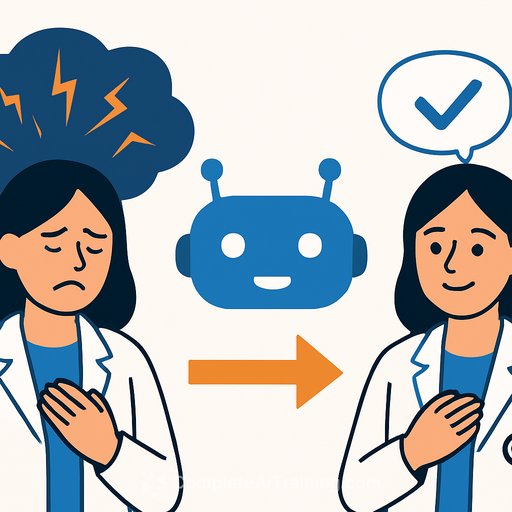
How Japanese medical trainees view artificial intelligence in medicine
AI is becoming part of daily clinical work and medical training. Alongside the benefits, educators still face real concerns: ethical responsibility, data privacy, loss of autonomy, and job displacement. To teach well, we need a clear picture of how learners feel and act around these tools.
A multicenter team in Japan has delivered exactly that: a validated Japanese version of the 12-item attitudes to AI scale (J-ATTARI-12) for medical students and residents. The study, led by Project Assistant Professor Hirohisa Fujikawa at Juntendo University with collaborators in Japan and the UK, was published in JMIR Medical Education on January 14, 2026. Credit: Hirohisa Fujikawa, Juntendo University Faculty of Medicine, Japan.
What is J-ATTARI-12?
Originally introduced in 2024, the ATTARI-12 is a brief measure that captures how people feel, think, and intend to act with AI. The Japanese team translated and culturally adapted it for local context, where social norms and uncertainty avoidance can shape responses.
The team ran a nationwide online survey from June to July 2025 across universities and hospitals, analyzing responses from 326 medical students and resident physicians. Translation followed international cross-cultural guidelines to keep both language and meaning accurate.
Key findings educators should know
- Two core dimensions: Exploratory factor analysis identified "AI anxiety and aversion" and "AI optimism and acceptance."
- Stronger model fit: Confirmatory factor analysis showed the two-factor model fit the data better than a one-factor model.
- Convergent validity: Scores correlated moderately with attitudes about robots, a related construct.
- Reliability: Internal consistency (Cronbach's alpha) was high across the scale.
Together, these results indicate J-ATTARI-12 is a dependable instrument for gauging medical trainees' attitudes to AI in Japan. You can view the paper here: DOI: 10.2196/81986.
Why this matters to medical educators
Attitudes shape adoption. Positive views can support responsible use; negative views can stall progress. With a validated scale, you can move from guesswork to data when planning curriculum and support.
Dr. Fujikawa noted that the tool helps identify learners who feel uncertain and gives programs a way to evaluate AI-related training over time. This makes it easier to focus instruction where it's needed most and track change as AI becomes part of routine care.
How to put J-ATTARI-12 to work in your program
- Baseline first: Administer the scale before any AI module to gauge starting points by cohort and site.
- Segment learners: Use factor scores to spot anxious vs. optimistic profiles; offer targeted support for concerns like data governance, bias, or overreliance.
- Match content to needs: Pair ethics, privacy, and accountability sessions with practical labs on clinical decision support and workflow integration.
- Measure change: Run pre/post assessments, tie results to competencies, and compare across rotations or specialties.
- Triangulate: Combine survey scores with observation (e.g., simulation, OSCEs) for a fuller picture of readiness and behavior.
- Benchmark and share: Pool anonymized data across departments to refine curricula and inform policy.
If you're building faculty capability or planning modules, this resource can help: AI Learning Path for Teachers.
Ethics and responsible use stay central
Concerns raised by trainees-privacy, accountability, and human oversight-are consistent with international guidance. For a concise reference, see the WHO's guidance on AI for health ethics and governance: WHO Guidance.
Study snapshot
- Design: Split-half validation with exploratory and confirmatory factor analyses.
- Sample: 326 medical students and residents across Japan (June-July 2025).
- Validity and reliability: Supported by model fit, correlation with attitudes about robots, and high internal consistency.
- Planned use: J-ATTARI-12 will support a "Medicine and AI" program at Juntendo University in 2026 and enable cross-national research.
About Project Assistant Professor Hirohisa Fujikawa
Hirohisa Fujikawa, M.D., Ph.D. (The University of Tokyo, 2023), is a Project Assistant Professor in the Department of General Medicine, Juntendo University Faculty of Medicine. He is an expert in health professions education with more than 90 peer-reviewed publications and extensive experience leading multicenter studies.
His research spans ambiguity tolerance, working-hour restrictions, patient care ownership, workplace social capital, and psychometric evaluation of educational instruments. He has secured competitive funding and earned recognition for contributions to medical education research.
Juntendo University: history and mission
Founded in 1838 as a Dutch School of Medicine, Juntendo created a community focused on advancing society through medical education and practice. It later established Juntendo Hospital, Japan's first private hospital, and has since grown to nine undergraduate and six graduate programs across medicine, health science, sports science, nursing, and international liberal arts.
The university's mission is to advance society through education, research, and healthcare, guided by the motto "Jin - I exist as you exist" and the principle "Fudan Zenshin - Continuously Moving Forward." The aim is to develop trusted clinicians, innovative scientists, and globally minded graduates ready to serve society.
Practical next steps for educators
- Review the paper and secure permission to use J-ATTARI-12: DOI: 10.2196/81986.
- Embed the scale in program evaluation plans (pre/post), with clear thresholds for follow-up support.
- Pair survey results with targeted teaching on bias mitigation, data governance, clinical reasoning, and human oversight.
- Share findings with curriculum committees and quality improvement teams to guide policy and investment.
Study authors and affiliations
Authors: Hirohisa Fujikawa, Hirotake Mori, Kayo Kondo, Yuji Nishizaki, Yuichiro Yano, and Toshio Naito
- Department of General Medicine, Juntendo University Faculty of Medicine, Japan
- Department of Medical Education Studies, International Research Center for Medical Education, Graduate School of Medicine, The University of Tokyo, Japan
- Center for General Medicine Education, School of Medicine, Keio University, Japan
- School of Modern Languages and Cultures, Durham University, United Kingdom
- Division of Medical Education, Juntendo University School of Medicine, Japan
Your membership also unlocks: