AI in Classrooms: Use It, Don't Outsource Thinking
At China's national advisory meetings, Xu Kun - president of Beijing University of Posts and Telecommunications and a member of the CPPCC National Committee - called AI a double-edged sword and urged schools to commit to "technology for good." His core warning was simple: guide students to use AI in moderation and avoid intellectual laziness.
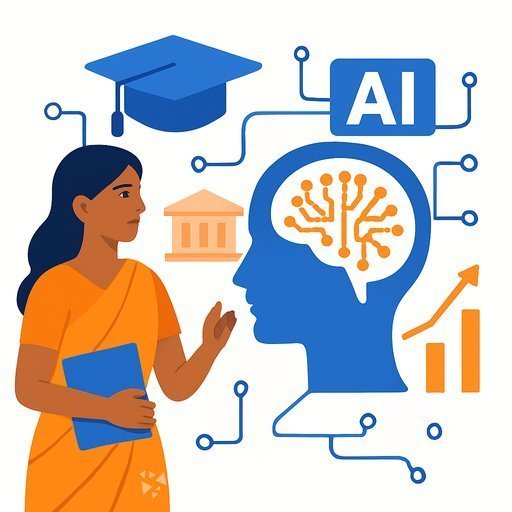
Used well, AI moves classrooms from one-size-fits-all delivery to support that meets each learner where they are. It can take repetitive tasks off teachers' plates so they can focus on creativity, curiosity, and meaningful feedback. Xu also pointed to a learning ecosystem that is open, data-informed, tied to real-world problems, and able to cross geography so more students can access quality instruction.
What this means for schools
- Personalized progress: adaptive practice, leveled readings, and targeted interventions over standardized pacing.
- Teacher role, upgraded: less clerical work, more coaching, studio time, and formative dialogue.
- Access beyond the building: translation, remote collaboration, and flexible schedules that reduce location as a barrier.
- Real-world integration: projects that use live data, authentic audiences, and measurable outcomes.
Guardrails that prevent "intellectual laziness"
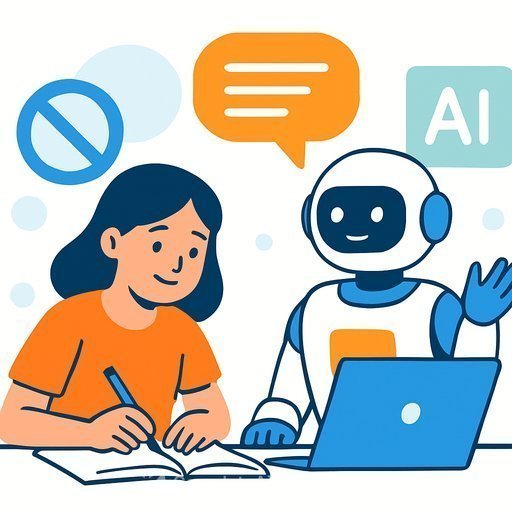
AI should accelerate learning, not replace thinking. Put clear boundaries in place and make the process visible.
- Define allowed uses by task stage (brainstorming, outlines, examples) and what remains strictly student work (final arguments, original analysis).
- Require an AI disclosure on submissions: tools used, prompts, and what changed after review.
- Assess process, not polish: drafts, version history, prompt logs, oral checks, and whiteboard defenses.
- Design for originality: use local data, lab results, field notes, or class-only constraints that generic models can't replicate.
- Blend no-AI reps with AI-assisted reps to build retrieval, reasoning, and transfer.
- Time-box AI use (e.g., 10 minutes), then switch to independent revision and reflection.
- Grade thinking moves: evidence, assumptions, structure, and synthesis - not just fluent prose.
- Teach AI literacy: bias, hallucinations, citation, and data security basics.
- Update integrity policies with concrete examples, consequences, and restorative steps.
Practical teacher moves this term
- Make an automation list: generate feedback banks, draft rubrics, analyze exit tickets, and summarize parent communications.
- Differentiate quickly: create leveled texts, practice sets with scaffolds, and accommodations that align with IEP goals.
- Free up time: batch-create exemplars, formative quizzes, and lesson variations so your energy goes to live teaching.
- Center creativity: use AI to ping-pong ideas, then have students build, debate, prototype, and present.
Equity and ethics you can act on
Xu's vision highlights wider access and real-world learning. Deliver that promise without cutting corners on privacy or fairness.
- Choose tools with clear data practices; disable model training on student content where possible.
- Offer low-bandwidth and offline options; set up device-sharing routines to reduce access gaps.
- Support accessibility: captions, alt text, screen-reader checks, transcripts, and dyslexia-friendly formats.
- Audit for bias: cross-check outputs, rotate datasets, and include diverse perspectives in prompts and materials.
Policy starter kit for your school
- Purpose statement: commit to "technology for good" and human-led learning.
- Clear use cases: what's allowed, what's limited, what's off-limits - with examples for each subject.
- Privacy and consent: data handling, parent/guardian approvals, and vendor requirements.
- Staff training plan: ongoing PD, classroom playbooks, and model lessons.
- Review cycle: incident response, quarterly audits, and student voice in updates.
Helpful resources
- UNESCO guidance on generative AI in education - policy and classroom implications.
- OECD: AI in Education - ethics, quality, and system-level strategies.
- AI Learning Path for Teachers - practical steps to integrate AI, save time, and boost student thinking.
Use the tools. Keep the thinking human. That's the line that protects learning - and pushes it forward.
Your membership also unlocks: