The AI Renaissance: How New Tech Is Rewriting Streetwear, Music, and Creative Culture in 2025
Every creative is asking the same thing: how do I stand out in a feed that never sleeps? AI won't do the art for you, but it will remove drag, spark new ideas, and help you ship faster. That combo is letting small teams and solo artists punch above their weight. The culture moves quick; your process has to move quicker.
The New Sound: AI as a Studio Collaborator
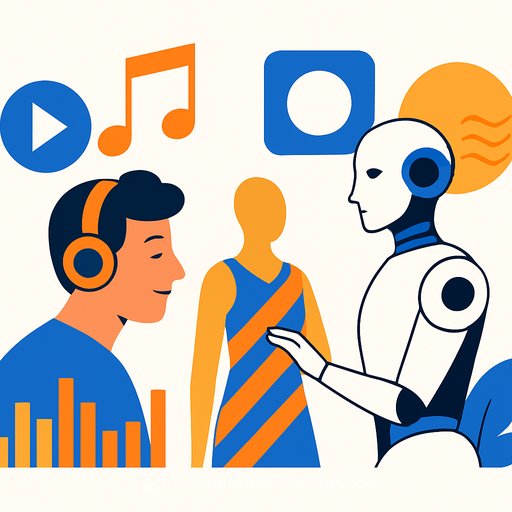
Music production has gone from marathon to sprint. Generative tools can sketch melodies, propose chord reharmonizations, design sound palettes, and even handle a solid first pass of mixing or mastering. When you hit a wall, you can spin up dozens of beat switches or harmony options in minutes, then keep the best and toss the rest.
Access is widening, too. A Deezer-funded study noted tens of thousands of fully generated tracks uploaded daily, a signal that the tooling is already in heavy use. The upside for you: more experiments, tighter feedback loops, and new micro-genres that would've taken years to find before. Deezer
- Build a 30-minute daily "idea engine": prompt a model for 10 drum grooves, 10 bass motifs, 10 chord voicings. Save only what sparks.
- Use AI for arrangement drafts: verse/chorus/bridge templates, energy maps, and alt versions (club, radio, instrumental).
- Keep your fingerprint: layer in one live element (vocal chop, guitar riff, field recording) on every track to humanize the texture.
- Create a reusable stem library and let AI recontextualize it into new tempos, keys, or genres.
- Document chain-of-creation: what you wrote, what the model suggested, what you changed. Credits and splits get easier.
Streetwear's Algorithmic Edge
Style moves on data now. Designers are tapping machine learning to forecast color ranges, prints, and silhouettes before the first sketch lands. Platforms like Trendalytics surface shifts across search, social, and retail signals so you place smarter bets. That means fewer dead ends and more timely drops.
AI also trims waste. Pattern-optimizing tools map cut layouts to minimize scrap, and digital sampling can get you a lifelike proto in a day-without piling up physical samples. That speed lets small labels respond to cultural moments with the pace of a global house.
- Spin a weekly "trend pulse" doc: top 5 rising hues, graphics, and silhouettes. Translate them into 3 capsule concepts.
- Prototype digitally first: fabric drape sims, fit checks, and print placements before you sew a stitch.
- Run small-batch tests: 25-50 unit drops tied to a story. Use sell-through and waitlist data to greenlight larger runs.
- Use AI for zero-waste layouts and BOM suggestions; lock margins before production.
- Generate lookbook shots with AI, then reshoot the top performers with real models for final polish.
The Data Science Behind Prediction
Under the hood is predictive modeling: feed large datasets into algorithms that estimate outcomes across messy systems. Finance uses it to react to news sentiment in seconds. Supply chains use it to forecast demand, avoid overstock, and cut waste.
Sports leans in as well. Similar models evaluate players, simulate games, and help price market odds across NFL and other leagues. The same logic that spots a sleeper team can spot a sleeper trend or a sound that's about to pop: find hidden patterns, assign probabilities, act with timing.
- Collect clean signals: sales, engagement, search volume, save rate, skip rate, returns. Bad data = bad calls.
- Engineer practical features: seasonality, drop cadence, collab effects, creator size, time-to-first-sale.
- Backtest your ideas against last year's data. Keep what outperforms; kill what doesn't.
- Decide with ranges, not absolutes: plan A/B scenarios and set thresholds for go/no-go decisions.
Cultivating the New Creative Culture
AI forces better questions about ethics, ownership, and credit-and that's a good thing. Consent for training data, clear attribution, and transparent workflows aren't red tape; they're trust builders. The culture rewards who ships, but it also remembers who plays fair.
- Credit both human roles and AI tooling in liners, lookbooks, and product pages.
- Use provenance tools or project logs so you can prove how a piece was made.
- Get sample clearance or use licensed packs; avoid training on datasets you don't have rights to.
- Share your process. The story behind the work is part of the value.
Build Your AI-Creative Stack
- Idea generation: text-to-melody, pattern drafting helpers, visual concept boards.
- Refinement: arrangement assistants, colorway explorers, fit/drape simulations.
- Operations: demand forecasts, pricing models, inventory and ad spend optimizers.
- Proof: project logs, asset versioning, credits management.
If you want structured ways to level up your workflow as a creative, explore live and on-demand programs here: Complete AI Training - Courses by Job
The Takeaway
AI won't replace your taste, your story, or your courage to ship. It will remove friction so you can make more attempts, learn faster, and get bolder with each release. Build a small system, run it daily, and let the data tell you what to do next. The future is owned by creatives who iterate in public and keep their fingerprints on the work.
Your membership also unlocks: