Hospitals and AI: Balancing innovation with caution
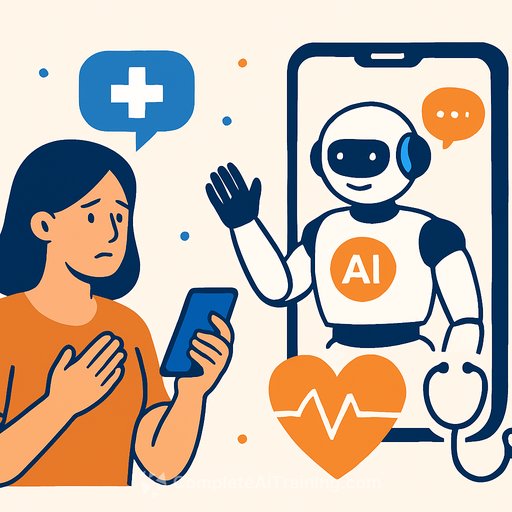
Hospitals are moving fast on artificial intelligence. Leaders see clear wins in business operations, while clinical use calls for guardrails and proof. That balance-speed with safety-defines the next year of work for every health system.
As the head of a major hospital association recently noted, AI is already improving efficiency in business functions. Bringing AI into clinical workflows, however, requires a different standard: evidence, oversight, and accountability.
Where AI is paying off now
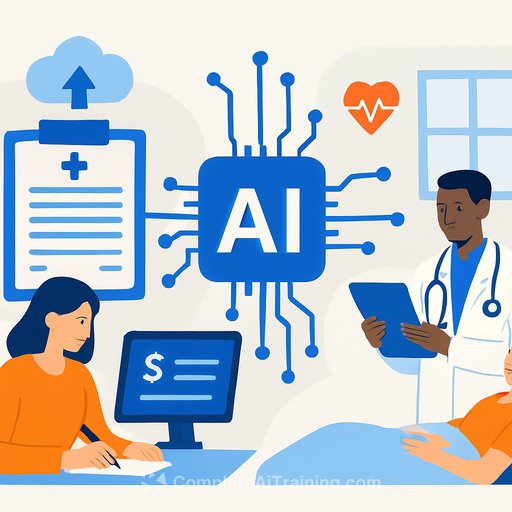
- Revenue cycle: claim scrubbing, denials prediction, prior auth automation, and coding assistance cut days in A/R and reduce write-offs. See practical training: AI Learning Path for Medical Billers.
- Workforce and operations: staffing forecasts, float pool allocation, and patient flow optimization reduce overtime and length of stay.
- Supply chain: demand forecasting and PAR level tuning trim waste and stockouts.
- Documentation: ambient scribing and template suggestions ease clinician burden and improve note quality.
Clinical AI: proceed, but prove it
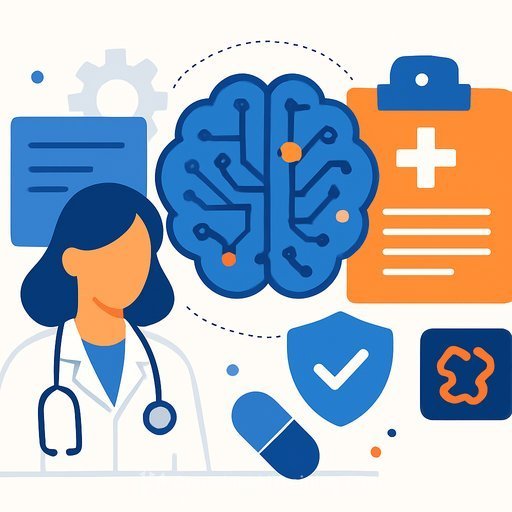
Clinical tools must earn their place at the bedside. That means local validation, clear risk ownership, and tight monitoring. If a model informs diagnosis, triage, or treatment, treat it like any other clinical device: verify, document, and supervise.
- Validate on your data before go-live; compare performance by site, unit, and demographic group.
- Bias checks are mandatory: calibration, subgroup AUC, PPV/NPV, and error analysis by race, age, sex, language, and payer.
- Require human-in-the-loop for high-risk decisions; no silent automation on meds, imaging reads, or escalations.
- Monitor model drift monthly; set thresholds that trigger rollback.
A simple governance model that works
- AI Council: CMIO, CNIO, CISO, Quality/Safety, Legal/Compliance, DEI, Data Science, and Ops. Meet biweekly.
- Systemwide inventory: catalog every model (internal and vendor), purpose, data sources, risk tier, and owner.
- Risk tiers: Admin (low), Clinical decision support (medium), Clinical action/automation (high), Patient-facing (varies).
- Standards: model cards, instructions for use, known failure modes, and rollback plan.
- Contracts: BAAs, data use boundaries, retraining approvals, uptime/SLA, incident reporting in 24 hours.
- Training: role-based education for clinicians, coders, rev cycle, and IT. See AI for Healthcare to upskill teams.
90-day starter plan
- Pick 2 low-risk use cases with clear ROI: denials prediction and ambient notes in one pilot clinic.
- Define success metrics upfront: days in A/R, denial rate, documentation time per note, clinician satisfaction.
- Stand up monitoring: dashboards for performance, drift, and adverse events; weekly triage with the AI Council.
- Communicate scope, limits, and "what to do when it's wrong" to all end users.
Evaluation checklist (use before approval)
- Clinical validity: problem relevance, evidence base, external validation, and intended population.
- Performance: AUC/PR-AUC, PPV/NPV at clinical thresholds, calibration, and alert burden.
- Equity: subgroup performance parity and mitigation steps if gaps persist.
- Safety: failure modes, contraindications, guardrails, and rollback triggers.
- Security & privacy: PHI handling, encryption, access controls, audit logs, and data retention.
- Sustainability: cost per prediction, licensing, support model, and total cost of ownership.
Regulatory and policy signals to watch
- FDA oversight for clinical software and AI-enabled devices; understand when your tool is clinical decision support vs. a regulated device. See FDA's AI/ML SaMD Action Plan here.
- Risk management and documentation practices align well with the NIST AI Risk Management Framework resource.
Data guardrails
- Keep PHI inside your tenant; use private endpoints and VPC peering for model access.
- Log prompts, responses, and user IDs; enable red-teaming and regular security testing.
- De-identify when possible; restrict training on your data without explicit approval.
- Limit external model calls for high-sensitivity contexts unless contractually protected.
Vendor due diligence (fast screen)
- Intended use, clinical risk, and evidence in a population like yours.
- Model transparency: data sources, update cadence, and known limitations.
- On-prem/virtual private deployment options and data isolation.
- Monitoring APIs, audit logs, and role-based access.
- Regulatory status, adverse event history, and customer references.
Change management that sticks
- Co-design with frontline clinicians; test in a small unit before scaling.
- Make it easy to override with a reason code; learn from overrides weekly.
- Train for skeptical users first; if they adopt, the rest will follow.
- Celebrate time saved and safety wins; publish quick wins with data.
KPIs that matter
- Admin: days in A/R, denial rate, cost to collect, coder productivity, turnaround time.
- Clinical: clinician time per patient, alert acceptance rate, readmissions, LOS, mortality (where applicable).
- Quality & safety: adverse events linked to AI, override rates, alarm fatigue index.
- Equity: subgroup calibration error and outcome gaps before/after deployment.
The bottom line
Use AI where the value is proven-billing, staffing, documentation. For clinical use, raise the bar: validate locally, monitor relentlessly, and keep a human in the loop. That's how hospitals get the efficiency gains today while protecting patients and clinicians as the tech matures.
The message from national hospital leadership is clear: move forward, but do it with discipline and evidence.
Your membership also unlocks: