AI in Higher Education: From Concern to Practical Classroom Support
AI started as a threat to academic integrity. Now, many educators see it as a support system that, used well, improves learning and saves time.
As one professor put it, there have been "positive developments" in giving students tools that actually help them learn. The shift isn't hype; it's a set of small, practical wins that add up.
What educators are finding useful
Tools like ChatGPT, Gemini, and Perplexity break down hard topics in plain language. That reduces the back-and-forth students need from instructors who are already stretched thin.
More universities are allowing AI for editorial help-grammar, structure, and clarity-while keeping the student responsible for the actual writing. That's raised the quality of submissions, especially for students who don't have English as a first language.
Integrity concerns have settled into practice
After 2022, campuses scrambled to update policies and clarify what counts as a student's own work. There was also anxiety about grading and who-or what-was doing the marking.
Today, the dust has settled. Results are mixed, but instructors have more control and better workflows. Some are using AI to compare syllabi across institutions and surface missing topics or gaps.
Adoption is rising
The 2024 Pan-Canadian Report on Digital Learning notes a jump in educators using generative AI in learning activities-from 12% in 2023 to 41% in 2024.
Early movers were already experimenting years ago. In 2016, Ivy Tech in Indiana used machine learning to flag 16,000 at-risk students by week two, then paired outreach with support-and saw the largest drop in D and F grades in 50 years.
In 2018, the University of Murcia deployed a chatbot to handle incoming student questions with over 90% accuracy. It answered at all hours and freed staff to focus on higher-impact work.
The tools are maturing
Hallucinations-confident, wrong answers-haven't disappeared, but they are being reduced as models improve. That makes adoption easier for faculty who need reliability, not toys.
Students see both the upside and the risk
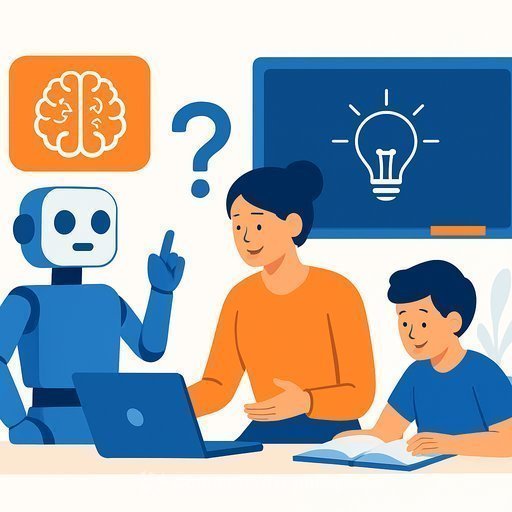
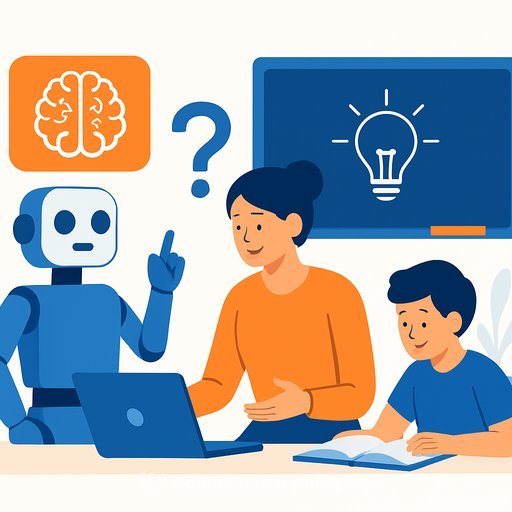
One university AI leader summarized it well: AI can serve as a 24/7 digital tutor. We can't give every undergraduate a personal mentor, but we can get closer to that level of support.
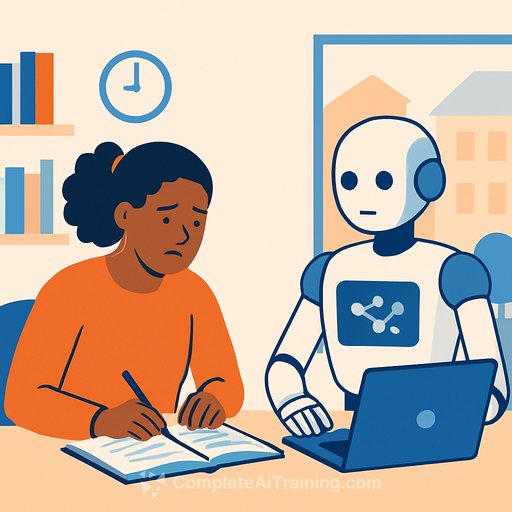
At the same time, students can offload too much cognitive work. Many are excited by the learning boost. Others worry about ethics, environmental impact, and the origins of training data. Most are still figuring out how to use it without losing the learning.
What AI won't replace
Education is more than content and tests. The core is social: collaboration, healthy debate, and learning to work with different viewpoints.
Universities adapted to the printing press and the internet. They persist because students still want to gather, ask better questions, and become capable contributors. AI doesn't change that.
Practical steps for your course or program
- Set clear policy. Define what's allowed (e.g., editorial help, outlining, concept checks) and what isn't (full text generation, solving graded problems). Require students to cite any AI use and include prompts.
- Assess the process. Add oral checks, in-class writing, version histories, and short reflections. Grade the thinking, not just the output.
- Use AI as a tutor. Encourage students to ask for hints, examples, or step-by-step scaffolds-then verify and rewrite in their own words.
- Adopt a fact-check routine. Require students to verify key claims with two trusted sources and list them.
- Mind privacy and ethics. Don't upload student data to public tools. Discuss environmental costs and data sourcing so students make informed choices.
- Support writing equity. Allow grammar and clarity assistance while holding the line on original thought and citation.
- Upgrade your workflow. Compare syllabi, draft rubrics, generate practice questions, and outline feedback-then refine with your expertise.
- Ensure access. Offer campus-approved tools and alternatives so students without paid accounts aren't disadvantaged.
Starter policy language you can adapt
"You may use AI tools for idea generation, outlining, and editorial feedback (grammar, clarity). You may not submit AI-generated text as your own. If you use AI, include a brief note listing the tool, prompts, and how you applied or edited the output. You are responsible for accuracy, citations, and academic integrity."
Faculty development and guardrails
If you need a framework for safe and effective use, review UNESCO's guidance for generative AI in education. It offers practical guardrails for policy, pedagogy, and ethics. UNESCO guidance
For a broad view of trends and teaching implications, this EDUCAUSE resource is helpful. 2024 Horizon Report: Teaching and Learning
Next steps
Pilot one assignment with clear AI rules. Add a reflection and a five-minute oral check. Share what worked with your department and iterate.
If you want curated learning paths and tools for educators, explore these resources: AI Learning Path for Training & Development Managers and AI for Education.
Your membership also unlocks: