Meet the IDF's new AI researchers reshaping military intelligence and operations
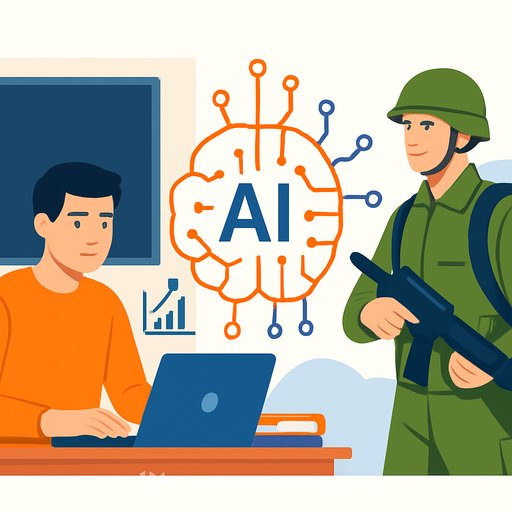
Twenty graduates from a focused six-week course at the IDF's School for Computer Professions are moving into units across the force. Their job is simple to state and hard to do: build AI systems that turn overwhelming text, audio and visual data into decisions that move missions forward.
Backed by the C4I and Cyber Defense Directorate and its new AI division, "Bina," these researchers act as force multipliers. They read the need, pick the right approach, ship working tools fast and keep improving them in the field.
What this role actually delivers for operations
- Summarization and triage of long reports, flight debriefs and investigation protocols.
- "Needle-in-a-haystack" search across massive data stores with relevance and reliability filters.
- Audio collection analysis: classification, transcription and sorting for immediate mission use.
- Visual intelligence: terrain mapping and identification support that tightens alerting and reduces false positives.
- Continuous add-ons to existing systems instead of rip-and-replace-new AI features layered where users already work.
How they work: research to deploy
"The mission is to provide solutions to different problems in their respective units using AI tools," said Capt. R., a graduate of the first class and commander of the second. The role blends research and development with end-to-end ownership.
Stage one is deep research-reading academic papers, stress-testing methods and translating theory into operational constraints. Next, they ship an intermediate system to unblock users while building the core AI capability on top. This dual track keeps tempo high without sacrificing quality.
Inside the six-week pipeline
The course starts with the foundations-what AI is, how it works and how systems are structured. From there, trainees learn signals and how different models interpret data across modalities.
The final stage sharpens research skills: extract what matters, drop what doesn't and implement the insight. "By the end, they know how to handle any information they receive, extract what is relevant to their specific development and implement it," said Capt. R. Most arrive with data science backgrounds, many with degrees, and some transition directly from civilian roles.
Where they plug in across the force
Graduates head to branches and regional commands, with a heavy emphasis on operational domains. In the C4I and Cyber Defense Directorate, text analysis is the grind-surfacing critical lines inside huge stores of unstructured content.
"We often develop systems to summarize long documents, flight debriefings or operational investigations where protocols contain massive amounts of content," Capt. R. noted. When a unit needs a specific detail from a sprawling database, they code tools that surface the most reliable information first.
Why this matters for operations leaders
- Shorter decision loops: hours of reading turn into minutes of review.
- Higher signal-to-noise: fewer false alerts, more credible leads.
- Faster debrief learning: lessons move from transcripts to tactics quickly.
- Embedded change: AI augments systems already in use, reducing adoption friction.
- Cross-unit leverage: shared patterns and components compound value over time.
Implementation moves you can borrow for your team
- Start with one clear use case where delay or noise hurts outcomes. Write a crisp problem statement and explicit success criteria.
- Assign end-to-end ownership. One team (or person) researches, prototypes, ships and maintains.
- Ship a scaffold first. Stand up a simple interface and data flow, then layer the AI feature that matters most.
- Integrate where operators already work. Add capabilities to current systems; avoid net-new tools unless necessary.
- Measure the loop: time-to-insight, false-positive rate, analyst hours saved, and decision quality (via after-action checks).
- Build a small guild for knowledge-sharing across specialties (text, audio, visual). Borrow patterns, don't rebuild them.
- Keep humans in the loop for high-impact calls. Use AI to prioritize and summarize; let people decide.
Signals work: text, audio and visual
The daily reality is multi-modal. One group triages thousands of pages; another classifies field audio; a third maps terrain from imagery to improve detection and route planning. The connective tissue is a repeatable process that turns messy inputs into clear outputs.
If you're building similar pipelines, start with speech recognition and retrieval on narrow, high-value audio sets, then expand. This training path on Speech-To-Text can help teams set up reliable audio-to-text workflows.
Operational text analysis at scale
Text remains the heaviest lift-finding the right paragraph across millions. Researchers apply summarization for briefings and retrieval techniques to extract specifics without drowning analysts in noise. The target is utility: reduce reading hours, keep context, preserve source links and confidence scores.
For teams under similar pressure, see AI for Operations for patterns that speed up intake, triage and review loops.
Cyber defense angle
Within the C4I and Cyber Defense Directorate, the same playbook applies: focus on high-value signals, fuse sources and ship upgrades into existing workflows. Think anomaly triage, threat enrichment and assisted investigations that cut time-to-containment without adding swivel-chair work.
A growing expert network
Graduates are spreading across units with shared standards and open lines of communication. "Because we all come from different parts of the army and specialize in different areas at a high level, we can maintain an advanced level of knowledge sharing," said Capt. R. That network lets an audio specialist help a visual team-or vice versa-so wins scale faster than any single unit could deliver alone.
The takeaway for operators
Keep the cycle tight: clarify the need, research fast, ship the scaffold, layer the critical AI feature, and measure. Do it inside current systems so adoption sticks. Then reuse what works across teams. That's how AI moves from interesting to indispensable on the ground.
Your membership also unlocks: