AI Is Becoming Marketing's Operating Layer
Artificial intelligence isn't a side tool anymore - it's becoming the core layer marketing runs on. As Atul Parvatayir at Texas Tech's Rawls College of Business put it, "AI is a code infrastructure," and marketers who pair it with strong creative judgment will win.
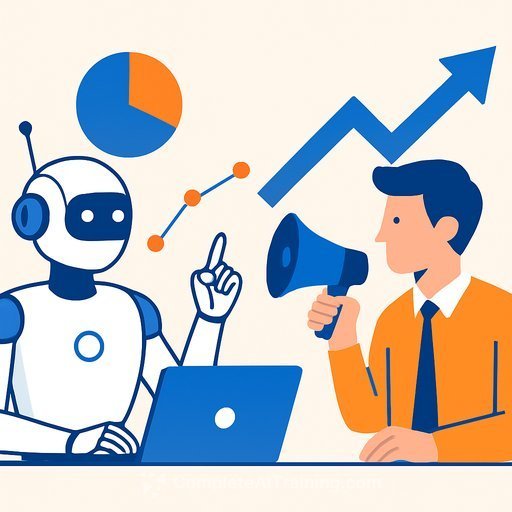
In practice, that means three levers matter most: creativity, production, and media exposure. AI accelerates each - if you stay in control of the brief, the brand, and the story.
Where AI Moves the Needle
Creativity: Draft concepts, iterate visuals, pressure-test angles. Treat AI like a fast sketch artist, not the creative director. You ship better ideas when you keep the human point of view at the center.
Production: Faster turnarounds and lower unit costs. AI helps teams version assets, localize, and adapt formats without bloated timelines.
Media exposure: Programmatic buying and personalization now align offers with behaviors and preferences at scale. The craft is in the targeting logic, frequency control, and message fit - not just the tool.
The Super Bowl Proved It
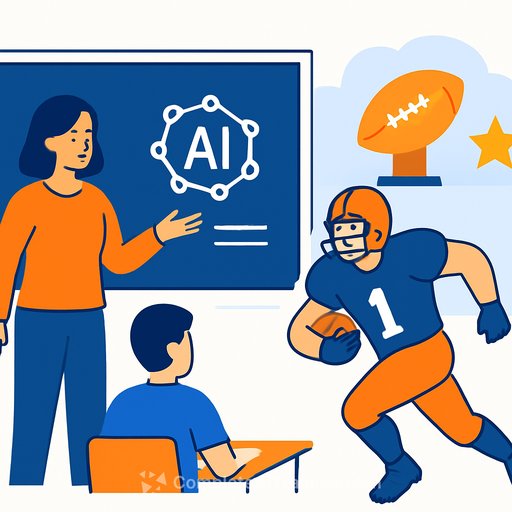
The Super Bowl remains the biggest captive stage for advertisers, with over 137.8 million viewers in 2026, according to TV Technology. This year, a quarter of the ads - 15 of 66 - featured AI in some way, per iSpot. You saw Google Gemini, OpenAI, Amazon Alexa, and Svedka's first mostly AI-generated spot.
Paige Rollins from Tech's Bullet Ad Team had mixed feelings. She liked Svedka's ad because it was intentionally absurd and memorable, not just "AI for AI's sake." Her view: AI often gives surface-level outputs, and you can tell when a brand leaned on it for the idea. She's not worried about her creative path - she'd be more concerned if her role was heavy on repeatable analysis.
What Stays Human
Dino Villegas at Rawls believes the field won't be replaced. The basics don't change: strategy, narrative, and connection. AI can analyze data and spit out options, but it can't own meaning. "The more human our skills can be… thinking strategically, communicating ideas to others, or to an AI - those become, every day, more important."
How Classrooms Are Adapting
Senior Annika Enger says Tech's marketing courses frame AI as a support tool, not a threat. Students use it for routine tasks - proofreading emails, organizing info, summarizing - so they can spend more time on creative and strategic work.
The goal is responsible, effective use. "They just have to rework or rethink: How does this become a tool and not a hardlink? How do I differentiate myself from this growing AI platform?"
A Practical Playbook for Marketers
- Anchor your advantage in human skills: taste, story, and strategy. Let AI handle speed; you handle meaning.
- Work the brief harder. Define audience, outcome, constraints, and voice before you touch a model.
- Creative workflow: human concept → AI prototypes (copy/visuals) → human edit → audience test → refine.
- Production system: templates, brand-safe guardrails, batch generation, and clear approval checkpoints.
- Personalization with discipline: align segments to messages and offers; cap frequency; monitor fatigue.
- Measurement that matters: track lift, CAC/LTV, attention metrics, and creative contribution - not just clicks.
- Data sanity: use first-party signals where possible; keep prompts and outputs compliant with brand and privacy rules.
- Quality control: fact-check, bias check, and tone check. Disclose AI use when it impacts trust.
- Portfolio proof: save prompts, iterations, and results to show process, not just the final asset.
- Career moat: double down on client communication, creative facilitation, and strategic thinking.
Get Up to Speed
If you're building your AI skill stack for campaigns, content, and optimization, this is a solid starting point: AI Learning Path for Marketing Managers.
Bottom line: AI is the infrastructure. Your edge is creative judgment, strategic clarity, and the ability to turn data and tools into stories people care about.
Your membership also unlocks: