AI at the Beijing Forum: What Healthcare Leaders Can Use Now
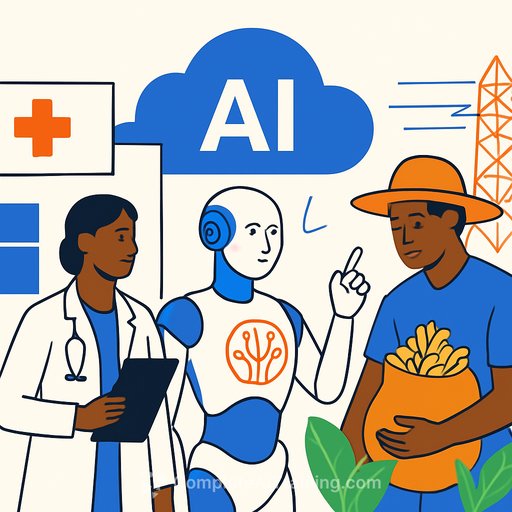
At the Beijing Forum, experts highlighted how AI can raise living standards by expanding access to care and improving food security. For healthcare teams, the message is clear: use AI to close gaps in quality, capacity, and equity-especially in low-resource settings.
What this means for healthcare
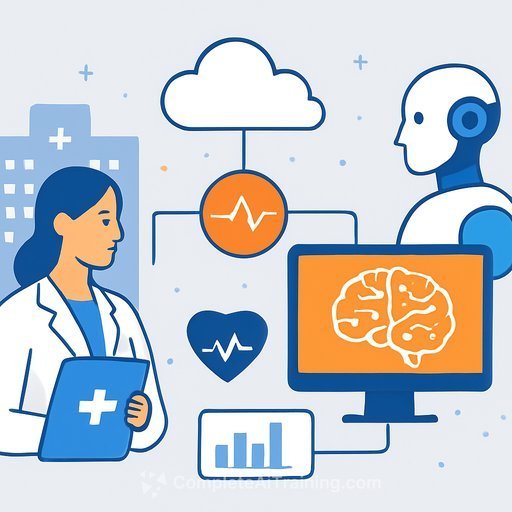
- Decision support in clinics: Triage, risk scoring, and guideline adherence tools can standardize care where specialist coverage is thin.
- Diagnostics and imaging: AI-assisted reads for X-rays, ultrasounds, and pathology help reduce turnaround times and miss rates.
- Virtual care workflows: Symptom checkers, intake summarization, and follow-up prompts free clinicians to focus on complex cases.
- Operations: Predictive models can steady staffing, bed management, and supply chains, reducing delays and waste.
- Public health: Early-warning signals from syndromic data and weather patterns support outbreak detection and vaccination planning.
Practical 90-day plan
- Days 0-30: Pick two use cases with clear ROI (e.g., imaging backlog, no-show reduction). Map data access, security needs, and integration points. Set baseline metrics.
- Days 31-60: Run a small pilot with guardrails. Track accuracy, time saved, equity impact, and clinician satisfaction. Involve compliance and patient reps early.
- Days 61-90: Validate results externally if possible. Document clinical safety checks, audit logs, and monitoring. Prepare a scale-up plan and budget.
Guardrails you cannot skip
- Privacy and security: Minimize data, encrypt in transit and at rest, and log every access. Avoid unnecessary PHI in prompts.
- Bias and equity: Test on your population. Compare performance across age, sex, ethnicity, language, and comorbidities.
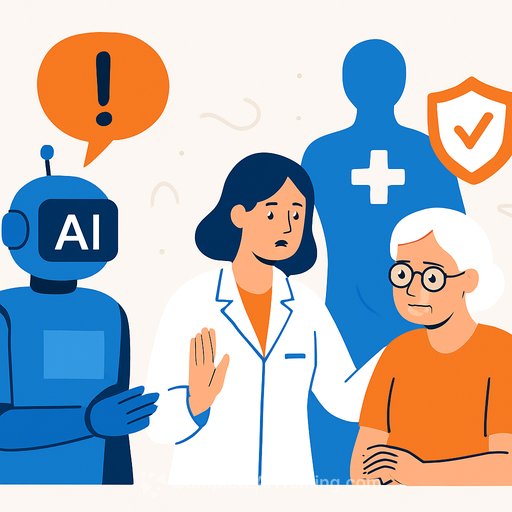
- Clinical validation: Benchmark against standard of care and peer-reviewed references. Require human oversight on high-stakes outputs.
- Regulatory readiness: Track model versioning, intended use, and documentation. Prepare for audits and post-deployment monitoring.
- Safety net: Clear escalation paths when AI is uncertain or conflicts with clinician judgment.
Why agriculture belongs in the healthcare conversation
Nutrition, disease exposure, and income stability move health outcomes more than any single hospital intervention. AI that optimizes crop selection, pest management, and yield forecasting supports food security, which in turn reduces stunting, anemia, and infectious disease risk. Coordinated pilots between health systems and agricultural agencies can pay off in fewer admissions and improved maternal-child outcomes.
For context on safe and ethical deployment, see the WHO guidance on AI for health. For the food systems angle, the FAO provides useful briefs on digital agriculture and AI here.
A perspective from the forum
Jeffrey Lehman, Vice Chancellor of NYU Shanghai and former President of Cornell University, captured the opportunity: "The possibilities that AI create for raising the standard of living of people are tremendous and including just for example, in health care. Right now health care is not distributed equally around the world. It's possible that AI will overcome that; it's possible that AI tools will enable people in developing world countries to obtain a quality of health care that they didn't think was gonna happen in their lifetime. So that is just one area, agriculture, another area, it's possible that the productivity of agriculture will zoom thanks to the contributions of AI to our understanding of how to produce the best crops in a particular area."
How to get your team ready
- Run a half-day workshop to align on use cases, risks, and KPIs. Assign clinical, data, and legal owners.
- Start with a narrow workflow, such as AI-assisted discharge summaries or X-ray prioritization.
- Measure time saved, diagnostic agreement, and patient outcomes-not just accuracy.
- Offer short, role-based upskilling so staff can use tools safely and effectively. A curated overview by job function can help: AI courses by job.
Bottom line
AI can extend high-quality care to places and people who rarely receive it, and better harvests can reduce the very pressures that fill clinics. Start small, keep humans in the loop, measure what matters, and scale only after safety and equity checks hold up. That's how this moment translates into better outcomes on the ground.
Your membership also unlocks: