Redefining API Management for the AI-Driven Enterprise
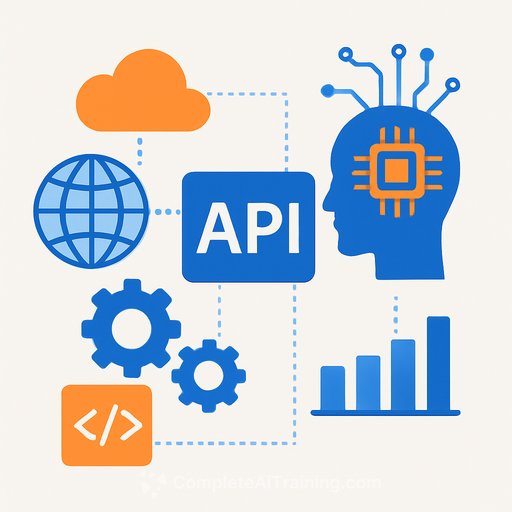
API management used to be plumbing: connect systems, secure endpoints, monitor traffic. That era is over. With multimodal models, agent-style systems, and retrieval-augmented workflows, APIs don't just connect - they carry context, policy, cost, and trust. The new API platform isn't a gateway; it's an intelligent control plane for the business.
If your AI runs on prompts, tools, data retrieval, and human-in-the-loop steps, then APIs are the spine of that system. Getting them right determines safety, spend, throughput, and user outcomes.
Why AI changes API management
- Requests are stochastic and stateful: prompts, histories, and tools must be tracked and versioned.
- Latency and cost trade-offs matter: token budgets, caching, and routing decide viability at scale.
- Data sensitivity is higher: grounding data, PII, and content safety need consistent policy.
- Workflows are long-running: agents call tools, trigger callbacks, and depend on events and retries.
- Quality is nuanced: "works" isn't binary - you need win rates, safety events, and human feedback loops.
What the new API control plane includes
- Identity and consent everywhere: user-to-service-to-model identity propagation (mTLS, OAuth2/JWT), fine-grained scopes, tenant isolation, and consent logging.
- Policy as code: redaction, data minimization, geo fencing, prompt firewalls, content filtering, and audit trails - all defined centrally and enforced at the edge and midplane.
- Model routing and experimentation: dynamic model selection, A/B and canary, fallbacks, and budget-aware routing by task, tenant, or risk level.
- Observability that understands AI: prompt/response traces with field-level masking, token usage, latency percentiles, quality metrics, safety incidents, and OpenTelemetry spans across tools.
- Reliability patterns: idempotency keys, retries with jitter, circuit breakers, deduplication, partial results, and compensating actions for multi-step agent flows.
- Data and RAG lifecycle: connectors to sources, vector index refresh SLAs, re-embed scheduling, metadata filters, cache invalidation, and provenance tracking.
- Security and supply chain: secret rotation, KMS/BYOK, code signing for tools, SBOMs for model/tool packages, and zero-trust service posture.
- Catalog and discovery: machine- and human-readable specs (OpenAPI/JSON Schema, AsyncAPI), capability tags, usage examples, and self-serve keys with guardrails.
- Monetization, chargeback, and quotas: per-tenant budgets, token and vector quotas, rate classes by risk, and internal showback. See AI Learning Path for Vice Presidents of Finance for budgeting and monetization guidance.
- Event-first design: webhooks, streaming (SSE), async jobs, and dead-letter queues for agent callbacks and tool outcomes.
Practical playbook: your next 90 days
- Weeks 1-2: Inventory AI-adjacent APIs. Tag by sensitivity (PII, IP), latency class, and cost driver. Enable idempotency and structured error codes on all write paths.
- Weeks 3-4: Add a global policy layer: PII redaction, prompt/response masking, and geo residency checks. Turn on request/response sampling with field filtering.
- Weeks 5-6: Centralize secrets and keys. Enforce mTLS for service-to-service. Introduce tenant-aware rate limits and budget guards.
- Weeks 7-8: Stand up model routing with canary and fallbacks. Capture token usage and win-rate metrics per endpoint and tenant.
- Weeks 9-12: Treat prompts as code: version, test, and rollout via CI. Add async patterns (webhooks/SSE). Publish an internal API marketplace with examples.
Metrics that matter
- 95th/99th percentile latency by endpoint and toolchain
- Token cost per successful task and per tenant
- Win rate (task success) and human override rate
- Safety events: redactions, policy blocks, hallucination flags
- Data freshness and vector index drift
- Cache hit rate and fallback frequency
- Error budget burn and SLO adherence
Common pitfalls (and fixes)
- Hidden costs: No token budgets. Fix with quotas, caching, and budget-aware routing.
- Leaky logging: Prompts and PII in logs. Fix with masking at ingress and storage policies.
- One big gateway: Everything choked at the edge. Split into edge, midplane (policy/model router), and data plane roles.
- Static schemas: AI outputs drift. Use JSON Schemas with strict validation and safe fallbacks.
- RAG staleness: Index refresh on best effort. Track freshness SLAs and re-embed schedules.
Architecture, briefly
Think in layers. An edge gateway handles authN/Z, quotas, and coarse policy. A midplane applies policy-as-code, routes to models/tools, and orchestrates retries. The data plane serves RAG (vector DB + connectors), caches, and feature stores. Telemetry spans all three with masked traces and consistent IDs.
For developers: patterns that work
- Use idempotency keys for any tool call that changes state.
- Prefer async for agent actions; confirm outcomes via webhooks or SSE.
- Version prompts and schemas together; gate rollouts behind flags.
- Shadow test new models with the same requests; compare outcomes offline.
- Apply exponential backoff with jitter; set circuit breakers per tool.
- Validate AI outputs into strict schemas; reject or auto-correct safely.
For IT and platform teams: governance that sticks
- Classify data and route by residency; enforce minimization and consent logs. See AI Learning Path for CIOs (Chief Information Officers) for governance and infrastructure patterns.
- Centralize secrets, rotate keys, and prefer short-lived tokens.
- Enforce tenant isolation at network, key, and data layers.
- Require SBOMs and signatures for tools and model packages.
- Codify policies; test them like code and audit continuously.
Standards and references
For secure design patterns, see the OWASP API Security Top 10. For risk practices tied to AI, review the NIST AI Risk Management Framework.
Next steps
Start by treating APIs for AI as products with budgets, SLOs, and safety rules. Put policy in code, add model-aware routing, and wire in telemetry you trust. The teams that do this will ship faster, spend less, and keep risk contained.
If your org needs to upskill engineers and product teams around AI systems and MLOps, explore role-focused learning paths such as the AI Learning Path for Project Managers to better manage AI-enabled workflows and multi-step agent processes.
Your membership also unlocks: