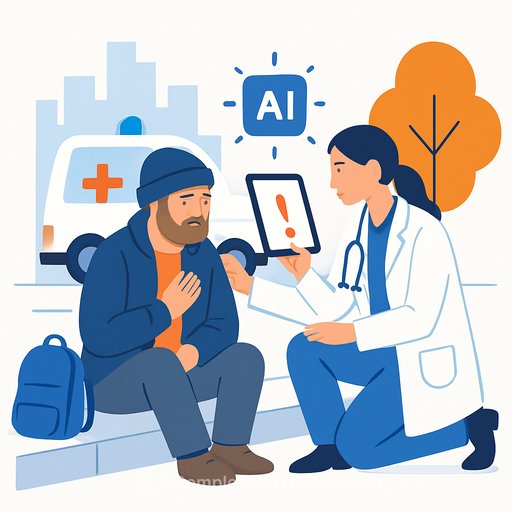
AI-Enabled Street Medicine Expands Care For the Bay Area's Unhoused
The Future Communities Institute and partners across the San Francisco Bay Area are standing up a safety-net program that uses AI to extend the reach of street medical teams. The goal is practical: faster access to treatment, tighter clinical documentation, and stronger social referrals for people living without housing. Every AI-driven clinical recommendation is reviewed and approved by a physician.
How the model works
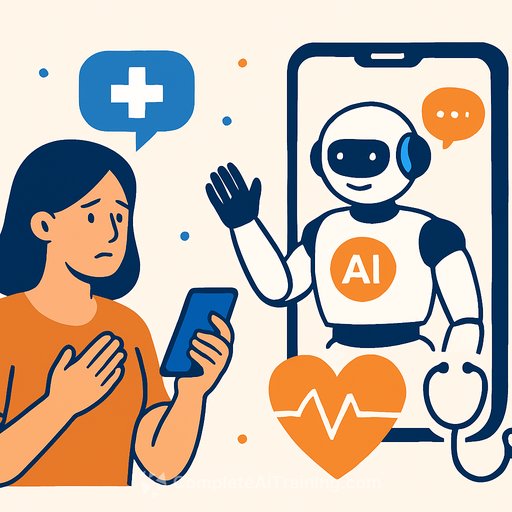
Community health workers will collect the clinical details providers need at the curbside, not days later. Akido Labs' Scope AI combines ambient listening, automated scribing of patient encounters and longitudinal Data Analysis to support clinical reasoning in real time. With physician oversight built in, field teams can move from assessment to treatment without unnecessary delays.
Why it matters
Homeless patients face reduced access to care and disproportionately rely on emergency services. The Bay Area's unhoused population grew 6% year over year, and nearly two-thirds of people are living on the streets, according to Akido. "California is at the epicenter of the country's homelessness crisis," said Prashant Samant, Akido's cofounder and CEO.
Point-of-care impact
As convener, the Future Communities Institute (FCI) will coordinate a regional healthcare intervention aimed at improving care metrics and reducing avoidable hospitalizations. Scope AI will guide patient encounters, generate clinical reports and preliminary diagnoses, and speed up treatment decisions. "Our AI brings critical healthcare services to some of the region's most vulnerable neighbors - expanding reach in a system where the clinicians we'd need simply aren't available," Samant said.
The region's unhoused population has climbed more than 46% over the last decade and is a heavy user of EMS. A 2023 San Francisco Fire Department report indicated that 25% of all ambulance trips involved people experiencing homelessness. Addressing acute issues like diabetes, substance use disorders and mental illness at the point of contact can stabilize patients and open the door to broader success.
Faster access to treatment
For patients who need medically assisted treatment for substance use disorders, the program aims to cut waits from days to hours. With AI-supported encounters and on-call physician sign-off, some patients could receive MAT within four hours of initial contact. For context on medications for substance use disorders, see SAMHSA's guidance.
Clinician oversight, more reach
Ambient listening and longitudinal data analysis give field medics the structure and clinical reasoning support to treat on site. At the same time, a single physician can oversee multiple field medical assistants, increasing coverage without sacrificing safety. It's a pragmatic response to limited clinician availability.
Community partners and evaluation
FCI is partnering with ReImagine Freedom and Five Keys Schools and Programs. Five Keys, founded by the San Francisco Sheriff's Department more than 20 years ago, connects individuals to education, housing, employment and other services across 14 counties and 100+ locations. FCI is also building an evaluation framework so all partners report consistent data.
The larger trend
Akido reports that AI-supported medical assistants can reduce administrative load, enable five times more face-to-face time and achieve a 96 Net Promoter Score. The platform is already used across multiple specialties in Southern California clinics and in New York to manage chronic conditions among professional rideshare and for-hire drivers.
"We built Scope AI to tackle the single biggest challenge facing healthcare systems worldwide: the physician shortage," Samant said when announcing a $60 million investment. "With demand for care far exceeding supply, AI is the key to addressing the global doctor deficit, empowering healthcare providers and ensuring patients receive the timely, high-quality care they deserve."
Similar initiatives are emerging elsewhere. Mass General Brigham's Care Connect serves patients who can't get timely primary care appointments, with physicians seeing 40-50 patients per day.
What healthcare teams should watch
- Governance and safety: Clear protocols for physician review and approval of AI recommendations.
- Data capture: Ambient scribing quality, consent workflows and EHR integration - all requiring careful Design to avoid data silos.
- Speed-to-treatment metrics: Time from first contact to interventions like MAT; define targets and track weekly.
- Team design: One physician supervising multiple field staff to expand reach without diluting clinical standards.
- Evaluation: Shared measurement across partners, including ED utilization, readmissions and social referrals.
- Privacy and trust: Trauma-informed care, secure data handling and transparent communication with patients.
On the record
"It is imperative that we rethink care models and forge new partnerships that will allow us to ensure that our most vulnerable communities receive vital, life-saving services," said Emma Mayerson, FCI's executive director.
Upskilling your team
If you're planning to build AI fluency across clinical and care coordination roles, explore courses by job to accelerate training without slowing down operations.
Your membership also unlocks: