Learners and educators are AI's new "super users"
AI has quietly shifted from a novelty to a daily learning tool. In a global study across 21 countries and 21,000 people (AI Research), the top reason for using AI is now learning - with 74% saying they use it to learn something new or clarify complex topics.
For those working in education, this isn't theory anymore. Students, teachers, and parents are using AI to save time, boost clarity, and expand options - and most believe it's improving how we learn. For practical classroom guidance and resources, see AI for Education.
What the data says (at a glance)
- Students (18+): 85% use AI. Top uses: help with schoolwork (83%), explain complex topics (78%), manage life tasks (54%), and support decisions (42%).
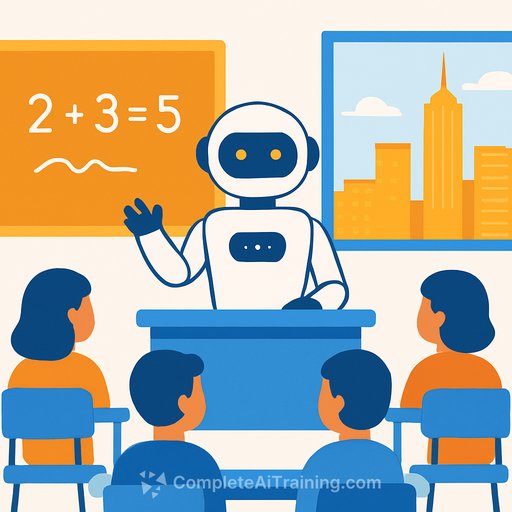
- Teachers: 81% use AI (vs. 66% of the general public). Top uses: learn or clarify topics (77%) and save time (75%). In a six-month pilot in Northern Ireland, teachers reported saving ~10 hours per week using Gemini.
- Parents: 76% use AI, mainly to learn (77%) and assist with work (73%). Nearly half (49%) use AI to explore career moves or new income streams.
- Attitudes: Most teachers, students (18+), and parents report a positive impact on learning. 67% of teachers expect AI to improve teaching quality; 63% expect better student outcomes.
- Global view: In emerging markets, more people believe AI will improve outcomes through personalized learning (63%) than worsen them by eroding critical thinking (37%). High-performing systems like South Korea, Japan, and Singapore show similar sentiment (63% vs. 37%). For context on performance benchmarks, see OECD PISA.
Why this matters for your school or district
AI use has moved from curiosity to core utility. Your teachers and students are using it right now - often without consistent guidance, guardrails, or shared expectations.
Positive attitudes create a window to set standards, pilot workflows that save hours, and focus teacher time on high-impact instruction. The risk is the "5% problem": benefits concentrating with the most motivated or privileged learners. Equity and safety can't be an afterthought.
Practical ways to put AI to work this term
- Set classroom guardrails in plain language. Define what's allowed (drafting, idea generation, feedback) and what isn't (final answers, citations without verification, age-inappropriate content).
- Start with three high-yield teacher use cases: lesson brainstorming, rubric-aligned feedback drafts, and admin tasks (emails, permission slips, newsletters). Track minutes saved weekly.
- Adopt a simple prompt pattern for students: task + context + criteria + example. Require source-checking and a reflection sentence on what changed in their thinking.
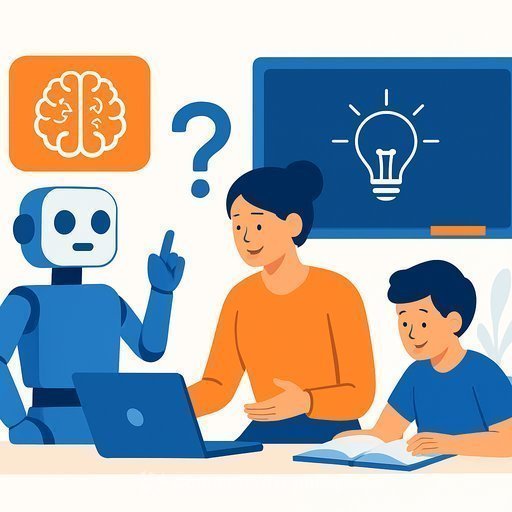
- Pilot a "guided learning" setup for complex topics. Pair short readings or videos with AI-assisted questioning and teacher-led discussion. Keep the human in the loop.
- Run a weekly "AI handoff" for admin. Collect repetitive tasks from staff, build reusable prompts/templates, and share wins in a 15-minute stand-up.
- Measure outcomes, not hype. Compare time saved, assignment completion rates, and rubric scores pre/post pilot. Keep what works, drop what doesn't.
Tools educators are using
Examples include Gemini's Guided Learning Mode, Gemini for Education, Google AI Pro for Education, and NotebookLM. These tools are built on modern Generative AI and LLM technologies and can help draft materials faster, personalize practice, and lighten administrative load - while keeping teacher judgment front and center.
Before rollout, confirm settings for data privacy, age-appropriate use, and content filters. Provide a simple "how we use AI here" one-pager for staff, students, and families.
Equity and safety checklist
- Access: Ensure devices and connectivity where needed; offer low-tech alternatives so no student is left out.
- Clarity: Publish acceptable-use examples and non-examples. Reinforce citation and verification.
- Bias and accuracy: Teach "trust but verify." Require students to cross-check sources and note gaps or contradictions.
- Data protection: Lock down accounts, log usage, and separate student data from experimentation spaces.
- Professional learning: Give teachers short, recurring PD with time to practice on real work. Make it ongoing, not a one-off.
What success looks like
Teachers recover hours for instruction and feedback. Students use AI to clarify concepts, not bypass thinking. Families understand how AI is used, why it's safe, and where it helps.
The goal is simple: better learning outcomes for everyone and more time for teachers to teach. Start small, measure honestly, and scale what proves valuable.
Further learning
- PISA performance benchmarks and methods: OECD PISA
- Structured training for educators by job role: Complete AI Training - Courses by Job
Your membership also unlocks: