Allen Park & Swyx on AI, Noodles, and Scaling
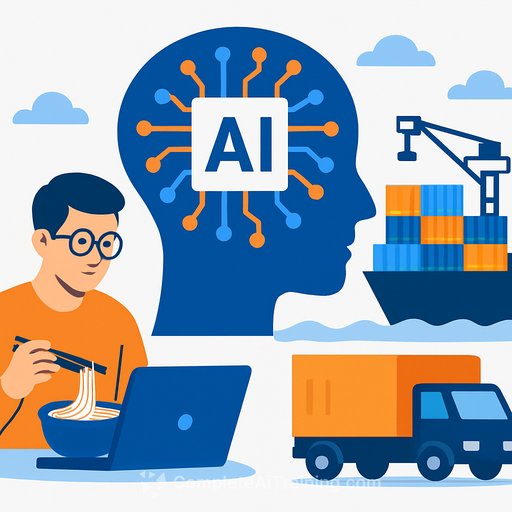
Two builders taste, guess, and rebuild a bowl of Dandan Noodles-while breaking down how to ship reliable AI. It's a perfect pairing: reverse-engineering a recipe and reverse-engineering a system under constraints.
Allen Park, CEO of Humanloop, brings the lens of an AI engineer who cut his teeth on space-grade reliability at NASA JPL. Swyx adds the investor-operator view, where the rubber meets the road: shipping AI that customers actually use.
Top 1% vs Bottom 99%: Two Different Games
Swyx said it bluntly: "The most head-fucky thing about building/investing in AI dev tools is that the top 1% of AI applications are building completely differently than the bottom 99%." Both can be right, but pretending the same stack fits both is how projects die.
Translation for builders: your architecture follows your goal. If you're chasing state-of-the-art performance with tight latency and cost targets, you'll make different calls than someone building an internal assistant. Pick a lane, then pick the stack.
Why the Cooking Challenge Matters
The challenge was simple: taste a dish, rebuild it with minimal guidance. That's software in a nutshell-observe outputs, infer inputs, iterate until it holds up under real use.
Cues matter. Ingredients = data. Technique = infrastructure. Heat control = latency/cost/quality trade-offs. Taste and adjust, don't guess and ship.
From NASA-Grade Reliability to LLM Production
Park shared how working on AI for space missions forced high standards. Agents had to operate in complex environments with zero margin for failure. You learn fast that "probably works" isn't good enough.
That same mindset is now flowing into LLM apps: deterministic rails around stochastic models, observability at every layer, and failure modes that degrade gracefully.
Coding vs Shipping
Coding is local. Shipping is end-to-end. It includes user behavior, deployment, evals, monitoring, and on-call realities.
If you're still treating your AI system like a toy script, you'll stall at the demo stage. Shipping forces you to prove it under traffic, edge cases, and changing data.
Principles: From 12-Factor to "12 Factor Agents"
The conversation drew a clean line from the 12-Factor App playbook to a similar mindset for LLM systems. Park mentioned Humanloop's "12 Factor Agents" effort to codify how to build reliable, scalable agent-style applications.
Think: clear boundaries, versioned prompts, reproducible datasets, offline/online eval loops, and operational discipline. Fewer surprises, faster shipping.
Practical Playbook for AI Builders
- Define the tier you're building for. Top 1% performance product or 99% utility app? Your infra, evals, and budget change with that choice.
- Make the shortest possible feedback loop. Local evals, small datasets, fast iteration. Long loops kill momentum.
- Write specs for prompts and agents. Treat them like code: version, test, review.
- Start with offline evals, then shadow traffic, then canary. Don't skip layers.
- Instrument everything. Token usage, latencies, failure reasons, user actions post-response.
- Design for failure. Timeouts, retries with backoff, fallbacks, and safe defaults.
- Keep data flywheels honest. Capture misfires, label them, retrain or refine prompts on real failure cases.
- Choose architecture by bottleneck. Latency? Cost? Accuracy? Different constraints imply different providers, caching, and finetune choices.
- Separate demo hacks from prod code. Create a clear path to "productionize" early wins.
- Document the "why." Decisions on models, context windows, and guardrails should be legible to future you.
The Noodles Verdict
No declared winner, but the point landed. Great dishes and great systems come from the same process: sharp observation, tight loops, and respect for constraints.
Taste, tweak, test. Ship, watch, refine. That's how you build software people trust.
Next Steps
If you're moving from demos to production, start building your "12 Factor Agents" checklist and bake it into your CI/CD. Treat prompts and evals as first-class citizens, not afterthoughts.
Want a structured path to level up your stack and shipping habits? Explore AI for Software Engineers.
Your membership also unlocks: