Alphabet and Meta Tie AI Closer to Revenue: What IT and Dev Teams Should Do Next
Alphabet and Meta ended 2025 with clear momentum, and the common thread is AI tied directly to revenue and cost control. Alphabet crossed $400B in annual revenue, fuelled by 17% growth in Search and a Google Cloud run rate above $70B after 48% growth. Meta posted $59.9B in Q4 revenue, up 24% year-over-year. Both companies made it plain: AI isn't a side project - it's baked into product, infra, and operating models.
For engineers, architects, and data leaders, the takeaway is simple: scale, unit economics, and shipping AI into core workflows determine outcomes - especially teams focused on Coding. The winners are building the stack end to end - models, serving infra, and the apps that monetize them.
Why this matters to builders
AI is now table stakes across platforms, infra, and internal workflows. Advantage favors teams that can ship features tied to measurable performance: lower serving costs, better recommendations, higher conversion, and faster developer throughput.
- Think in unit costs (per token, per request) and throughput, not just model quality.
- Integrate AI where it drives revenue or cuts cycle time, then instrument everything.
- Plan capacity and placement (region, accelerator type) early to avoid compute bottlenecks.
Infra spend is strategy now
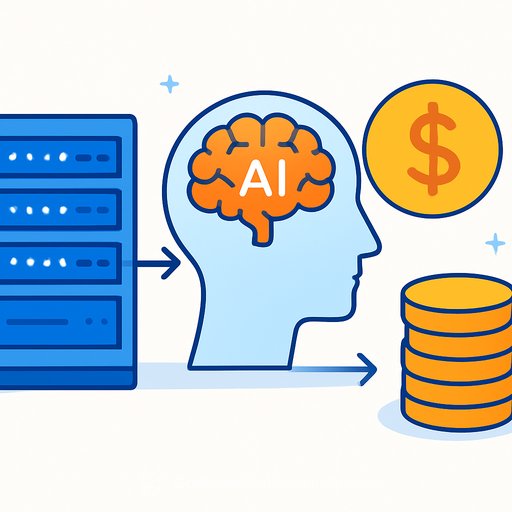
Alphabet guided $175-$185B in 2026 capex, concentrating on compute and data centers for Gemini development and serving. They cut Gemini serving unit costs by 78% in 2025 - a direct link between infra investment and gross margin. Meta plans $115-$135B in 2026 capex for servers, data centers, and silicon programs, and flagged compute availability as tight.
- Design for cost: cache aggressively, route smartly, batch where latency tolerates it, and match model size to task.
- Evaluate accelerator mix and reservation strategies to contain spend volatility.
- Treat model-serving SLOs (latency, p95 cost) as first-class product requirements.
Frontier models are now product features
Gemini 3 is integrated into Search, AI Mode, Workspace, and Cloud, enabling longer conversations and enterprise automation. Gemini 3 Pro processes 3x the daily tokens vs. the prior generation and is Alphabet's fastest adopted model yet. Meta is embedding large language models into recommendation systems to use longer interaction histories with better context, moving feeds toward adaptive experiences and modern Design considerations.
- Ship narrow, high-ROI use cases first: retrieval-augmented help, form fills, summarization, code assist, and routing.
- Log prompts, context length, and outcomes; tune for inference efficiency, not just accuracy.
- Define privacy/PII boundaries for longer histories and cross-surface context.
Monetization follows AI performance
Google Cloud growth is tied to demand for AI infra and Gemini-based solutions, with nearly 75% of customers using vertically optimized AI offerings. Customers using AI features tend to consume more services and expand spend. Meta reported higher ad click rates and conversion improvements driven by model architecture updates and inference efficiency - revenue gains without raising ad load.
- Make performance your spec: target CTR, CVR, AOV, LTV, or ticket deflection, then wire A/B tests and guardrails.
- Automate model lifecycle: data contracts, eval suites, shadow deployments, rollback plans.
- Bundle AI features with usage-based pricing where possible to align value and consumption.
Agents are moving from demos to production
Alphabet reports growing usage of Gemini Enterprise for knowledge, customer interactions, and software development, handling 5B+ customer interactions in the quarter. Meta's agent-based coding tools lifted output per engineer by 30% since early 2025, with higher gains for frequent users, while keeping human review in place.
- Start with bounded agents: triage, ticket routing, PR review, internal Q&A, and workflow orchestration.
- Add audit logs, rate limits, and explicit escalation paths; keep humans in the loop on high-risk actions.
- Measure developer lift by PR throughput, cycle time, and defect rate - not just lines of code.
Org design is shifting to smaller, sharper teams
Leaders highlighted AI deployments across technical and finance workflows to offset rising depreciation and infra costs. Meta is leaning into smaller teams and stronger individual contributor roles, supported by AI tooling. The pattern: fewer layers, more ownership, better tooling.
- Re-scope teams around problem spaces with clear metrics and AI-augmented tooling.
- Fund enablement: evals, prompt libraries, data quality, and internal platforms for agents.
- Budget for model and infra depreciation up front; treat it as part of feature cost.
What to implement in the next 90 days
- Select 2-3 workflows for agent assist (support macros, PR review, finance reconciliations). Ship with guardrails.
- Stand up a token-level cost dashboard by service and model; alert on drift.
- Build an eval harness: golden sets, non-regression tests, toxicity/PII checks, latency/cost gates.
- Pilot long-context recsys or RAG where session history boosts relevance. Track CTR/CVR lift.
- Set capacity plans: reserved GPUs/TPUs, region placement, and fallback models.
Key constraints to keep front of mind
- Compute limits and queueing risks - validate supply before committing to launch windows.
- Vendor-specific silicon and APIs increase switching costs; isolate abstractions early.
- Unit cost volatility - compress context and right-size models to protect margins.
- Data governance - longer histories raise PII risk; enforce retention and masking by default.
If you want a deeper skills path for engineers and data teams working on these problems, see focused tracks at Complete AI Training - Courses by Job.
For source details, review company disclosures: Alphabet Investor Relations and Meta Investor Relations. Mark Zuckerberg also pointed to a longer arc toward "personal superintelligence," which signals more adaptive, user-specific applications ahead.
Your membership also unlocks: