SZTE Embraces AI for Student Success
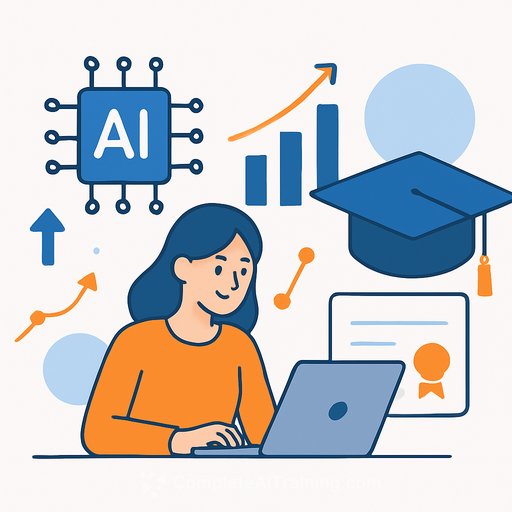
The University of Szeged is using AI to improve academic programs and make student support timely and measurable. This work sits inside a university-wide digital transformation funded by the EU's Recovery and Resilience Facility under the RRF-2.1.2-21 initiative, launched in July 2022 and set to complete in April 2026. The goal: better learning outcomes, smoother student pathways, and degrees that fit real labor market needs.
What's actually changing
AI now informs how SZTE analyzes student progress and plans curricula. Decisions are rooted in real data and observed outcomes rather than assumptions. That shift allows earlier interventions, clearer accountability, and faster iteration.
Measuring student success with real signals
The project started by defining what "success" means at a semester level and across a full degree. Analysts worked with anonymized data from Neptun-covering demographics, academics, admissions-and extended it with usage signals like library activity, mobility programs, student excellence initiatives, and e-learning engagement. Models were trained and tested on separate datasets and validated through classification matrices to reduce bias and confirm reliability.
Three analysis cycles moved from a 10-year historical view to a refined 2023-2024 model and then to updated datasets for better accuracy. Cross-institutional comparisons with the University of Sopron and the University of Miskolc helped separate local effects from general patterns and surface proven practices worth adopting.
Key findings you can use
- Based on 49,653 student records, the long-term model identifies students needing targeted support with 79.7% classification accuracy.
- First-semester performance is a strong predictor of long-term outcomes-early wins matter.
- Completing online courses correlates with stronger academic results, signaling motivation and consistent study habits.
From insights to action: Student Success Pathway Program
In 2025, the Directorate for Academic Affairs launched a unified student support framework that makes help simple to find and use. It covers well-being, academic progress, and career entry-early, relevant, and practical.
Pilot campaigns began with two faculties (Juhász Gyula Faculty of Education; Faculty of Science and Informatics). Phase three expanded to eight faculties and reached 4,000+ students with timely, personalized information. Focus groups with student ambassadors and pilot participants surfaced high-impact needs: clarity on language-exam requirements, stronger stress and time management, and better access to internships.
Campus Compass: One place for help
Campus Compass centralizes services across six areas: learning skills, personal effectiveness, career planning, community support, academic counseling, and financial assistance. Legal aid information is also available. Short and detailed questionnaires from the University Student Counseling Center help students quickly identify relevant support. Ongoing updates keep the site aligned with current needs.
Personalized support at scale by 2026
SZTE is building an automated communication and support system that triggers the right help at the right time-without adding administrative load. Every action is logged and measured, creating a clear loop from signal to intervention to outcome.
Planned work includes Power BI dashboards for start- and end-of-semester reviews, earlier outreach to at-risk groups, automated data loading, and additional communication channels. The target is a transparent, always-on support layer baked into everyday student life.
AI for program renewal: Stronger fit with jobs
AI also supports a deeper review of academic programs-moving beyond learning outcomes to assess how program content matches current employer expectations. The pilot shows most degrees deliver the required knowledge, while skills and attitudes are gaining more weight in teaching practice. This improves program clarity and global competitiveness.
Faculty workshops highlighted two quick wins: be more deliberate about how skills and attitudes are developed across courses, and raise technological awareness across programs. These directions are now being embedded into ongoing program development.
Skills Passport: Making competencies visible for hiring
To help students present their abilities in a format that fits HR workflows, SZTE is building a Skills Passport. Around 40,000 courses are being mapped via AI-based competency analysis. The result will help students communicate what they can do-and help employers find a better match faster. The initiative continues through 2026.
Why this matters for Education, IT, and Development teams
- Operate on signals, not hunches: Treat key moments (e.g., first semester) as make-or-break and support aggressively.
- Instrument everything: Track which services drive outcomes; cut what doesn't move the needle.
- Build student-facing UX like product teams: Fewer clicks, clearer choices, consistent follow-up.
- Make skills legible: Translate course outcomes into competencies that hiring systems can read.
- Close the loop: Use dashboards to run semesterly retros-then act on what you learn.
Project context
This work is part of Hungary's Recovery and Resilience Facility program (Project ID: RRF-2.1.2-21-2022-00012). For background on the facility and funding framework, see the European Commission's overview of the Recovery and Resilience Facility: RRF at a glance.
Further learning
If you're building AI capability across academic or student services teams, explore curated programs by role: AI courses by job.
Your membership also unlocks: