AI can close the creative measurement gap
You've got the audience, the media plan, and the budget locked. The weak link is still the creative - and that's where most marketers are guessing. We've mastered clicks and conversions, but we're still struggling to prove which creative elements drive profit, and why.
Fresh research from Google, Kantar, and Marketing Week shows the disconnect clearly: 8 out of 10 marketers say creative quality drives effectiveness, yet less than half measure its impact. If you need a reason to fix that, here's one: separate Kantar research shows high quality creative can drive 4.7X more profit.
Why measurement lags creative production
AI is already part of the creative workflow. 57% of marketers use it to produce assets, and 45% use it to create variants. But measurement hasn't caught up. Less than a quarter use any single tech-enabled tool to measure creative impact.
As Simon Atherley, head of marketing effectiveness at Kantar U.K., puts it, teams are squeezed on time and budget. Launch fast. Iterate faster. Analysis gets pushed to "later" - and often never happens. There's also a knowledge gap on tools and where to start. The fix: make creative measurement a default step, not an extra.
1) Pre-test creative for predictive insight and best practices
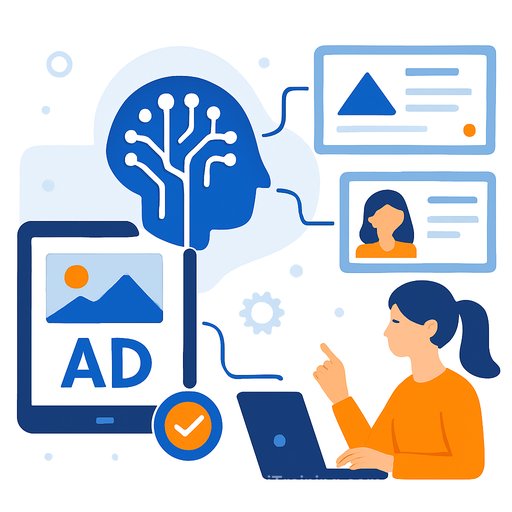
Pre-campaign testing lets you optimise before the first paid impression. One proven approach is using Google's ABCD framework (Attention, Branding, Connection, Direction) to stress-test early concepts. Prototyped AI agents, powered by Gemini, can scan storyboards or rough cuts, score them, and flag risk areas before production costs stack up.
Think of a major launch with three routes. Upload each cut. Get a predictive score for brand recall or purchase intent, plus plain-language notes like "strong first three seconds, unclear call to action." Iterate. Tighten. Only fund the creative with the highest odds of moving the metrics you care about.
- Run AI checks against ABCD during script and storyboard - not just during post.
- Set a quality bar: anything below your score threshold gets reworked or cut.
- Document the feedback and the changes made so those learnings compound.
2) Link creative impact to business goals
Most reports stop at impressions. That's a problem. Ten impressions could be 10 people once, or one person 10 times. If your goal is growing reach, those outcomes are nothing alike.
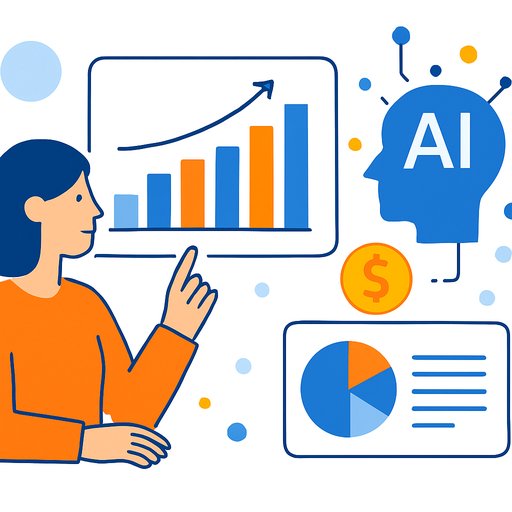
Modern MMMs like Google's Meridian can ingest both reach and frequency, and then tie creative quality to ROI. That lets you predict outcomes, not just read them after the fact.
- Find the frequency "sweet spot" by brand and by creative, so you avoid oversaturation and waste.
- Feed your best-performing creative (from pre-tests) into your plan with the right reach and frequency to hit goals.
- Integrate creative predictions into your MMM so finance can see how quality shifts ROI, not just cost.
As Atherley notes, layering creative quality into MMM can change the conversation. One client saw up to a 4X difference in sales uplift between bottom and top performing campaigns. That's not a minor tweak - that's material to growth.
3) Build a data loop with AI
AI gets good at what you feed it. Without a feedback loop, it will keep optimising for yesterday's audience. People evolve. Culture shifts. Brands that don't listen feel offbeat fast.
Create a loop that captures what works, stores it, and pushes it into the next brief. If ads featuring people outperform product-only shots by X%, that should change scripts, casting, and story arcs - not just a single edit. Tools like NotebookLM can store tests, results, and notes, then surface the right insight on demand.
- Centralise learnings: message, opening frames, audio cues, length, CTA clarity, brand presence.
- Tag results by audience, platform, format, and objective (recall, CTR, conversions, profit).
- Review quarterly to prevent the echo chamber effect and refresh signals.
Unlock your budget with forecasted creative ROI
Shift the budget talk from "what we spent" to "what we'll earn." Predictive testing, MMM integration, and a clean data loop give you a credible forecast - in finance's language. That's how creative gets the investment it deserves.
One last stat worth keeping: 51% of marketers have seen budgets rise after focusing on effectiveness measurement. Prove the value of the work, and the budget follows.
Quick start checklist
- Add an AI pre-test step to every brief (ABCD review and predictive scoring).
- Set hard gates: no production without a minimum creative quality score.
- Map each asset to a business goal and expected reach/frequency band.
- Feed creative quality metrics into your MMM (e.g., Meridian) to forecast ROI.
- Build a shared library of learnings and refresh it every quarter.
Resources
- Kantar: Creative effectiveness research and tools
- Marketing mix modeling (overview)
- AI certification for marketing specialists (practical training)
Sources
Google/Kantar/Marketing Week, U.K., The Language of Effectiveness, n=1,091 online survey, Mar. 17, 2025-Apr. 8, 2025. Additional Kantar analysis on creative quality and profit impact.
Your membership also unlocks: