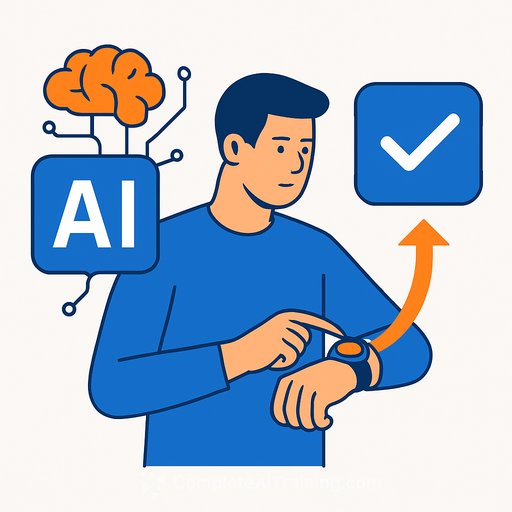
Closing the AI Intent-to-Execution Gap: A PR Playbook for Wearable Devices (NASDAQ: WLDS)
Wearable Devices was featured in a recent NetworkNewsAudio piece focused on a problem most AI stories miss: the intent-to-execution gap. Advanced models can reason, but outdated input methods slow them down and strip away context. This is the opening for a clear, ownable narrative-one that connects human intention directly to AI-driven action.
The company's ai6 Labs initiative proposes a neural ecosystem that decodes biological signals into machine-readable data-a kind of digital nervous system. Pair that with consumer products like Mudra Band and Mudra Link, and you get touch-free, gesture-based control across operating systems and XR environments. For PR teams, this is a rare chance to position interface innovation as the unlock for AI's next phase.
Why this matters for communications
Most AI coverage centers on model size and benchmarks. The bottleneck is human input. Tie Wearable Devices' story to interface latency and context loss, and you have a crisp angle that reframes AI performance around user intention, not just computation.
Narrative pillars to anchor your messaging
- The gap: Traditional input (keyboard, touch, voice) adds latency and drops context, capping AI autonomy.
- The fix: A neural input layer that reads biological signals and translates intention into action in real time.
- Proof in market: Mudra Band and Mudra Link enable touchless, intuitive device control across OS and XR.
- Go-to-market: Dual path-direct-to-consumer products plus enterprise licensing and collaborations.
- Acceleration: ai6 Labs brings research, products, and AI together to speed ecosystem development.
Message house (ready to use or adapt)
- Headline: Closing AI's intent gap with neural input, from wrist to XR.
- Subhead: Wearable Devices translates biological signals into machine-readable data so AI can act with context and speed.
- Proof points: Mudra Band/Mudra Link for consumer control; enterprise solutions for AR/VR/XR and smart environments; Nasdaq-listed (WLDS/WLDSW); ai6 Labs to unify research and productization.
Media angles to pitch
- AI's next constraint isn't compute-it's the interface. Here's how neural input reduces friction.
- From gestures to intent: What a "digital nervous system" means for XR productivity and accessibility.
- Enterprise ROI: Faster workflows and hands-busy use cases where voice/touch fall short.
- Human-centered AI: Keeping people in the loop without slowing the loop.
Reporter questions to prep for
- Privacy and security: What biological signals are captured? How are they processed on-device vs. in cloud? What's encrypted?
- Accuracy and latency: Benchmarks for signal decoding, error rates, and response time across use cases.
- Safety and compliance: Applicable standards, certifications, and regional data rules.
- Accessibility: Support for different mobility profiles; left/right hand; inclusive design choices.
- Developer ecosystem: SDKs, APIs, and how partners extend functionality in XR and smart environments.
- Enterprise integration: Compatibility with major XR platforms, IT management, and rollout playbooks.
Tactics and assets to prioritize
- Short demo clips showing intent-to-action speed vs. keyboard/voice in real workflows.
- Side-by-side use cases: gaming, productivity, field operations, and XR training.
- Customer pilots with measurable outcomes (time saved, error reduction, task completion).
- Founder/CTO Q&A on the "capabilities overhang" created by legacy interfaces.
- Clear privacy one-pager and security architecture diagram for enterprise buyers.
Measurement that actually signals traction
- Share of voice in "AI interfaces," "neural input," and "XR productivity" categories.
- Quality tech press and analyst mentions that cite the intent gap narrative.
- Engagement on demo assets: completion rate, click-through to spec sheets/SDK.
- Inbound enterprise inquiries and partner sign-ups tied to ai6 Labs.
- Sentiment shift from "novel wearable" to "enabling layer for AI."
Useful references
Context for PR teams
Wearable Devices positions neural input as the missing link between human intent and AI execution. The story gains credibility with real products (Mudra Band, Mudra Link), an enterprise pathway, and a dedicated R&D-to-product engine in ai6 Labs. Anchor every pitch to measurable gains: less latency, more context, broader accessibility.
If you're mapping this into your content calendar, pair product demos with education on why input, not just model size, decides user experience. That's how you lead the conversation instead of reacting to it.
Next steps
- Create a message brief and FAQ aligned to the pillars above; circulate to spokespeople and partners.
- Build a 60-90 second demo reel highlighting intent speed in two priority use cases.
- Package a privacy/security explainer for enterprise press and analyst briefings.
- Develop a mini media kit for XR reporters with SDK notes and integration specifics.
- Level up team skills with resources on AI communications: AI for PR & Communications
Company snapshot
Wearable Devices Ltd. develops AI-powered neural input technology using proprietary sensors, software, and algorithms. Consumer products Mudra Band and Mudra Link enable touch-free, intuitive control across operating systems, with applications in gaming, productivity, and XR. The company operates both direct-to-consumer and through enterprise licensing and collaborations, and trades on Nasdaq under WLDS (shares) and WLDSW (warrants). The ai6 Labs ecosystem brings research and product development under one roof to speed adoption.
Your membership also unlocks: