Humanoid, AI-driven agents are reshaping hotel operations
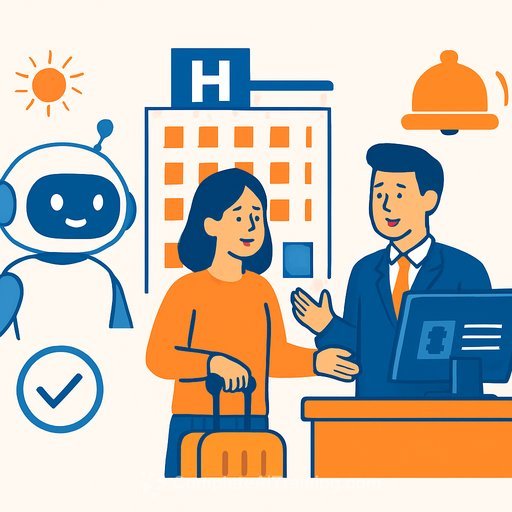
What looked like sci-fi in the lobby is turning into standard operating procedure. As competition intensifies and guest expectations increase, humanoid AI agents are moving from novelty to necessity for properties that want speed, consistency and clear brand differentiation.
Travelers are signaling they're comfortable meeting AI at reception. For operations leaders, this is less about shiny tech and more about throughput, accuracy and the ability to scale service without ballooning payroll.
Why this shift is happening now
- Labor pressure: higher wages, persistent shortages and unpredictable demand curves.
- Tech maturity: better NLP, conversation management and robotics enable reliable automation and real personalization.
- Capital allocation: reports indicate AI investment jumped roughly 250% year over year in 2025, with about 42% of hospitality firms spending $1M-$5M. Yet nearly 60% still worry about trust and accuracy-so proof beats promises.
Where humanoid agents fit in the operation
- Front desk relief: check-in/out, ID verification handoffs, key activation, amenity explanations, late-night FAQs.
- Wayfinding and logistics: luggage guidance, meeting-room directions, shuttle schedules.
- Local info at scale: neighborhood tips, transport, weather, events-consistent and always available.
The payoff: shorter queues, fewer routine interruptions and more bandwidth for staff to handle exceptions, resolve conflicts and create moments guests actually remember.
Brand impact you don't have to buy
A humanoid agent isn't just a tool; it's part of the guest story. People film it, post it, review it. That organic visibility builds distinction without more ad spend-if the experience is smooth and useful.
Audit your operation before you automate
- Map the end-to-end guest flow from pre-arrival to departure. Flag bottlenecks and repeat complaints.
- Tag tasks that burn staff time but add low perceived value-prime candidates for automation.
- Protect human-touch moments (problem solving, empathy, high-stakes recovery) by Design, not by accident.
Define handoffs clearly: what the AI handles, what staff handles and how escalation works in seconds, not minutes.
Build the tech backbone first
- Network: high-bandwidth Wi-Fi and failover to support constant data exchange with PMS, POS and cloud services.
- Security and compliance: enterprise-grade controls and clear policies for guest data. Review obligations under GDPR (or your local equivalent) before you pilot.
- Integrations: real-time access to reservations, room status, billing and loyalty data so conversations lead to actions.
- Latency: use edge processing where needed for fast check-in peaks and high foot-traffic moments.
Prepare your team to work with AI
- Training: quick playbooks for redirecting guests, supervising the agent and fixing common issues on the spot.
- Mindset shift: position the AI as a coworker taking low-value tasks off their plate-not a competitor.
- Ownership: name "AI champions" per shift; create a simple escalation tree; track learnings weekly.
If your staff needs practical upskilling on AI basics and workflows, explore role-based options at Complete AI Training.
Make the tech part of the guest experience
- Visibility: clear signage and prompts-"Check in here," "Ask for local tips," "Scan ID to get your key."
- Engagement: invite questions, photos and quick surveys; reward usage with small perks during pilot.
- Balance: ensure human staff are in sight to assist immediately when the situation calls for judgment.
Pilot, measure and improve
- Start narrow: one property, one lobby, or night shifts first.
- Track the right KPIs: average check-in time, queue length, first-contact resolution, CSAT/NPS, upsell conversion, staff overtime hours, incident/error rates.
- Tune weekly: update scripts, refine routing rules, adjust integrations and signage based on real usage patterns.
"Working" doesn't just mean the agent runs. It means guests feel service got faster and easier, and your team ends the shift with more energy than they started.
A 90-day rollout blueprint
- Weeks 1-2: baseline metrics, map processes, define use cases and compliance checks.
- Weeks 3-6: select vendor, integrate with PMS/POS/loyalty, sandbox tests, security review.
- Weeks 7-10: staff training, soft launch in off-peak windows, live monitoring, daily standups.
- Weeks 11-12: analyze KPIs, guest feedback and staff input; fix gaps; expand or pause with a clear ROI read.
The bottom line for operations
Humanoid AI agents help you absorb demand spikes, standardize routine service and free your best people for the moments that actually win loyalty. Move deliberately, measure everything and design for human-machine collaboration from day one. That's how you stay competitive without adding complexity you'll regret later.
Your membership also unlocks: