From observability to reasoning: AI agents are catching bugs before they ship
Software teams are moving past dashboards and alerts. The new focus is AI systems that reason about failures, pinpoint root causes with high confidence, and stop risky changes before they hit production.
That's the promise behind Sentry's move from pure observability to proactive prevention with a reasoning layer. As Sentry CEO Milin Desai put it, "The ability to take this deep context that Sentry has around what's broken, to then apply it with AI, gives you 95% accuracy in root cause. That's the closed-loop that our customers have wanted."
What's changing
Agentic AI isn't just spotting exceptions; it's predicting where code will fail and recommending fixes. This flips the workflow from reactive firefighting to automated guardrails that protect releases.
Desai didn't mince words: "We are catching hundreds of thousands of bugs right now. Preventing them, not catching them, preventing them from getting shipped, which is a whole different value play."
Inside Sentry's Seer: A reasoning layer, not another dashboard
Sentry began with error monitoring. Today, it ingests performance traces, logs and session replays across web, mobile and backend services. Seer taps that production context and adds reasoning on top.
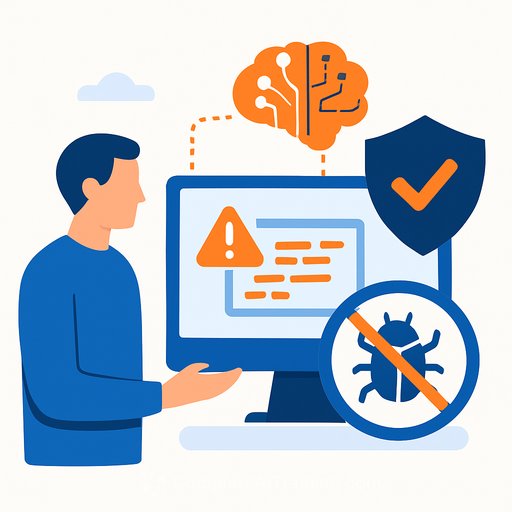
Once Seer identifies the root cause, it can engage an in-house coding agent to propose and write the fix - and increasingly, to block risky changes before they merge. It's embedded in the developer workflow, not bolted on as an afterthought.
How this shows up in your workflow
- Seer correlates errors, traces and logs to find the real source of a failure.
- It flags risky commits and suggests targeted fixes tied to the code path and service boundaries.
- Your coding agent drafts a patch, linked to the exact stack trace and telemetry evidence.
- CI gates enforce policy: high-risk changes require an AI-reviewed or human-approved fix before merge.
The result: fewer noisy alerts, faster remediation, and fewer surprises after deploy.
Why teams care
- Root-cause clarity: Less guesswork, fewer handoffs.
- Speed: AI drafts the first fix while you validate edge cases.
- Prevention: Guardrails catch defects before they hit real users.
- Focus: Engineers spend more time building features, less time triaging incidents.
Practical rollout checklist
- Connect production telemetry: errors, traces, logs, session replays.
- Map services to owners so AI can route fixes and PRs to the right teams.
- Define CI policies: block merges on high-risk signals; auto-open PRs with AI-generated diffs.
- Keep feedback in the loop: require brief human notes on accepted/rejected AI fixes to improve future suggestions.
- Start with a low-risk service to calibrate signal quality, then expand.
Metrics that matter
- Time to root cause (TTx): From alert to pinpointed cause.
- Mean time to restore (MTTR): Incident duration end-to-end.
- Pre-merge defect rate: Bugs stopped before release.
- False positive rate: How often "risky change" flags are wrong.
- Developer time saved: Hours reclaimed from triage and rework.
Guardrails and risk
- Data boundaries: Limit training data to what's necessary and scrub PII.
- Explainability: Require rationales with every AI recommendation.
- Policy enforcement: Critical paths demand human approval, even if AI is confident.
- Secure SDLC: Pair AI checks with secure coding standards and dependency scanning. See the OWASP Top 10 for common risk patterns.
What to watch next
Desai expects AI support to become standard: "I expect every developer to be AI-assisted." As more teams adopt agentic workflows, the gap will widen between orgs that prevent issues upfront and those that still chase alerts after release.
Events like AWS re:Invent are spotlighting this shift: less toil, more automation, and tighter loops between production signals and code changes.
If you're planning your next step
- Pilot AI reasoning on one service with clear KPIs.
- Integrate with your CI/CD and code review flow on day one.
- Set explicit rules for when AI can block a merge or open a PR.
If you want structured learning paths for AI-assisted development and coding agents, explore our curated programs by role here: Complete AI Training - Courses by Job.
Your membership also unlocks: