AI is taking Healthcare from 'One Size Fits All' to 'One Patient-One Solution': Governor
A focused programme on "Effective Use of AI in the Healthcare Sector" brought clinicians, administrators, and policymakers together at Lok Bhawan, Dehradun. Hosted by Hemwati Nandan Bahuguna Uttarakhand Medical Education University, it featured Governor Lieutenant General Gurmit Singh (Retd) as Chief Guest and Health Minister Dr Dhan Singh Rawat.
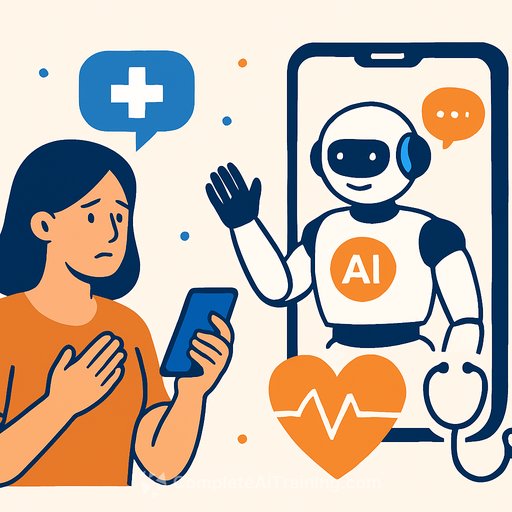
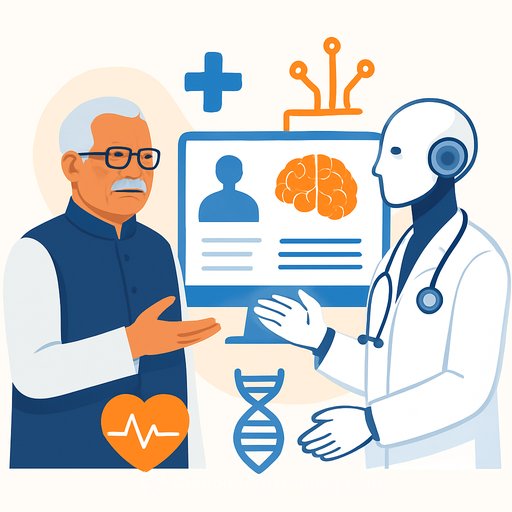
The message was direct: AI is here, and the systems that learn to use it well will pull ahead. The Governor underlined how AI is strengthening care delivery-supporting accurate diagnosis, earlier detection, personalised treatment, and faster research-moving healthcare from one-size-fits-all to one patient-one solution.
What experts shared
CV Venkata Subrahmanyam, COO at CRMIT (Bengaluru), outlined practical use cases and walked participants through the AI-driven "Dhanvantari" application for clinical workflows. Dr Ankur Mittal, Head of Urology at AIIMS Rishikesh, discussed AI-enabled diagnosis and treatment planning, with insights specific to urological cancers.
Why this matters in Uttarakhand
Terrain and distance make access a constant challenge. The Governor stressed that AI can extend quality care to hilly and remote areas-through remote triage, clinical decision support, imaging assistance, and continuous monitoring-without adding burden to already stretched teams.
The ask was simple: adopt the tools, keep clinicians in the driver's seat, and build confidence through real-world use.
Practical moves for healthcare teams
- Start with high-yield, low-risk use cases: automated triage, radiology reads as a second opinion, and chronic disease risk scoring (diabetes, CKD, hypertension).
- Use AI as an assistive layer, not a replacement. Keep human-in-the-loop review for any diagnostic or therapeutic decision.
- Stand up remote consult pathways for last-mile care. Pair telemedicine with AI symptom checkers and Translation for local languages.
- Pilot oncology decision support for consistent staging, pathway selection, and follow-up scheduling-especially relevant to urological cancers.
- Tighten referral management with AI-driven prioritisation, so critical cases move first and avoid avoidable delays.
- Improve operational reliability: forecasting for bed capacity, blood products, essential drugs, and staffing.
- Invest in data quality. Clean inputs lead to safer outputs and fewer false alarms.
Guardrails that keep patients safe
- Clinical validation and continuous audit: benchmark tools on your population and recheck performance after updates-see Research.
- Bias and equity checks: measure error rates across age, gender, and geography; fix gaps before scale-up.
- Privacy and security by default: encrypted data flows, strong access controls, and clear retention policies.
- Clear consent and explainability: patients should know where AI is used and clinicians should see "why" a suggestion was made.
- Interoperability: integrate with national digital health rails so data moves securely across facilities.
For broader context, see WHO's guidance on AI ethics for health (WHO) and India's Ayushman Bharat Digital Mission for health data interoperability (ABDM).
90-day action plan
- Pick two use cases with clear ROI (e.g., ER triage and chest X-ray QA). Define success metrics upfront.
- Form a small governance group: clinician lead, IT lead, quality/safety officer, and a patient voice.
- Map data sources and permissions; establish a de-identified sandbox for pilots.
- Run limited pilots in one department or district hospital; compare against baseline metrics weekly.
- Train users with short scenario-based drills; document failure modes and escalation paths.
- Vendor due diligence: model provenance, update policy, security posture, and support SLAs.
- Plan for low-connectivity settings: offline-first features and SMS/IVR fallbacks for remote areas.
Policy footing and momentum
Health Minister Dr Dhan Singh Rawat noted that departmental schemes will incorporate the seminar's expert inputs. Over the past 25 years, the state has stepped forward in medical education and service delivery-AI can help compress the next decade of progress into fewer steps if we execute with discipline.
University leaders, including Vice-Chancellor Prof Arun Kumar Tripathi, outlined programme objectives and thanked participants. The event drew administrators, faculty, and students-exactly the mix needed to turn pilots into practice.
Upskilling your team
If your clinicians and managers need structured AI literacy paths by role, explore curated options here: AI courses by job.
Bottom line: Use AI as a supportive tool to extend clinical judgment, personalise care, and reach patients in difficult terrain. Small pilots, strong guardrails, and clear metrics will get you real results-fast and safely.
Your membership also unlocks: