From paper-based realty to smart cities: 10 ways AI and PropTech are transforming real estate in India
India's real estate engine is moving from manual, paper-heavy processes to connected, software-first operations. A joint report by KPMG and NAREDCO, "The Role of Real Estate in Viksit Bharat @2047," lays out how digital governance, AI-enabled workflows and advanced construction tech are changing the entire lifecycle-approvals, build, operations and transactions.
"Digital governance and land digitisation are reducing friction and improving reliability. Artificial intelligence (AI) and property technology (PropTech) are changing how approvals are managed, how construction is delivered and how assets perform across their lifecycle," said Parveen Jain, President of NAREDCO.
"Technology and sustainability are no longer optional. Digital governance systems, land record digitisation, AI-enabled processes and modern construction methods are reducing friction, improving transparency and raising build quality and speed," said Neeraj Bansal, Partner and Head-India Global, KPMG in India.
1) From weeks of lease review to minutes of AI scanning
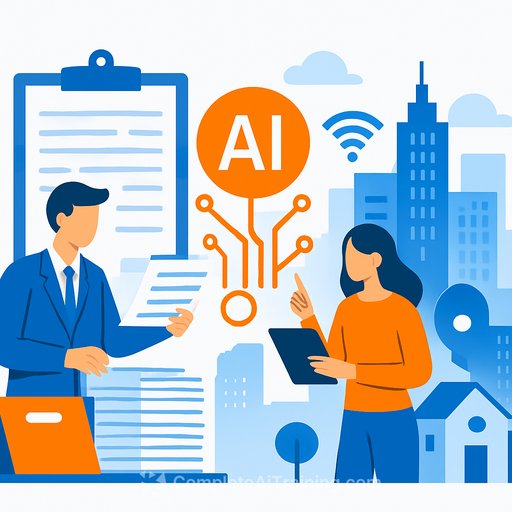
Lease abstraction that used to drag on for weeks now takes minutes. AI tools parse large contracts, extract critical clauses, flag risks and surface tenant behaviour signals-speeding deals without dropping the ball on compliance.
2) From subjective screening to data-driven tenant assessment
Tenant screening is moving to objective, model-driven scoring. By analysing financial patterns and risk profiles, owners and operators can reduce defaults and set terms that reflect real credit strength.
3) From static buildings to smart, self-optimising assets
AI-driven building systems adjust lighting, cooling and heating in real time based on occupancy and weather. The result: lower operating costs, more stable comfort and clearer energy benchmarks portfolio-wide.
4) From reactive repairs to predictive maintenance
IoT sensors and predictive analytics catch failures before they become outages. Teams plan downtime, extend equipment life and cut emergency callouts-improving NOI and tenant experience at the same time.
5) From paper-based approvals to digital governance
The Online Building Permission System (OBPS), introduced in 2023 and now live in 2,465 cities and towns (including all AMRUT cities), lets builders submit plans digitally with online scrutiny and minimal human interface. Land record digitisation and Aadhaar-linked systems are accelerating dispute resolution and improving transparency, while platforms like PM GatiShakti and ULIP add planning and logistics visibility. See PM GatiShakti for the national infrastructure data backbone.
6) From fragmented infrastructure to integrated data platforms
PM GatiShakti integrates infrastructure data from 574 central ministries and 363 states/UTs across ~1,700 layers to enable coordinated planning. ULIP crossed one billion digital transactions by August 2025, giving developers and operators cleaner line-of-sight on supply chains and last-mile movement.
7) From conventional property records to blockchain-based ownership
Blockchain is entering title, contracts and ownership models. Secure digital records, self-executing smart contracts and shared ownership structures are lowering transaction costs and reducing middlemen in select pilots.
8) From manual construction to digital collaboration
Building Information Modelling (BIM) brings architects, engineers and contractors onto a single model to eliminate clashes before groundbreak. Drones and site IoT improve surveying, QA/QC and safety monitoring-cutting rework and schedule risk.
9) From traditional construction to 3D printing and prefabrication
Under GHTC-India lighthouse projects, prefabrication and 3D construction delivered 1,000 homes in 10-12 months versus ~24 months via conventional methods-about 50% faster. Autonomous equipment, AI-guided machinery and wearables are boosting site productivity while reducing human error.
10) From paper-based urban planning to smart cities
India's Smart Cities Mission has mobilised about Rs 1.64 trillion, integrating water, mobility, waste and energy systems. Under AMRUT, 461 cities are onboarded for GIS-based master planning and 229 towns have completed master plans, with satellite imagery, GPS and drone surveys replacing manual records. Learn more at the Smart Cities Mission.
What this means for developers, investors and operators
- Prioritise quick wins: pilot AI lease abstraction, tenant risk scoring and energy optimisation in one or two assets before scaling across the portfolio.
- Standardise your data: adopt BIM on all new projects, stream telemetry from BMS/CMMS, and structure asset data so predictive maintenance models have something to work with.
- Plug into governance rails: use OBPS where available, push for e-stamping and digital title checks, and align site selection with corridor and logistics data from integrated platforms.
- Tighten vendor due diligence: verify model accuracy, data privacy, uptime SLAs and open APIs. Avoid lock-in by insisting on exportable data and clear integration paths.
- Upskill your teams: equip property, leasing and projects staff with practical AI and data skills. See AI for Real Estate & Construction for applied resources.
- Model lifecycle ROI: reframe budgets from pure capex to total cost of ownership. Blend SaaS OPEX, retrofit costs and efficiency gains into one investment view.
The KPMG-NAREDCO report is clear: AI, PropTech and digital governance aren't side projects-they're the operating system for India's next phase of urban growth. From leases to land records, smart meters to smart cities, the winners will be the teams that move first, measure outcomes and scale what works.
Your membership also unlocks: