How AI Will Impact InsurTech in 2026
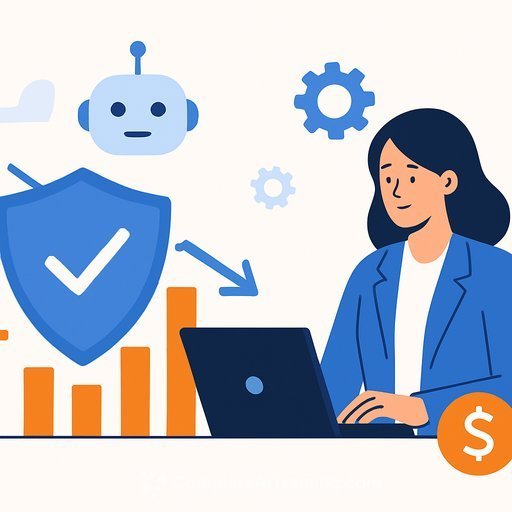
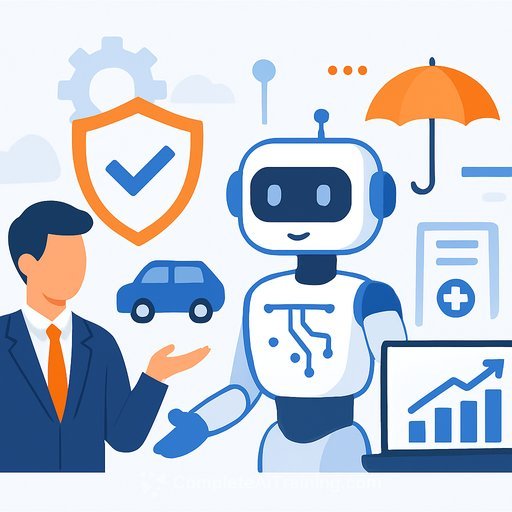
2026 is the year AI moves from labs to the core stack. Pilots and proofs of concept are giving way to production systems across underwriting, pricing, compliance, and customer engagement. The mandate is simple: do more, faster, with tighter controls-without bloating headcount.
Industry leaders see the same pattern: efficiency first, then smarter decisions, then better customer experiences. The winners will be the teams that turn AI into dependable, auditable workflows-not side projects.
Why 2026 is different
Economic pressure is forcing change. Health insurance costs keep climbing, and current models aren't holding up. As one leader noted, some US families now pay more for health insurance than for housing-an unsustainable trend that accelerates adoption of practical automation and better risk decisions.
The technology is also ready. Large insurers have the infrastructure, model governance, and data pipelines to run AI safely at scale. Voice-based interfaces are gaining traction, and the long-term collision of life, health, and healthcare continues as large language models speed up research and product design.
From pilots to production-grade systems
After years of experimentation, AI is now being wired into core workflows. Expect fewer demos and more SLAs. Underwriting, pricing, and compliance are first in line because they have clear rules, measurable outcomes, and big cost centers.
- Underwriting: automated data intake, risk signals, and straight-through decisions for low/medium complexity cases
- Pricing: faster model iteration, guardrails for fairness and explainability, and integrated approvals
- Compliance: automated policy checks, audit trails, and documentation embedded into daily operations
Operational efficiency: where ROI lands first
The near-term payoff is reducing friction. Teams are wiring AI into system integrations, repetitive checks, and routine decisions. Result: fewer manual touches, shorter cycle times, and consistent outputs across lines and regions.
As this sticks, org design shifts. Workflows become queue-driven, with humans handling exceptions, edge cases, and judgment calls-where they add the most value.
Front office comes into play
Early adoption focused on the middle and back office because customer-facing models lacked reliability. That gap is shrinking. Sales, service, and engagement are now viable targets, with AI improving speed to response and consistency at scale.
- Sales: guided discovery, instant quotes, and dynamic eligibility checks
- Servicing: policy changes, billing issues, and claims updates handled in-channel
- Engagement: proactive outreach around renewals, gaps, and cross-line opportunities
Customer experience: ready for prime time
Group benefits, P&C, auto, and homeowners are seeing clear traction. The priority is controlled automation-systems that escalate cleanly, log every action, and respect regulatory constraints. Expect measurable lifts in first-contact resolution and NPS, with fewer transfers and handoffs.
Voice and conversational interfaces
Voice is becoming the most natural entry point for customers and advisors. With reliable transcription and intent detection, insurers can turn long calls into structured data, trigger workflows, and auto-generate compliant summaries.
For teams building these capabilities, see practical resources like Speech-To-Text.
What leaders are saying
Peter Ohnemus (dacadoo): Costs are unsustainable, and 2026 marks the move to full production for AI-especially among large insurers. Expect more voice-driven experiences and deeper links between life/health insurance and healthcare.
Yasser Rajwani (Earnix): The biggest near-term impact is efficiency in underwriting, pricing, and compliance. Automating checks and integrations will reshape daily workflows and speed up decisions without adding headcount.
Ido Deutsch (Producerflow): AI is shifting from employee tools to customer-facing use. Sales, servicing, and engagement are now viable as models mature and controls improve.
Simha Sadasiva (Ushur): Customer-facing automation is ready for broader deployment across benefits and P&C lines, with a strong emphasis on control and compliance.
Governance, controls, and regulatory fit
Production AI needs clear ownership, risk scoring, and transparent decision logic. Build lineage: where data came from, which model acted, and why it made that call. Keep humans in the loop for high-impact outcomes.
Regulatory momentum will continue-from model risk governance to explainability and bias controls. For context on upcoming rules, review the EU's AI Act.
Practical starting points for 2026
- Pick 3-5 workflows with clear KPIs (e.g., quote turn time, loss ratio lift, compliance breach rate) and ship them to production
- Instrument everything: quality gates, audit trails, escalation logic, and shadow-mode testing before go-live
- Standardize prompts and model configs; version them like code
- Create a playbook for exceptions and adverse decisions; make appeals fast and traceable
- Train frontline teams on new handoffs and how to interpret AI outputs
What to measure
- Cycle time: quote, bind, claim FNOL-to-payment
- Touch reduction: percent of cases resolved without manual intervention
- Decision quality: loss ratio impact, leakage reduction, fairness metrics
- Customer outcomes: FCR, NPS/CSAT, abandonment rates
- Compliance health: audit pass rate, documentation completeness, explainability
The bottom line
2026 isn't about flashy demos. It's about dependable systems that reduce friction, improve risk selection, and deliver consistent customer experiences at scale. Teams that lock down governance and ship production workflows will set the standard for the next decade.
For more practical use cases and tooling across underwriting, claims, pricing, and compliance, explore AI for Insurance.
Your membership also unlocks: