Agentic AI and the Next Leap in Industrial Operations
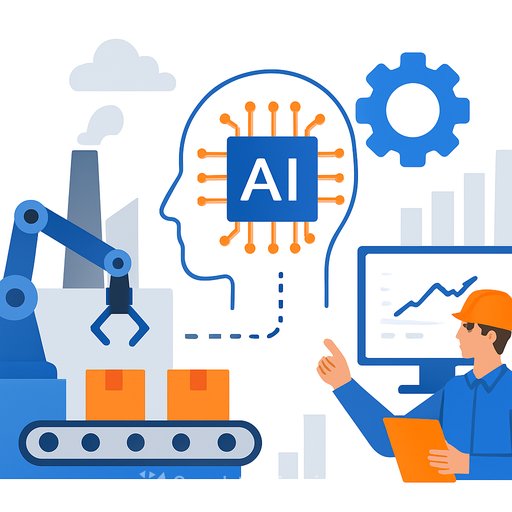
Agentic AI blends data intelligence with operational autonomy. It's the logical next step after sensors, analytics, and automation - moving from alerts and scripts to systems that can perceive, reason, plan, and act within guardrails.
For operators, this shift means fewer fire drills, tighter control over variability, and outcomes tied directly to goals like uptime, yield, and energy cost per unit.
From Connected Assets to Foresight
The first wave of digitization connected assets - sensors, SCADA, historians - to give teams visibility. Predictive models then turned signals into foresight, flagging failures before they struck.
That improved uptime and reduced maintenance spend. But these systems were passive. They told you what might happen; people still had to coordinate the response.
Automation Delivered Control, Not Adaptability
PLCs, DCS, and robotics standardized quality and removed repeatable errors. Great for consistency and speed, less great when conditions shifted.
Supply hiccups, weather swings, or drifting equipment behavior meant reprogramming or manual workarounds. Execution was fast, but logic was fixed.
What Makes Agentic AI Different
- Continuous, contextual decisioning: Agents monitor telemetry, schedules, supply data, and environment signals in real time and adjust actions on the fly.
- Goal-oriented autonomy: Instead of fixed scripts, agents pursue outcomes like "maximize energy efficiency" or "minimize unplanned downtime," simulate options, learn, and optimize.
- Collaborative ecosystems: Maintenance, scheduling, and quality agents coordinate with each other and with humans. Think "negotiate a low-demand window, order parts, and keep tolerances in bounds."
DataOps: The Backbone for Agents
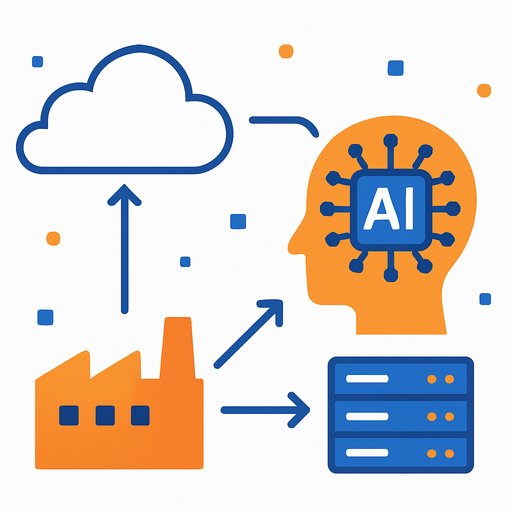
Predictive analytics could live with periodic, siloed data. Agentic AI can't. It needs clean, timely, contextual streams from OT, IT, and external sources (weather, logistics, energy markets).
That level of integration depends on mature DataOps - not just pipelines, but shared definitions, trust, and control.
- Unify tags and context: a shared catalog for assets, sensors, and business entities.
- Move to streaming where it matters: events for anomalies, state changes, and schedules.
- Quality SLAs: freshness, completeness, and drift monitoring with automated alerts.
- Lineage and auditability: know what data and models drove each action.
- Secure OT/IT bridges with least privilege and network segmentation.
High-Impact Use Cases for Operations
- Autonomous process optimization: Agents fine-tune setpoints across lines based on live feedback, not just static models.
- Dynamic maintenance orchestration: Detect anomalies, check inventory, order parts, and book a service window at the lowest-cost time.
- Resource-aware production: Balance output, energy use, and material availability to hit sustainability and cost targets.
- Digital operators: Natural-language assistants that explain reasoning, propose plans, and support engineers on shift.
Guardrails, Safety, and Oversight
Autonomy doesn't mean a free-for-all. Define clear limits, escalation paths, and audit trails. Keep humans in control of goals and constraints; let agents own the execution detail.
- Control limits and hard constraints (safety, quality, compliance).
- Human-in/on-the-loop for mode changes, exceptions, and boundary conditions.
- Change control for policies and models with rollback plans.
- Cybersecurity aligned to industrial standards like ISA/IEC 62443.
- Risk and bias checks aligned to the NIST AI Risk Management Framework.
How to Get Started in 90 Days
- Pick one asset class or line with clear pain (e.g., high energy variance or chronic downtime).
- Set one goal and 3-5 KPIs (e.g., -15% unplanned downtime, -8% kWh/unit, +3% OEE).
- Map data: OT tags, CMMS, MES/ERP, schedules, and any external feeds. Close gaps.
- Stand up an agent layer with guardrails; connect read-only first, then controlled write access.
- Simulate decisions with historical replays and a digital twin or offline test cell.
- Start in "recommendation" mode, then move to "autonomous within limits."
- Run an A/B or phased rollout, measure weekly, and lock in wins before scaling.
Metrics That Matter
- Unplanned downtime and MTTR.
- OEE and first-pass yield.
- Energy use per unit and peak demand charges.
- Schedule adherence and changeover time.
- Maintenance cost per asset and spare turns.
The Bottom Line
We've moved from connected data to predictive insights, and now to systems that can act on those insights. Engineers set the goals and boundaries; agents handle the constant adjustments.
Start small, measure hard, and scale what proves value. If you want structured learning paths for operations-focused AI skills, explore our courses by job.
Your membership also unlocks: