AI in Workplace Safety: What EHS and Lab Leaders Need to Know
The American Society of Safety Professionals (ASSP) has released a new white paper, "AI and the Evolving Role of EHS Professionals," outlining how AI is beginning to change safety practice. Early adopters are already using tools for better reporting, faster risk identification, and smarter decision-making. The message is clear: AI can lift administrative load while experienced professionals guide interpretation and oversight.
For laboratories, where hazard monitoring, compliance, and incident prevention drive daily operations, this shift supports digital transformation and predictive risk management. The opportunity is practical-use AI to cut repetitive work, surface trends earlier, and reallocate expert time to high-impact safety initiatives.
Where AI Is Already Delivering Value
- Analyze incident and inspection data to spot patterns and precursors
- Automate documentation and reporting workflows
- Develop training materials and procedures based on real events
- Improve communication across teams and shifts
Result: Less manual admin, faster insights, and more time for strategic risk reduction.
From Reactive Response to Predictive Safety
Machine learning, connected sensors, and video analytics can flag issues before they become incidents. In labs, this can mean real-time visibility into exposure levels, equipment performance, and procedural compliance.
- Early alerts on exposure thresholds trending high
- Anomalies in fume hood or freezer performance
- Recurring deviations from SOPs during specific shifts or tasks
- Near-miss patterns that suggest future incidents
Predictive insights help managers prioritize controls, tune procedures, and strengthen programs before problems escalate.
Human Expertise Remains the Control
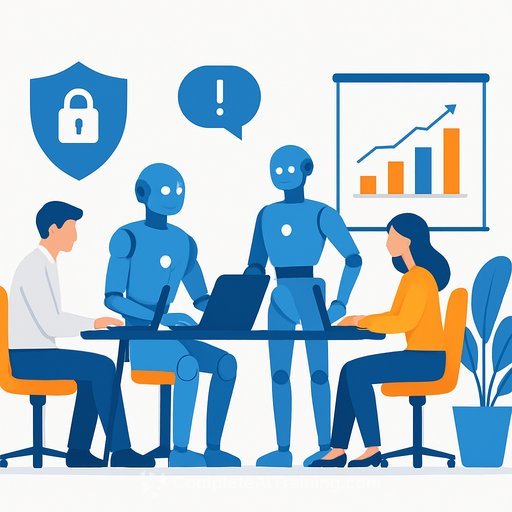
Automation does not replace EHS professionals. It amplifies judgment with better data and faster analysis. Trust, transparency, and accountability require experienced oversight-from defining safe operating thresholds to validating model outputs and closing the loop with corrective actions.
Leadership should set clear expectations for ethical use, documentation, and continuous improvement as AI becomes part of daily safety work.
ASSP's Five Strategic Focus Areas
- Strategic leadership: Tie AI projects to safety goals and business outcomes.
- AI competency development: Upskill teams on data literacy, prompts, and oversight.
- Research initiatives: Test use cases, measure impact, share findings.
- Trusted authority and guidance: Standardize methods, templates, and controls.
- Ethical leadership: Ensure transparency, bias checks, and worker protections.
What This Means for Laboratory Leaders
- Automate compliance documentation and reporting
- Use analytics to enhance hazard monitoring and trend detection
- Identify leading indicators tied to high-risk tasks and processes
- Improve training delivery and access with AI-generated materials
- Support a proactive safety culture with timely, data-backed insights
90-Day Implementation Playbook
- Days 0-30: Pick one use case (e.g., incident trend analysis). Map data sources, owners, and data quality. Define success metrics (e.g., time-to-report, near-miss capture rate). Align with IT/Legal on privacy and security.
- Days 31-60: Pilot with a small team. Keep human-in-the-loop reviews. Document prompts, models, and procedures. Train supervisors and techs on new workflows.
- Days 61-90: Evaluate results against KPIs. Address false positives/negatives. Update SOPs and RASCI. Plan scale-up with clear guardrails and an audit trail.
Guardrails to Put in Place
- Data quality: Standard naming, timestamps, and fields for incidents and inspections.
- Bias and fairness: Check that risk flags don't over- or under-index certain roles or shifts.
- Privacy and security: Access controls, encryption, and clear retention policies.
- Explainability: Keep model assumptions and decision criteria documented.
- Accountability: Define who reviews, approves, and acts on AI outputs.
Metrics That Matter
- Leading indicators: unsafe condition rate, near-miss reporting rate, corrective action closure time
- Lagging indicators: TRIR, DART (monitored but not the sole focus)
- Process metrics: time-to-generate reports, inspection coverage, overdue actions
- Model health: false positive/negative rates, drift, and revalidation cadence
- Productivity: administrative hours saved and redeployed to prevention
Next Steps and Resources
If you're building capability inside your team, start with practical training and reference frameworks that support responsible adoption.
- AI Learning Path for Safety Engineers
- AI for Science & Research
- NIST AI Risk Management Framework
- NIOSH on Leading Indicators
Bottom Line for Management
AI is already useful in EHS-especially for labs-but it needs clear goals, solid data, and human oversight. Start small, measure what matters, and scale what works. That's how you turn technology into fewer incidents, faster decisions, and stronger safety performance.
Your membership also unlocks: