The Rise of AI/ML Software Development in 2025
Artificial intelligence and machine learning have moved from buzzwords to baseline. They're embedded in products, processes, and roadmaps - not as add-ons, but as core architecture. If you build software in 2025, you're building with AI/ML.
We're Living in the AI/ML Era
Across healthcare, finance, entertainment, and logistics, AI/ML is no longer experimental. It's production-grade. Teams use it to cut costs, personalize experiences, and find signal in messy data. Behind every "smart" feature is a new development paradigm that blends engineering, data science, and operations.
AI/ML Goes Mainstream
What used to live in research labs now ships in sprints. Voice interfaces, fraud detection, recommendations, and even self-correcting code are standard. Cloud infrastructure, open source frameworks, and plentiful labeled data shortened the path from idea to deployment.
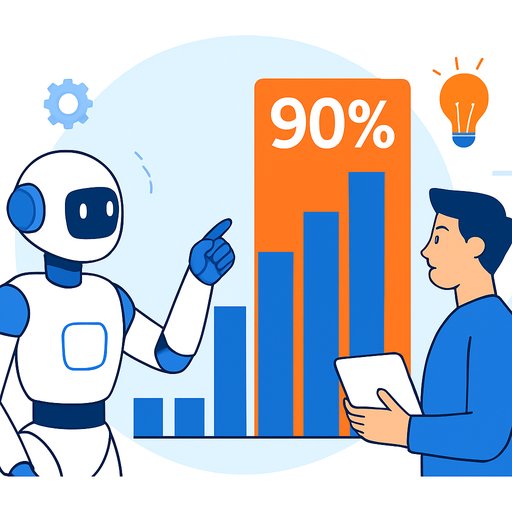
AI has shifted from optional to mission-critical. SMBs are hiring first-time ML engineers. Non-tech sectors - agriculture, construction, public services - are building AI capabilities. Demand is up. Talent is tight. Innovation cycles are shorter than ever.
How Engineering Work Is Changing
The old model: write rules, write code, ship features. The new model: curate data, train models, test predictions, and architect around intelligence. Teams now start with the question, "Can the model do this better?" That's why auto-tagging, dynamic pricing, and conversational UX show up in almost every modern app.
Roles have blended. Developers own architecture and scale. Data scientists tune models. MLOps engineers automate pipelines and deployment. It's agile with scientific method baked in - experiments, iterations, and continuous validation.
Ukraine's Ongoing Impact
Ukraine's developer community continues to be a force in AI/ML. Strong math foundations, deep systems knowledge, and adaptability make these teams effective on problems from computer vision to analytics and automation. Many global companies rely on Ukrainian engineers to ship scalable systems that merge deep learning with business intelligence.
Tech Stack: What Actually Changed
- Open source as default: TensorFlow, PyTorch, Scikit-learn, and the Hugging Face ecosystem make it possible to stand up strong baselines in hours. You can fine-tune, evaluate, and deploy with minimal friction.
- Cloud MLOps: AWS SageMaker, Google Vertex AI, and Azure ML Studio turn training, evaluation, and deployment into repeatable workflows. This pushes teams to focus on problem framing and data instead of hardware.
- Low-code AI: DataRobot, H2O.ai, and Google AutoML bring product managers and analysts into the loop. More people can prototype intelligent features without blocking on engineering bandwidth.
Where AI/ML Is Delivering Real Value
- Healthcare: Models flag anomalies in scans and assist diagnostics with high sensitivity. ML-driven discovery shortens R&D timelines and reduces cost exposure.
- Finance: From real-time fraud scoring to underwriting and risk models, AI/ML underpins core fintech workflows. Latency and interpretability are first-class requirements.
- Retail and eCommerce: Personalization engines, demand forecasting, and smart inventory run on data. Computer vision streamlines warehouse operations and QC.
- Transportation and Logistics: Routing, predictive maintenance, and autonomy rely on continuous learning. City systems already use live predictions to adjust schedules.
Operational Challenges You Can't Ignore
- Data privacy and ethics: Bias, opacity, and intrusive data use erode trust. Teams are standardizing on transparent datasets, explainability, and federated learning. Treat this as core engineering work, not a checkbox.
- Talent gap: Demand outruns supply, especially for smaller teams. Upskill internally, pair engineers with data scientists, and document reusable patterns to reduce dependency on unicorn hires.
- Model maintenance: Concept drift breaks silent. You need monitoring, alerts, and scheduled retraining. MLOps isn't optional; it's the guardrail keeping models useful and compliant.
Practical Playbook for Dev Teams
- Start with the metric: Define the KPI the model must move (e.g., approval rate, LTV, latency). Make it visible in dashboards from day one.
- Data contracts: Lock down schemas, SLAs, and lineage. Enforce versioning for datasets and features to make experiments reproducible.
- Evaluate like production: Test on live-like slices, skewed distributions, and edge cases. Add guardrails for fairness and safety in CI.
- Own the lifecycle: Automate training, validation, deployment, and rollback. Monitor drift, feature quality, and cost per inference.
- Upskill continuously: Cross-train engineers on ML fundamentals and MLOps patterns to reduce bottlenecks and improve handoffs.
What's Next
AI-assisted development: Coding copilots suggest functions, tests, and refactors. Expect tools that propose architectural changes, threat models, and even user stories tied to product goals.
Hyper-personalization: Apps adapt to each user's context, goals, and constraints - not just segment-level behavior. Feature flags meet on-device inference for privacy and speed.
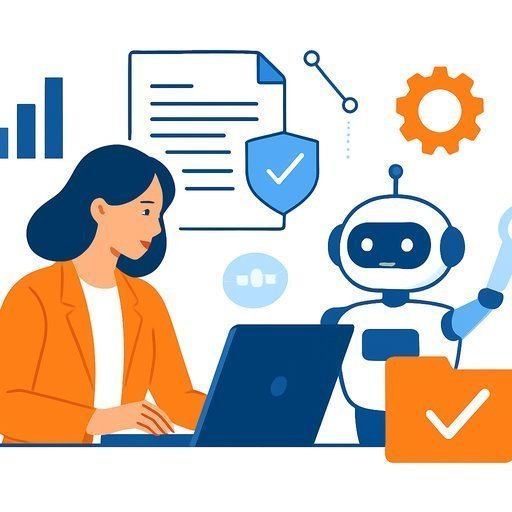
Regulation by default: Compliance is shifting left. The EU AI Act and similar policies will shape data collection, model transparency, and deployment practices. Treat governance as code.
The Bottom Line
AI/ML development isn't a fad. It's the new foundation of software. Teams that invest in talent, infrastructure, and ethics will ship better products, faster - and keep them reliable as data and regulations change.
If you're building out skills for your team, explore focused certifications to speed up adoption and standardize best practices: Complete AI Training - Popular Certifications.
Your membership also unlocks: