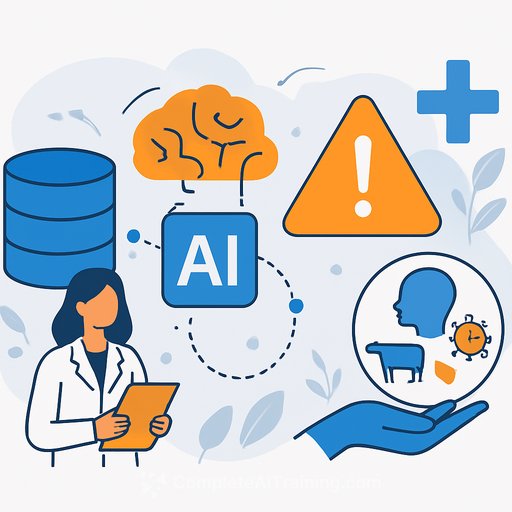
Smarter Prevention with AI and One Health
Healthcare is under pressure. Aging populations, chronic disease, climate-related illness, and antimicrobial resistance are driving demand faster than systems can respond. The answer is a shift from reactive care to proactive prevention, and that requires a One Health approach that links human, animal, and environmental data into one view.
That vision has been hard to deliver because data lives in silos. Today, advances in AI, cloud platforms, and geospatial analysis make it feasible to integrate insight across sectors and act earlier-without compromising privacy.
The bottleneck: fragmented data
By 2030, 1.4 billion people will be 60 or older. Chronic conditions keep climbing. Climate change fuels heat stress, respiratory illness, and vector-borne diseases like dengue. Meanwhile, antimicrobial resistance could claim close to 2 million lives per year by 2050 if left unchecked.
Yet data is scattered across hospitals, public health, environmental monitoring, and veterinary systems. Privacy rules such as GDPR are essential, but different formats, coding standards, and unstructured notes make a complete view difficult. Without that view, prevention is delayed and resources get wasted.
AI + geospatial intelligence make One Health operational
Cloud-based, privacy-compliant platforms can unify clinical, environmental, and veterinary data while preserving consent and control. Geographic Information Systems add context by mapping pollution, climate patterns, water quality, and animal migration alongside human health.
AI and GenAI bring practical capability to this stack:
- Translate and standardize medical and environmental terminologies for cross-sector interoperability
- Extract insights from unstructured notes and reports to fill data gaps
- Detect spatiotemporal patterns (e.g., air quality hotspots aligned with respiratory clusters)
- Generate predictive models for outbreak risk, climate-related health impacts, and AMR trends
With the right interface, clinicians and policymakers can ask natural-language questions and get real-time, explainable answers. That lowers the barrier to insight and speeds up preventive action.
Case in practice: Campania's Sinfonia Salute
The Region of Campania is building a digital ecosystem that connects healthcare with environmental monitoring, civil protection, and other agencies. The platform, Sinfonia Salute, runs on a secure, GDPR-compliant cloud foundation and unifies data from hospitals, labs, and regional services.
It supports vaccinations, screenings, and chronic disease management while integrating GIS, AI, and predictive analytics for real-time surveillance. The system tracks respiratory, oncological, and metabolic diseases alongside environmental factors such as water quality, PFAS contamination, and climate effects-surfacing early risk signals to guide policy.
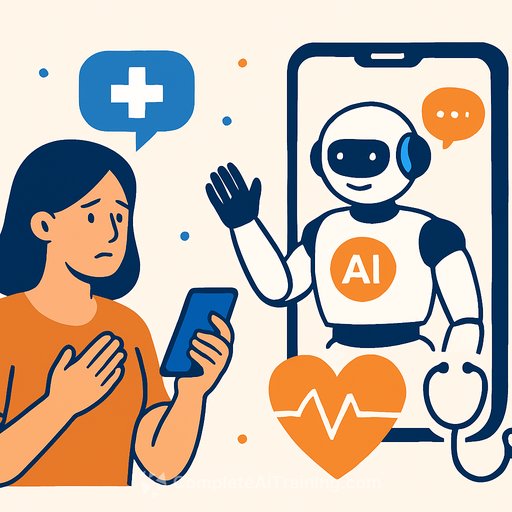
An AI-enabled virtual health assistant extends prevention to citizens with guidance on nutrition, activity, and screening-aligned with WHO and national guidelines. According to the 2023 Gimbe Report, Campania reached compliance across Prevention, Community Care, and Hospital Care, improving by 11 points year over year.
What healthcare leaders can do now
- Break the silos: Stand up a privacy-by-design data platform with clear consent, purpose limitation, de-identification, and access controls.
- Align semantics: Adopt shared ontologies and code systems across health, veterinary, and environment so AI models can compare like with like.
- Start where value is clear: Prioritize use cases like respiratory surveillance with air quality overlays, vaccine outreach, and chronic disease risk stratification.
- Build cross-sector governance: Include public health, environmental agencies, clinicians, and data protection officers to set policies and escalation paths.
- Insist on explainability: Use models with transparent features, audit trails, and bias checks; keep humans in the loop for critical decisions.
- Skill up the workforce: Train teams on geospatial tools, privacy engineering, prompt design for GenAI, and clinical interpretation of AI output.
- Measure impact: Track earlier detection, reduced admissions, screening uptake, cost per capita, time-to-intervention, and equity across communities.
Guardrails you'll need
Apply data minimization, purpose limitation, and strong consent management. Use de-identification and, where possible, federated analytics to keep sensitive data local. Enforce role-based access, continuous monitoring, and incident response. Pair models with human oversight and fairness testing to prevent widening disparities.
The big picture
Prevention depends on intelligence. A One Health strategy supported by AI and geospatial insight helps organizations see risks earlier, respond faster, and keep populations healthier.
For background on One Health concepts, see the WHO overview. If your team needs practical upskilling on AI for healthcare operations and population health analytics, explore curated programs and resources on AI for Healthcare.
Your membership also unlocks: