Orchestrating the Perfect Trip: Real-Time Personalization for Hospitality and Events
Travel plans don't move in straight lines anymore. A spark of interest on Sunday night becomes a plan, then a reroute, then a room change. If context drops, the whole experience feels clunky. That's why teams across airlines, hotels, and events are leaning into real-time personalization backed by journey orchestration and AI for Operations.
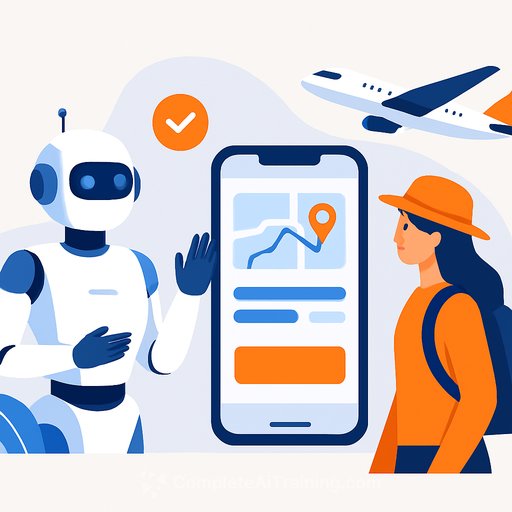
People are ready for it. In the UK, around 18% of travelers aged 25-34 already use AI tools like ChatGPT to plan. Globally, most say generative AI helps them plan faster, and many would pay for an assistant that stays with them the whole way. Personalization isn't a nice-to-have; it's the thread that connects discovery, booking, on-property moments, and the review that follows.
Why real-time personalization now?
The average traveler deals with handoffs that don't connect: start a booking on one site, change a seat on another, then check in on a hotel app that can't find the same loyalty ID. Somewhere in those hops, context gets lost.
Airlines still lean on legacy distribution that struggles with live data. Newer standards like IATA NDC and Offers & Orders make dynamic offers and bundles possible, but adoption is uneven. Irregular ops still trigger reactive shuffles instead of proactive care. When a flight changes, the tech often lags behind the passenger.
OTAs lose context between inspiration (usually social or search) and booking. That gap hurts conversion, and it weakens the handoff to airlines and hotels. In hospitality, data is scattered across loyalty, PMS, guest feedback, and OTA pipes. On-property teams don't see the full picture. Post-stay outreach often falls back to generic templates.
What results look like when orchestration works
Turn inspiration into conversion
Planning is where most travelers bounce. Too many choices, shifting prices, and decision fatigue. DER Touristik used Adobe data tooling to adapt recommendations live as people browse. Result: a 270% lift in conversions and longer sessions. It doesn't feel pushy; it simply keeps pace with intent.
Expedia's AI trip builder lets people plan inside ChatGPT, editing routes and hotels like a conversation. Booking.com uses generative AI to guide choices with fewer steps. The flow is shorter, and the system feels like it already knows what matters.
Manage disruption before it becomes a complaint
Nothing tests loyalty like delays and missed connections. With real-time orchestration, systems watch weather, crew schedules, and airport congestion. They predict issues and act: rebooking options, vouchers, and ground transfer updates without forcing a queue.
United's ConnectionSaver uses predictive AI to hold flights for tight connections, saving more than 3.3 million connections so far. Virgin Atlantic rebuilt its contact network on Genesys Cloud, cutting handle times by half and lifting CSAT by 28 points in a year. About 20% of conversations now resolve automatically, freeing agents to focus where empathy matters.
Grow on-property revenue and loyalty
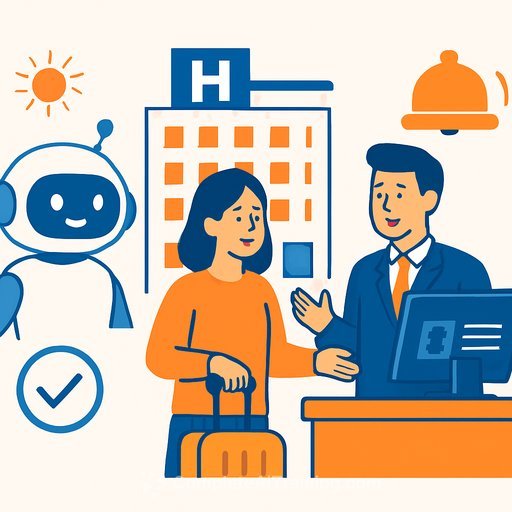
The moment a guest arrives, expectations peak. If systems are connected, the app check-in can surface status, trip purpose, and past preferences. The right offers show up at the right time-no guesswork for the front desk.
Choice Hotels linked contact-center insights with Medallia analytics and found missed upsell moments and friction points. Fixing small gaps improved revenue and guest satisfaction. Marriott is testing AI tools that help event planners shape room layouts, costs, and venue options in minutes instead of days. Speed feels like attention.
Turn experience into advocacy
After checkout, response time is everything. Real-time orchestration routes feedback to the people who can act. High ratings trigger timely thank-yous or referral nudges. Low scores prompt immediate follow-up with context.
LATAM Airlines connected every channel through Medallia to watch sentiment across the trip. Leaders sometimes reach out personally to strong signals. Over four years, NPS rose by 23 points, digital satisfaction by 30, and contact-center scores by nearly 50. Visibility changes behavior.
Increase operational efficiency without adding headcount
Disconnected tools burn hours. Agents repeat questions. Insights arrive after the moment passes. Orchestration moves repetitive work out of the way and gives teams a single view that's actually useful.
Northern Trains automated simple workflows and pulled over a million records into one platform, reclaiming roughly 4,000 working hours a year. Carnival UK brought in NICE CXone copilots to spot abandoned carts, upsell timing, and sentiment in calls. Agents act sooner and with more confidence. Conversion goes up; stress goes down.
A practical playbook for hospitality and events teams
- Map micro-moments: pre-stay, pre-event, arrival, on-property, in-venue, post-stay. List the decisions guests make and the triggers you can detect.
- Unify the minimum viable profile: loyalty ID, contact info, consent, preferences, stay history, channel history, open cases. Don't wait for perfect data-ship the basics and iterate.
- Instrument signals: web and app events, Wi-Fi sign-on, check-in method, room readiness, POS receipts, call reasons, event registration changes.
- Decide and act in real time: define triggers (VIP arrival, room not ready, weather risk, group booking change, cart abandonment). Set clear actions and SLAs for each.
- Automate three high-impact flows first:
- Pre-arrival upsell based on purpose and status (late checkout, lounge, room placement).
- Disruption care (proactive rebooking, vouchers, transport updates).
- Post-stay follow-up (service recovery within hours, referral or loyalty nudge for promoters).
- Make agents smarter: surface next-best action, relevant context, and one-click credits. Keep humans on empathy and exceptions.
- Close the loop weekly: review outcomes, tweak triggers, retire what doesn't move the needle.
Metrics that matter
- Direct booking rate and conversion by segment
- Cart abandonment and time-to-book
- Attachment rate for ancillaries and average revenue per guest
- Queue time, handle time, first contact resolution, service recovery time
- CSAT, NPS, and complaint recurrence
- Rebooking time during disruptions and connection saves
- Post-stay survey response rate and referral lift
Tech stack checklist
- Customer data platform or real-time data layer that can ingest streams and update profiles on the fly
- Decisioning/orchestration engine for triggers, rules, and next-best action
- Messaging pipes across email, SMS, app push, WhatsApp, and web
- Contact center platform with AI assist and knowledge surfacing
- On-property integrations: PMS, POS, keyless entry, housekeeping, ticketing for events
- Travel standards: support for NDC and Offers & Orders where relevant
- Privacy, consent, and audit by design
From static itineraries to living trips
Guests don't expect perfection. They expect awareness. Notice what they need, respond in the same moment, and avoid sending them back to step one.
That is the promise of journey orchestration: quiet, timely moments that keep the experience connected. The result is fewer apologies, more trust, and teams that spend their energy where it counts.
If you're building skills for your team, explore the AI Learning Path for Business Unit Managers. Or take the next step with a focused playbook for intelligent customer journey orchestration and start testing your first three flows this quarter.
Your membership also unlocks: