AI upgrades enterprise treasury management: from spreadsheets to real-time control
Most corporate treasuries still run on spreadsheets while the rest of finance moves to automation. That gap is now a liability. As CM Grover of IBS FinTech put it: "IBS FinTech has identified the gap in the CFO's office in corporations where they are managing their most critical information system, that is, treasury management on Excel."
Teams execute trades on platforms like Bloomberg, Reuters, or 360D, then manually key data into spreadsheets, and finally post entries into the ERP. Slow. Error-prone. Impossible to scale. In volatile markets, this is the difference between controlled risk and costly surprises.
Why treasuries stall on AI
AI isn't a quick fix-it's a multiplier on clean, connected data. Without it, models guess and dashboards mislead. Grover was blunt: "It is not by talking you can do AI in treasury. You have to create that underlying data set that has to be digitised and automated."
- Manual handoffs break real-time visibility and weaken hedging decisions.
- Data inconsistencies trigger compliance issues and audit headaches.
- Talent spends time fixing files instead of managing liquidity and risk.
The foundation: digitised, automated data
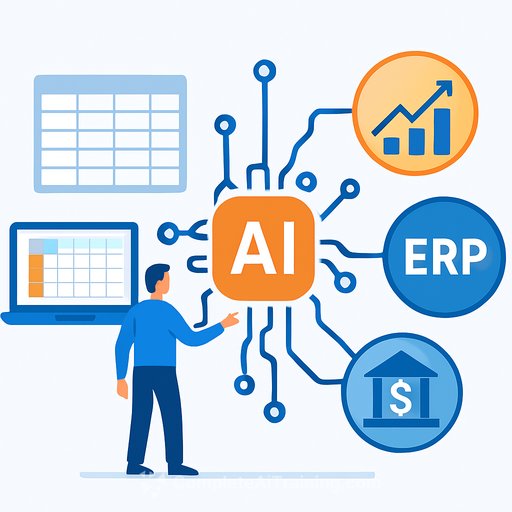
Integrate your treasury management system (TMS) directly with the ERP, trading platforms, and banks. That creates a clean, continuous data pipeline. IBS FinTech, an Oracle-based TMS provider operating for 19 years and ranked among the top five globally by an IDC report, integrates with Oracle Cloud, NetSuite, and Fusion to enable this connected setup.
With direct integrations, executives see cash and exposures in real time, can act on liquidity opportunities, and catch compliance violations early. This is the baseline AI needs-no shortcuts.
Oracle Cloud ERP is a common anchor point for these integrations across finance operations.
Architecture that works
- Data sources: Banks, ERPs, trading venues, market data feeds.
- TMS as the orchestrator: Centralizes cash, risk, and investments; standardizes data.
- APIs and secure connectivity: Real-time flows to reduce manual touchpoints.
- Master data and controls: Single source of truth for accounts, entities, instruments, and limits.
- Audit and compliance: Trace every change; enforce segregation of duties.
Priority AI use cases once the pipes are in place
- Cash forecasting: ML models using bank balances, AR/AP, payroll, and seasonality.
- Anomaly and fraud detection: Spot outliers in payments, confirmations, and reconciliations.
- Hedging recommendations: Optimize tenor, instrument mix, and timing for FX and commodities.
- Scenario and stress testing: Predict exposure under rate, FX, and price shocks.
- Reconciliation assistance: NLP to categorize and resolve breaks faster.
Step-by-step playbook for executives
- Map the current flow: From trade execution to ERP posting; flag every manual step.
- Prioritize integrations: Direct TMS-to-ERP and TMS-to-bank connections before dashboards.
- Standardize data: Chart of accounts, counterparty IDs, instrument taxonomy, and calendars.
- Automate controls: Limits, approvals, confirmations, and reconciliations as system rules.
- Pilot a high-value use case: Start with cash forecasting; measure forecast error and STP rate.
- Scale connectivity: Add trading venues and market data feeds; remove spreadsheet bridges.
- Enable the team: Upskill treasury analysts to own data quality and AI-assisted workflows.
- Institutionalize governance: Model validation, monitoring, and clear ownership.
Metrics to prove value in 90-180 days
- Forecast accuracy: MAPE for 7/30/90-day cash forecasts.
- Straight-through processing (STP): % of transactions posted without manual touch.
- Cycle time: Trade-to-posting and close time reductions.
- Exception rate: Breaks per 1,000 transactions and time-to-resolution.
- Risk outcomes: VaR stability, limit breaches, and hedging P&L slippage.
Governance and risk
- Data ownership: Treasury ops owns golden data; IT secures and monitors flows.
- Model risk management: Document assumptions; version models; track drift.
- Access and controls: Enforce least privilege; audit every critical action.
- Resilience: Backups, failover, and tested incident response.
- Retention and privacy: Align to policy and regulator expectations.
Why now: volatility isn't slowing
Geopolitical and economic shocks are hitting commodities, equities, and FX simultaneously. Grover expects volatility to rise, not fade. Ashish Kumar's point stands: modernizing treasury with AI-anchored to the ERP-builds financial resilience when it matters most.
Vendor and integration considerations
- Prebuilt connectors to major ERPs (Oracle Cloud, NetSuite, Fusion) and leading banks.
- Open APIs, event-driven architecture, and proven STP rates.
- Security certifications (e.g., SOC 2, ISO 27001) and strong audit capabilities.
- Transparent data model, sandbox environments, and clear implementation timelines.
- Total cost of ownership that includes bank connectivity and maintenance-not just licenses.
Bottom line
AI will not fix a spreadsheet problem. Fix the data first. Wire your TMS directly into the ERP, trading platforms, and banks. Then apply AI to forecasting, detection, and decision support. That's how treasury moves from reactive reporting to real-time control-and how the CFO's office earns back time, certainty, and better risk-adjusted returns.
Want to upskill your finance leadership team? Explore the AI Learning Path for CFOs and our curated insights on AI for Finance.
Your membership also unlocks: