AI Comes To Tower Field Operations: PowerX Launches AI Maintenance
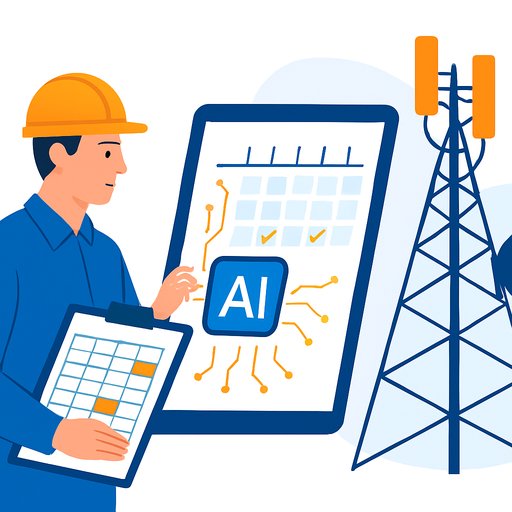
- AI scheduler assigns technicians using skills, proximity, availability, and required parts
- Live re-optimization adapts to delays, priority shifts, and inventory changes
- Workflows, workforce, and inventory management unified in one platform
Tower maintenance has been run on spreadsheets, calls, and best guesses for too long. That creates longer MTTR, repeat visits, missed SLAs, and rising OpEx. PowerX is stepping directly into that gap with AI Maintenance - an operations platform that automates dispatch decisions and ties field execution to inventory and workflows.
What changes in day-to-day operations
Instead of fixed routes and static calendars, the scheduling engine assigns jobs based on a live view of technician skills, distance, availability, and the exact parts required. If a site escalates, a part goes out of stock, or a tech gets delayed, the plan adjusts in real time. Back-office effort shifts from manual coordination to exception handling and service assurance.
How the AI scheduler works
- Scans all open jobs and constraints: SLAs, skills, travel times, site access, and spares
- Builds optimal assignments and routes, then re-optimizes as conditions change
- Pushes clear diagnostics, steps, and parts info to the technician's device before roll-out
This reduces wasted travel and "arrived without the part" failures. It also smooths handoffs between planning, warehouse, and field.
One platform for workflows, workforce, and inventory
PowerX AI Maintenance integrates ticketing, mobile work management, and parts tracking. Ops teams get a live map of work-in-progress, parts movement, and SLA risk. Technicians see the right tasks, in the right order, with the right materials - which lifts first-time fix rates.
Andrew Schafer, CEO of PowerX, put it plainly: "Maintenance in the tower industry has been held back for years by static schedules and disconnected tools. PowerX AI Maintenance ensures the right work is done at the right time by the right people, improving workflows and outcomes at scale."
Why this matters for Ops
The issue isn't headcount. It's orchestration. Disconnected tools and static plans create friction - slow MTTR, missed SLAs, and unnecessary truck rolls. Treating maintenance as a data and optimization problem removes that friction at the source.
Expected impact on core KPIs
- MTTR: Down, via smarter dispatch, accurate parts, and fewer handoffs
- First-time fix rate: Up, via pre-visit diagnostics and inventory checks
- SLA compliance: Up, via priority-aware scheduling and live re-optimization
- OpEx: Down, via shorter routes, fewer repeats, and tighter labor utilization
Closing the loop from monitoring to execution
PowerX has been strong in monitoring and analytics. AI Maintenance extends that into field execution, creating a closed loop: performance data drives maintenance prioritization, and execution data feeds back into analytics. Over time, the system learns which patterns cause delays and which workflows deliver better outcomes.
Implementation notes for operations leaders
- Start with high-volume, SLA-critical tasks; pilot in one region before scaling
- Clean your data: technician skills, parts catalogs, site access rules, and geolocation
- Integrate with existing ticketing and inventory systems to protect current process investments
- Define guardrails: SLA weights, max travel time, overtime limits, and escalation paths
- Coach the field on new workflows; measure adoption with first-time fix and schedule adherence
Availability and fit
PowerX AI Maintenance is available now, as a standalone or as part of the broader PowerX platform. As networks densify with 5G and edge sites, job volume and scheduling complexity will grow. An optimization layer becomes a practical necessity, not a nice-to-have. For operations leaders implementing AI Maintenance at scale, consider the AI Learning Path for Supply Chain Managers. For context on 5G build-outs, see 3GPP's 5G overview.
If your ops team is moving toward AI-driven maintenance and needs upskilling, explore role-based options such as the AI Learning Path for Production Planners.
Bottom line: fewer manual decisions, fewer repeat visits, tighter SLA control. That's what operations teams need to scale without adding complexity.
Your membership also unlocks: