Better Tomorrow: How OpenAI is reimagining education and inclusion for the digital age
At the Mint All About AI Tech4Good Awards & Summit in Mumbai, a candid conversation between Arundhati Bhattacharya (Salesforce South Asia) and Raghav Gupta (OpenAI, Education for India and Asia-Pacific) cut through the hype. The topic was simple and urgent: how generative AI can help India teach better, reach more learners, and keep learning authentic.
Educators are asking the right question: will students use AI to skip the hard parts of learning? The answer shared on stage was clear-technology has to guide thinking, not replace it.
The challenge: learning over shortcuts
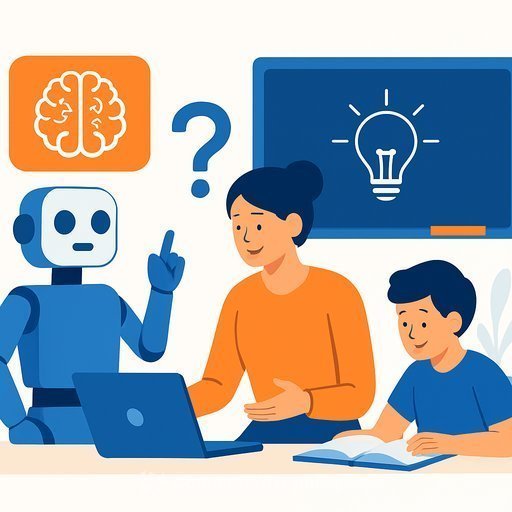
Bhattacharya voiced a common worry: students might use ChatGPT to spit out answers and avoid the grind of practice. Gupta agreed and outlined a direct response-Study Mode in ChatGPT. Switch it on, and the assistant stops handing out final answers. It acts like a tutor, nudging the student to think, reason, and get to the solution.
This feature grew out of feedback from Indian parents, teachers, and regulators. The principle is basic but non-negotiable: learning takes effort. Tools should support that effort, not erase it. OpenAI is leaning into school partnerships to help set norms for responsible use.
Education as the lever for scale
Education is the backbone for progress, and AI can extend high-quality learning far beyond elite institutions. Gupta noted that education is the top global use case for ChatGPT. India and the US lead in usage, with India at the front for student activity.
The bigger question is distribution. How do we get IIT/IIM-level quality thinking and materials into average classrooms? How do we build AI literacy so graduates are work-ready? That's the work ahead.
What educators can do right now
- Adopt a "Study Mode first" rule for take-home learning and revision.
- Redesign assignments to value reasoning, process, and reflection-not just final answers.
- Teach prompt craft, verification, and critique as core digital skills.
- Create clear classroom policies: where AI is allowed, where it isn't, and why.
- Use AI to generate varied practice sets and explanations at different difficulty levels.
Local context isn't optional
One theme kept returning: localisation. OpenAI is working with schools in remote regions to help teachers build context-rich materials. A school in Leh is training teachers to use ChatGPT for lesson content that reflects local realities-climate, culture, examples students actually see.
On the R&D side, OpenAI is partnering with IIT Madras to ensure model behavior and outcomes make sense for India. This is where policy, pedagogy, and technology need to move in sync.
Inclusion through language, voice, and vision
For inclusion at national scale, three levers matter: strong performance in Indian languages, cultural understanding, and pricing that schools and families can handle. Gupta shared a simple story: using Voice Mode with a phone camera to help a gardener diagnose a plant issue-in Hindi-by having the AI "see what you're seeing."
This has clear spillover for agriculture and vocational training. Think of a farmer getting instant help on crop issues, local weather, or market rates-without needing to read long pages of text. For many learners, voice and vision are the bridge.
To see where this is headed, review OpenAI's work on multimodal models like GPT-4o: Introducing GPT-4o.
The next three years: scale, context, safety
Gupta laid out a simple roadmap. First, scale usage the right way-teach people to use the tools effectively. This isn't a search bar; it's a thinking partner that needs good input and good habits.
Second, deepen contextual performance for India. OpenAI built INDQA, a 2,500-question evaluation with 300 Indian experts, to test whether models can handle our cultural and local nuances. That level of evaluation keeps us honest about what the tech can and can't do yet.
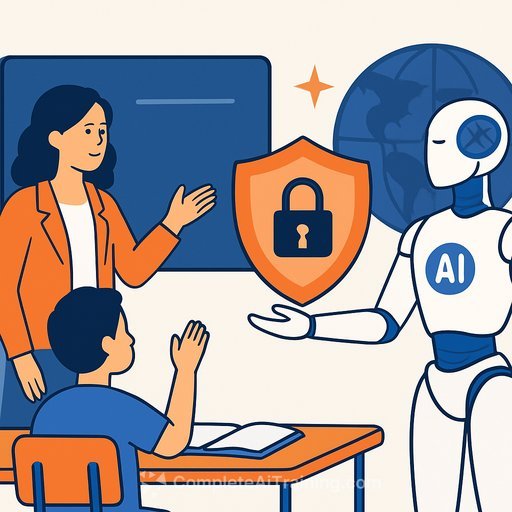
Third, make usage safe and responsible. Younger learners are already comfortable with AI. Our job is to set guidelines, model good use, and keep classrooms focused on skill-building and integrity.
Implementation checklist for this term
- Set a department-wide AI policy that distinguishes: learning aid, drafting aid, and prohibited uses.
- Standardize on Study Mode for practice, with students submitting thought steps or reasoning logs.
- Upgrade assessments: more oral defenses, project journals, and source attribution requirements.
- Build bilingual or regional-language pathways using AI for translation and explanation.
- Run teacher workshops on prompt craft, bias checks, and fact verification.
- Partner with local institutions for context-rich datasets and examples.
- Add privacy, citation, and academic integrity training to student onboarding.
Why this matters for Indian education
AI isn't a shortcut to learning; it's a scaffold. Tools like Study Mode encourage productive struggle. Language and multimodal features widen access. Partnerships and evaluation frameworks like INDQA keep the technology grounded in Indian realities.
If we do this right, we lift quality and access at the same time-better materials, better pedagogy, and more confident learners entering the workforce. That's a future worth building.
Resources for educators
- Explore role-based upskilling paths: AI courses by job
- Browse new and practical AI courses: Latest AI courses
Note: The All About AI initiative mentioned above is an editorial program and the event was sponsored by Salesforce.
Your membership also unlocks: