Patients Are Asking AI First About Symptoms, Conditions, and Treatments
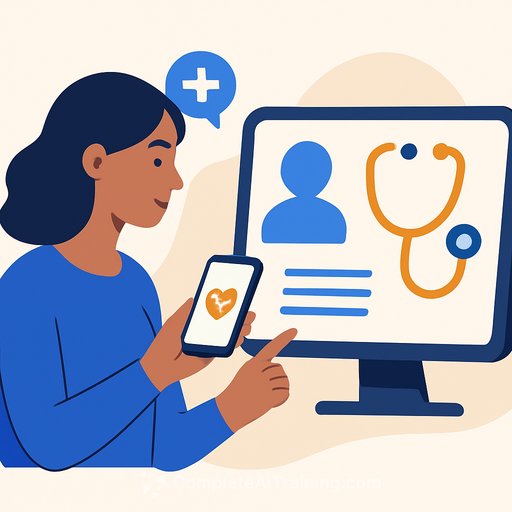
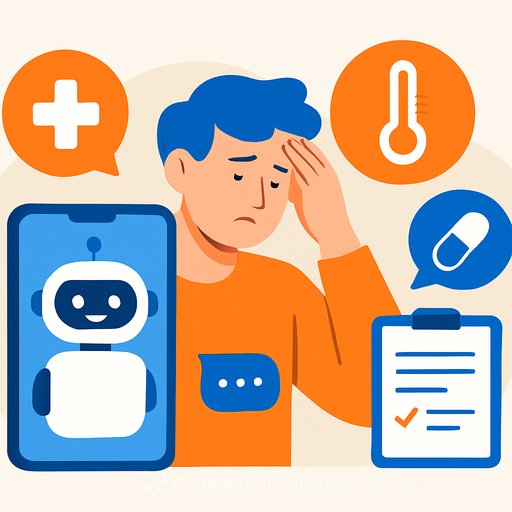
Your patients are consulting AI before they call, book, or message. It's fast, private, and always on. That changes expectations for speed, clarity, and follow-up. Healthcare has to meet that reality with structure, guardrails, and measurable outcomes.
What This Means For Your Practice or System
- Pre-visit beliefs are forming from AI chats. You'll see stronger opinions and specific asks.
- Misinformation risk rises without clinician context. So does anxiety.
- There's upside: better-prepared patients, shorter visits, and scalable education-if you guide the flow.
Where AI Delivers Value Today
- Symptom triage chat with clear escalation rules to nurse lines, urgent care, or 911.
- Intake summarization that turns portal messages into a concise, EHR-ready note for review.
- Plain-language patient education at an appropriate reading level, with links to trusted sources.
- Post-visit instructions personalized to the plan, with bilingual options.
- Administrative Q&A for scheduling, prep instructions, and benefit basics to reduce call volume.
Non-Negotiable Guardrails
- Scope: Informational support only. No diagnosing, prescribing, or device-like claims.
- Safety triggers: Immediate escalation for red flags (e.g., chest pain, stroke signs, severe bleeding).
- Human oversight: Clinician review for clinical outputs before patient delivery.
- Data protection: No unsecured PHI. Use HIPAA-aligned vendors, BAAs, audit logs, and access controls.
- Bias and accuracy checks: Sample reviews, error tracking, and periodic re-validation after model updates.
- Transparent disclaimers: Clear purpose, limitations, and instructions for urgent care.
Workflow Patterns That Work
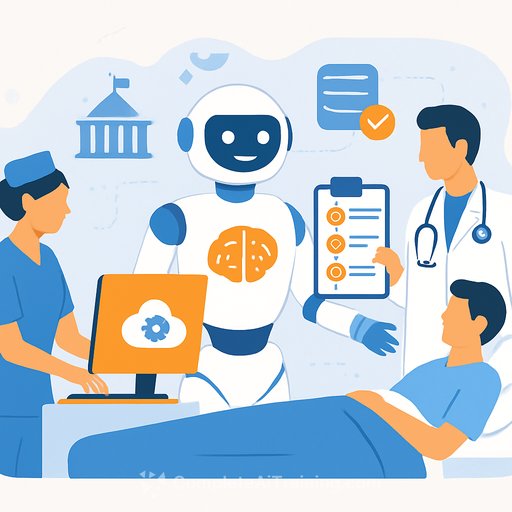
- Two-tier triage: AI pre-screens, then routes to nurse or clinician queues with structured summaries.
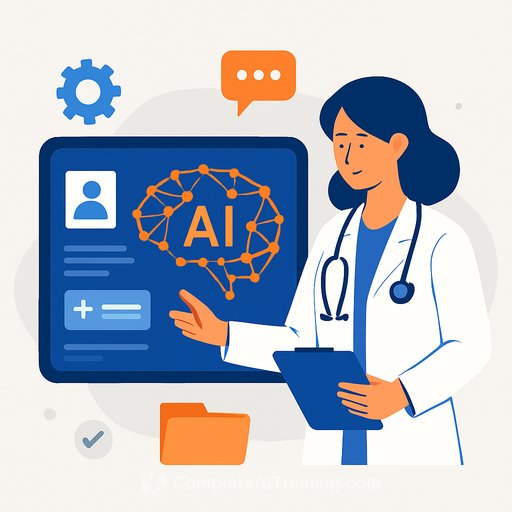
- Note co-pilot: AI drafts history and patient education; clinician edits and signs.
- Prompt library: Pre-approved prompts for common conditions to standardize tone, reading level, and safety language.
- EHR integration: Drop outputs directly into templates and patient instructions to avoid copy-paste errors.
How To Talk With Patients Who Used AI
- Validate: "Thanks for researching. Let's review what applies to you."
- Clarify: Address risks, time course, and why your plan differs from what they read.
- Anchor: Provide a brief, readable summary and trusted links so the patient leaves aligned.
Evaluation Metrics You Can Track
- Clinical: Escalation appropriateness, revisit rate within 14 days, error/near-miss count.
- Operational: First-response time, call deflection, average handling time, staff hours saved.
- Patient: Reading level of outputs, satisfaction (CSAT), confusion callbacks.
- Equity: Usage by language and access channel; monitor gaps and adjust.
Prompts That Are Safe By Default
- "Rewrite these discharge instructions at a 6th-grade reading level. Keep medication names exact. Add common side effects, red flags, and when to seek urgent care."
- "Create a bilingual (English/Spanish) summary of [condition] with 3 key actions for the next 48 hours and links to trusted sources."
- "Summarize this portal message into an EHR note with chief concern, duration, severity, associated symptoms, and next step recommendation for RN review."
90-Day Implementation Checklist
- Week 1-2: Define use cases, scope limits, and escalation criteria. Draft disclaimers and scripts.
- Week 3-4: Select vendor, complete security review, set up sandbox, and configure audit logging.
- Week 5-6: Build prompt library and templates. Pilot with 5-10 clinicians and 1-2 nurse teams.
- Week 7-8: Train staff, finalize EHR workflows, and set metrics dashboards.
- Week 9-10: Soft launch to a subset of patients. Monitor red flags, accuracy, and satisfaction daily.
- Week 11-12: Review results, tighten prompts, update policies, and expand gradually.
Policy Basics To Put In Writing
- Approved use cases and prohibited claims
- PHI handling rules, retention, and masking
- Escalation criteria and accountable roles
- Monitoring cadence, incident response, and version control after model updates
Team Enablement
Give your clinicians and staff practical training, not hype. Start with high-impact, low-risk tasks and grow from there. For structured guidance, explore AI for Healthcare and professional use of ChatGPT.
Trusted References
Bottom line: Patients will keep asking AI first. Meet them there with clear workflows, strict guardrails, and training that supports safe, efficient care.
Get Daily AI News
Your membership also unlocks:
700+ AI Courses
700+ Certifications
Personalized AI Learning Plan
6500+ AI Tools (no Ads)
Daily AI News by job industry (no Ads)