AI in Education: Use It, Don't Surrender to It
Schools and universities are rushing to plug AI into everything. Some gains are real: faster grading, adaptive assessments, and smoother admin decisions.
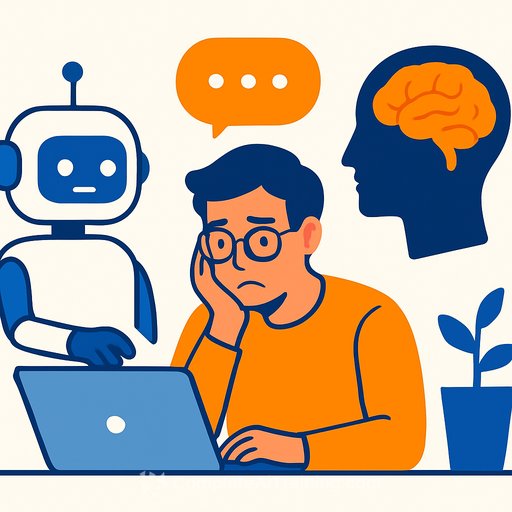
But there's a cost we're not talking about enough. Convenience can dull thinking. Outsourcing judgment can chip away at confidence and agency - for students and teachers.
The quiet trade: convenience for cognition
AI delivers crisp answers. Thinking is messy. If we default to quick outputs, we lose the struggle that builds reasoning, reflection, and originality.
Over time, that shift rewires identity. Learners start to feel like operators, not creators. Doubt grows. Engagement drops.
Knowledge as product, prompts as currency
We're turning questions into tactics. "Prompt well" becomes the goal, not "think well." That's the wrong skill to major in.
Prompting should support inquiry, not replace it. The core habit we're training is attention and thought - not command syntax.
Teacher development that misses the point
Many PD sessions fixate on tools and tricks. Far fewer address bias, pedagogy, assessment integrity, data privacy, or how AI shifts classroom culture.
Educators need moral and creative agency, not a script for operating systems they didn't design.
Market logic vs. human learning
Vendors move fast because competition is fierce. That's their game. Education isn't a market first. It's where character, judgment, and care are built.
Efficiency matters - but not at the expense of meaning.
Use AI well: practical guardrails you can implement this term
- Human-first policy: Define tasks AI will not do (core idea generation, final thesis formation, summative feedback). Let AI support drafting, practice, and admin work.
- Think-first protocol: Require a pre-AI artifact (outline, hypothesis, plan) before any AI use. Submit both versions. Grade the evolution of thinking.
- AI contribution caps: Set clear limits (e.g., no more than 20% of a draft can be AI-generated). Anything AI-assisted gets labeled and cited with model and date.
- Prompt log & attribution: Students attach prompts and AI outputs in an appendix. This normalizes transparency and makes feedback concrete.
- Assessment redesign: Add in-class drafting, oral defenses, whiteboard problem-solving, and process portfolios. Make reasoning visible, not just the final answer.
- Bias checks as routine: Test AI outputs across dialects, names, and contexts. Keep a simple bias log. Adjust rubrics and tools accordingly.
- Data privacy by default: Don't upload student data to public tools. Use district-approved platforms, data processing agreements, and minimal data practices.
- Procurement checklist: Require model cards, data retention policies, export controls, opt-out paths, and offline or hosted options where possible.
- Faculty PD that centers pedagogy: Case studies on integrity, formative use, and redesigning tasks - not just "which tool" and "which prompt."
- Success metrics beyond speed: Track student agency, engagement, and quality of reasoning. Use quick pulse surveys and sample work comparisons each term.
A clear ethical framework for your institution
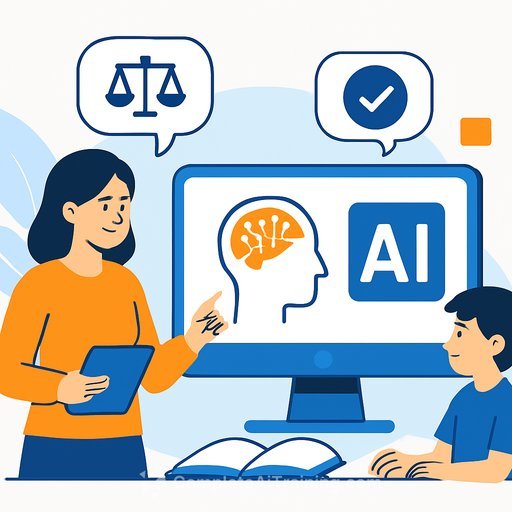
- Agency: Humans make final academic and pastoral decisions.
- Transparency: Disclose where and how AI is used in learning and operations.
- Accountability: Staff remain responsible for outcomes; tools don't take the blame.
- Proportionality: Use AI where it truly helps; avoid overreach.
- Equity: Audit for bias and access; provide non-AI pathways.
- Privacy: Collect the least data needed; protect it rigorously.
- Pedagogy-first: Preserve inquiry, creativity, and care as non-negotiables.
- Review cycle: Revisit policies every term with student and teacher input.
Classroom scripts you can use next week
- "Draft your claim and three reasons first. After that, you can ask AI for counterarguments. Attach both."
- "If AI helps you, label where and why. Your grade rewards your thinking process more than polish."
- "No AI on the first pass. We'll compare your version to an AI-assisted revision and discuss what changed."
Leaders: a simple 90-day plan
- Days 1-15: Audit current AI use. Map risks and bright spots.
- Days 16-30: Draft policy and consent language. Set assessment and privacy rules.
- Days 31-60: Run small pilots in 3-5 classes with the guardrails above.
- Days 61-75: Collect artifacts, surveys, and bias logs. Adjust.
- Days 76-90: Publish guidance, run PD, and expand gradually.
Measured adoption beats blind adoption
AI can help with access, feedback loops, and admin lift. Keep humans at the center - where care, judgment, and context live.
The question isn't "Should we use AI?" It's "How do we keep thinking, ethics, and humanity intact while we do?"
Resources
Want structured programs for your role?
If you're building skills with intention, browse curated options by job role: Complete AI Training - Courses by Job. Pick tools second, pedagogy and ethics first.
Your membership also unlocks: