How Estonia Built Practical AI for Government-and What You Can Use Today
Estonia, a small Baltic nation, is showing how to make AI useful in government without fanfare. Schools are integrating AI, hospitals are piloting AI-assisted cancer diagnosis, and digital public services run on automation by default. The judiciary is exploring applications with guardrails. This isn't theory-it's day-to-day operations.
"Since the 1990s, immediately after independence, Estonia kept digitalization and technological innovation as a core national strategy," said Kamel Tellis, deputy chief of mission at the Embassy of Estonia in Korea. "Even when administrations changed, the digital-first stance did not. That resolve not to postpone innovation made today's AI powerhouse."
The long game: digital first, then AI
Estonia didn't bolt AI onto a paper-based system. It built digital ID, secure data exchange, and online services first. Nearly all public services are available online-taxes, prescriptions, marriage registration, even national elections.
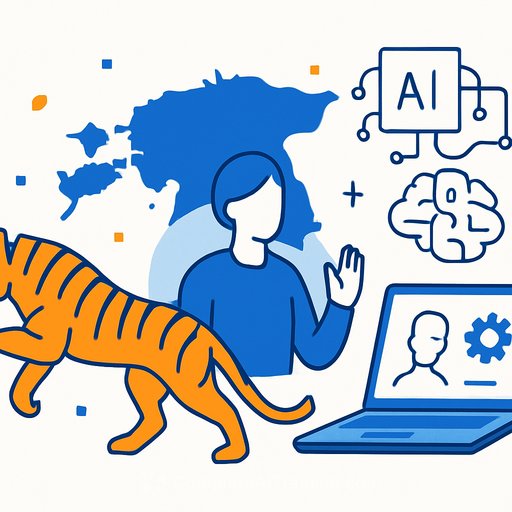
With that foundation, AI became a natural next step. Structured public data, interoperable systems, and sustained public trust gave Estonia an execution advantage. Policy wasn't forced in a short sprint; it was the next chapter of a decades-long plan that started with "Tiger Leap" (computers in classrooms) and now continues with "AI Leap" in education.
Small tools, big impact
More than 130 AI uses are reported across 65 public agencies, with about 60 agencies actively using AI. Most are targeted tools that trim friction instead of flashy mega-projects.
- Tax and Customs Board: AI flags potential tax evasion across filings so investigators focus on high-value cases.
- Unemployment Insurance Fund: Models identify job seekers at risk of long-term unemployment and route them to support early.
- Parliament: An AI transcription program auto-records meetings.
- Government-wide: The "Bürokratt" chatbot surfaces services across ministries, giving citizens one entry point.
The principle is simple: AI handles repetitive work; humans make final calls and focus on higher-value problems.
Human oversight, explainable systems
Estonia's approach is people-first. The goal isn't to replace citizens or officials; it's to remove busywork and raise service quality. Any AI that affects rights or obligations requires human oversight and final approval.
Algorithms used by government must be explainable and transparent. An e-governance platform discloses information about those systems so citizens and auditors can see how they operate. The state is also investing in lifelong learning and public-private AI education to narrow digital literacy gaps, especially for older adults.
Security and trust aren't optional
Trust makes digital government possible. Estonia learned this the hard way after a massive DDoS attack in 2007 that hit ministries, parliament, and banks. That crisis led to a whole-of-government security upgrade.
Estonia later established the world's first "Data Embassy" in 2018-backups of core national data stored abroad to keep the state running even during a crisis. The country also hosts the NATO Cooperative Cyber Defence Centre of Excellence, underscoring the priority placed on cyber readiness.
Education, health, and the judiciary
Estonia is teaching responsible AI use in schools rather than banning it. That choice signals confidence: guide behavior, don't fight it. In healthcare, AI-assisted diagnosis pilots are moving from research to practice, with tight oversight.
The judiciary is under active review for AI support-think document prep, case triage, and research-always with a human in the loop.
Why Korea and Estonia fit as partners
Both countries have advanced ICT infrastructure, strong digital services, and similar constraints: cyber risks, aging populations, and talent shortages. According to Tellis, education is a standout area for joint progress, alongside Smart City work and ethical AI governance frameworks.
Practical takeaways for public leaders
- Lay the groundwork: digital ID, interoperable systems, and clean data. AI sticks when pipes are in place.
- Start small: deploy narrow tools that remove bottlenecks (transcription, case triage, risk scoring) before big bets.
- Codify oversight: require human approval where rights or obligations are affected; document model behavior and limits.
- Publish what you use: maintain a public registry of algorithms and their purposes to build trust.
- Invest in people: train officials and citizens-especially older adults-so adoption doesn't stall on skills.
- Stress-test security: plan for cyber incidents and continuity of state data; practice recovery regularly.
- Focus on value: measure time saved, case throughput, and citizen satisfaction-not model accuracy alone.
If you're getting started
Pick one frontline service where delays are common and data is available. Stand up an internal pilot with clear success metrics, a human-in-the-loop policy, and a plan for publishing model details. Iterate in weeks, not months.
If you need structured upskilling paths for your team, explore role-based learning tracks that focus on applied AI in public service. For curated options, see AI Learning Path for CIOs or visit Courses by Job and Latest AI Courses.
The bottom line
Estonia proves that disciplined digital foundations, transparent governance, and practical tools can move an entire state forward. Keep humans in charge, publish what you run, and make AI boring-in the best possible way.
Your membership also unlocks: