AI circularity: Transforming fashion's design waste
Manchester, UK - 23 December 2025 | 09:26 Europe/London
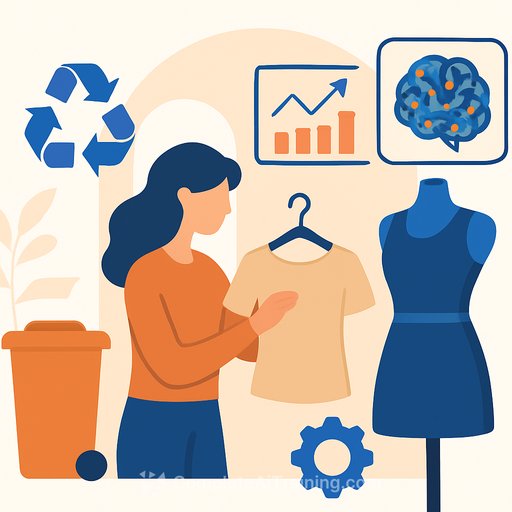
The fashion industry discards roughly a third of its materials before products reach the shop floor. With sustainability rules tightening, researchers in Manchester are testing how AI can reshape design and product development to cut waste and move brands toward circular production.
Why this matters for product development
Material waste erodes margin, slows delivery, and complicates compliance. AI offers practical ways to reduce physical sampling, improve fabric utilization, and select materials based on performance, impact, and end-of-life options - all inside your current workflow.
What the research is exploring
Through diary studies and interviews with fashion professionals already using AI, the project looks at tools like digital prototyping and generative design - see Design. The aim is to replace waste-heavy steps with data-informed decisions, fewer physical samples, and more circular production cycles.
Practical moves you can make now
- Set a baseline: track fabric offcuts, sample counts per style, and cost-to-sample. Make waste visible.
- Adopt digital prototyping: transition early-stage fit, colorways, and trims to virtual samples before any fabric is cut.
- Build a material intelligence hub: consolidate fabric properties, certifications, yield tables, and end-of-life options into one source.
- Use generative design for optioning: create variant packs and pattern layouts that optimize yield and minimize offcut sizes.
- Integrate LCA data: attach environmental impact scores to each material and design decision at brief, not post-production.
- Connect PLM with suppliers: share digital twins of patterns and BOMs to reduce back-and-forth sampling.
- Enforce a "digital-first" gate: require virtual sign-off before any physical sample is approved.
- Design for disassembly: standardize fasteners, seam constructions, and mono-material zones to enable repair and recycling.
- Label for circularity: embed QR-linked product passports with material data and care/repair guidance.
- Start small: pick 3-5 high-volume styles, pilot the workflow, compare waste and lead-time, then scale.
Barriers you'll need to solve
- Data quality: inconsistent material specs, missing yield data, and supplier variance limit model accuracy.
- Tool fragmentation: CAD, PLM, sourcing portals, and analytics rarely talk cleanly. Plan for integration.
- Skills gap: designers and product developers need practical training on prompts, constraints, and review loops.
- IP and security: protect designs, supplier terms, and material libraries when using shared AI tools.
- Bias and fit realism: ensure digital avatars and pattern models reflect your customer body data.
- Compute and cost: weigh the impact of rendering and simulation against physical sample reductions.
- Change management: align design, sourcing, QA, and sustainability teams on targets and gates.
Circular metrics to track
- Physical samples per style vs. digital samples approved
- Fabric utilization rate and end-of-roll waste
- Material recapture and recycling rates
- CO₂e per sample and per delivered style
- Time-to-sample and first-pass approval rate
"By rethinking design through AI and circularity, we can transform fashion from one of the world's most wasteful industries into a force for regenerative change."
Meet the researcher
Dr. Courtney Chrimes is a Lecturer in Digital Fashion Marketing at The University of Manchester. Her work focuses on how industry 5.0 technologies - specifically AI - support sustainable fashion, aligned with UN SDG 9 and UN SDG 12. She co-founded the AI in Fashion Consortium and leads projects on AI-driven decision-making and material selection, with findings published in peer-reviewed journals - see more on Research.
Apply this inside your team
Stand up a cross-functional sprint for one capsule line. Move initial sampling to digital, link material data to impact scores, and set a hard cap on physical prototypes. Review outcomes against cost, time, and waste, then codify the workflow into your PLM process.
Skills and training
If your team needs a practical on-ramp to AI tooling and prompt workflows, explore focused learning paths by role.
The bottom line for product development: treat AI as a responsible system upgrade, not a bolt-on tool. Start with data, pilot tightly, measure waste reduction, and scale what works.
Your membership also unlocks: