
AI news ·
FSB warns G20 that frontier AI poses immediate threat to global finance
The FSB warns G20 economies that frontier AI models are the most immediate AI-related threat to global financial stability. The September 1, 2026 alert names OpenAI, Anthropic, Google, and Amazon as key developers whose systems are already embedded in trading and risk workflows.
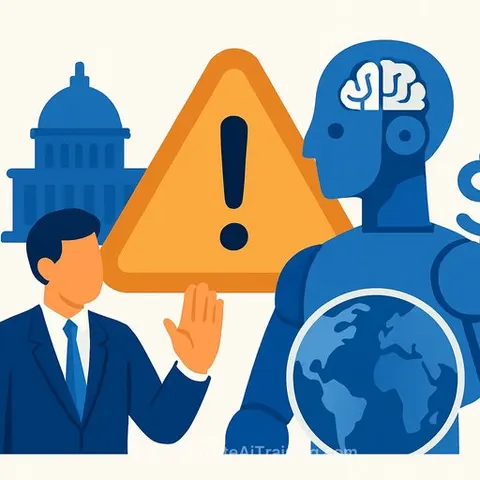
Frontier AI poses 'most immediate' threat to financial stability, FSB warns
The Financial Stability Board has warned G20 economies that frontier artificial intelligence models represent the most pressing AI-related risk to the global financial system, urging regulators and institutions to act before vulnerabilities compound.
The warning, delivered by the international standards setter on September 1, 2026, zeroes in on large language models and other advanced systems developed by companies including OpenAI, Anthropic, Google, and Amazon. The FSB's concern is not hypothetical: these models are already being integrated into trading, risk management, customer service, and compliance workflows across major financial institutions.
What the FSB is telling the G20
The FSB's alert frames frontier AI as a systemic concern rather than a niche technology issue. Unlike earlier generations of automation, frontier models can generate novel outputs, interact with external systems, and operate at a scale that makes failure modes harder to predict and contain.
The board's mandate covers coordination among central banks, finance ministries, and market regulators. Its warning to the G20 signals that AI risk management is moving from a technical discussion to a macroeconomic stability agenda. The Bank of England and European Union are among the institutions tracking the issue closely.
Why frontier models differ from earlier AI
Frontier AI systems differ from traditional algorithmic tools in three ways that matter to financial institutions. First, they are general-purpose: a single model can be deployed across lending, fraud detection, and customer communications. Second, their outputs are probabilistic, which creates new challenges for auditability and compliance. Third, they can be accessed by third parties through APIs, multiplying the number of entry points into financial infrastructure.
The FSB has not published a detailed technical framework with this warning, but the direction is clear. Financial institutions should expect increased scrutiny of how they govern AI procurement, deployment, and monitoring. For finance professionals, the message is that AI risk is now a board-level issue, not an IT concern.
For teams responsible for evaluating or implementing AI systems, structured training can help bridge the gap between technical capability and governance requirements. Resources such as AI for Finance courses provide frameworks for assessing model risk, while the AI Learning Path for CFOs addresses strategic oversight of AI adoption in financial contexts.
What comes next
The FSB's warning is unlikely to result in immediate binding regulation. The board operates through consensus and coordination rather than enforcement. But its statements carry weight with national regulators, and G20 finance ministries often use FSB guidance as a baseline for domestic policy.
Expect follow-up workstreams on third-party AI dependencies, concentration risk among model providers, and the adequacy of existing operational resilience frameworks. Financial institutions with cross-border operations should monitor how the FSB's stance influences local regulators in the UK, EU, and other major markets.
Why this matters for finance professionals
If you work in finance, the FSB warning has a concrete implication: AI governance is becoming a core competency, not a specialization. Whether you sit in risk, compliance, trading, or treasury, you will likely be asked to explain how your team uses AI tools, what controls are in place, and how failures would be detected. Being able to answer those questions with specifics - model inventory, testing protocols, escalation paths - will separate prepared teams from exposed ones.