Fujitsu launches AI-Driven Software Development Platform: end-to-end automation for large systems
Kawasaki, Japan - February 17, 2026. Fujitsu announced an AI-Driven Software Development Platform that automates the full lifecycle-from requirements and design to implementation and integration testing.
The platform uses multiple AI agents powered by the Takane large language model (jointly developed with Cohere) and agentic patterns to operate on complex, long-lived enterprise systems. The goal: have coordinated agents understand systems, apply changes, and validate results across the stack-at scale.
What's already in motion
Fujitsu plans to use the platform to update all 67 medical and government software packages provided by Fujitsu Japan Limited by the end of fiscal year 2026, driven by legal and regulatory changes. It has been in use since January 2026 for modifications related to the 2026 medical fee revisions.
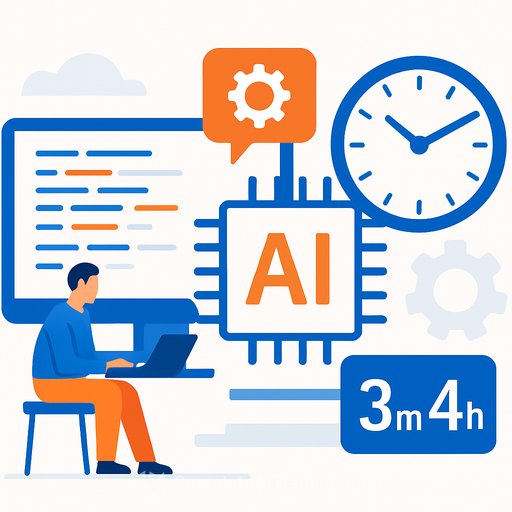
In a PoC against the 2024 medical fee revision, the platform delivered a 100x productivity gain: work estimated at three person-months was completed in about four hours.
How it works (for engineers)
- Ingests laws, regulations, specs, change requests, historical tickets, and legacy codebases; normalizes assets so agents can reason over them.
- Maps changes to scoped requirements with traceability, then generates design artifacts and update plans.
- Implements code modifications, produces unit/integration tests, executes test suites, and generates evidence.
- Runs multi-layer quality checks (including ambiguity detection in source materials) and loops until quality gates pass.
- Outputs diffs, impact analyses, and documentation for audits and sign-off.
Fujitsu emphasizes "AI-Ready Engineering": preparing assets and organizational knowledge so AI can interpret legacy logic and domain rules with high reliability. End result-agents can operate across the waterfall process without breaking handoffs.
Why this matters to IT and dev teams
- Compresses regulation-driven changes from weeks or months to hours or days.
- Drops verification overhead by automating test generation, execution, and evidence capture.
- Shifts team focus from manual triage to planning, service design, and customer impact.
- Creates a path to cope with talent shortages while improving change velocity and auditability.
- Enables a move from person-month budgeting to value-based delivery.
What early adopters are saying
- IDC Japan expects AI/agent-based modernization to be a key driver from 2026 and sees this as a practical path for legacy-heavy enterprises.
- Optima highlights end-to-end automation, including verification-critical for packages that change annually.
- Kawasaki Heavy Industries views it as a way to preserve and evolve long-held business knowledge, with AI supporting human judgment where needed.
- Kewpie Digital Innovation points to "multi-layer quality control" that fixes ambiguities and omissions, boosting trust in outcomes.
- Kintetsu Information System cites stronger requirements accuracy and fast, comprehensive testing.
- Leaders at Google Cloud Japan, IBM Japan, and Microsoft Japan expect strong productivity gains and see this model setting a new standard for development.
- Healthcare stakeholders note the platform's ability to parse legal documents, surface ambiguous points explicitly, and support safe deployment with a Japanese-focused LLM.
Where it's going next
Fujitsu plans to extend the platform across finance, manufacturing, retail, and public services by the end of fiscal year 2026. The service will be available to customers and partners to help them adapt systems quickly as their business conditions change.
Practical steps to prepare your org
- Inventory and normalize assets: code, specs, test plans, decision logs, and regulatory docs (prefer machine-readable formats).
- Stand up test environments and CI that agents can control end-to-end (builds, test data, rollbacks, and evidence capture).
- Define quality gates: traceability rules, coverage thresholds, and audit trails for compliance.
- Codify tacit knowledge: patterns, exceptions, and domain rules that senior engineers carry but aren't documented.
- Upskill teams on LLM/agent patterns, prompt contracts, and failure modes. See the AI Learning Path for Software Engineers.
Key facts and notes
- Takane LLM: jointly developed by Fujitsu and Cohere. Learn more about LLMs: Large language model.
- Medical fee revision: Japan's periodic review of public medical fees and cost allocation.
- Baseline comparison: conventional development verifies quality at each stage from requirements through integration testing.
What this means for engineering roles
Fujitsu plans to strengthen its Forward Deployed Engineer model, pushing engineers closer to business problems while agents handle routine change work. Expect a shift in skills-from manual updates to orchestration, quality policy design, and system-level thinking.
Availability
The platform is already in use for medical fee-related changes in Japan and will scale across industries and partner ecosystems through FY2026. Fujitsu positions this approach as a new baseline for AI-driven system development.
Your membership also unlocks: