Why the future of AI is physical - and what governments must do about it
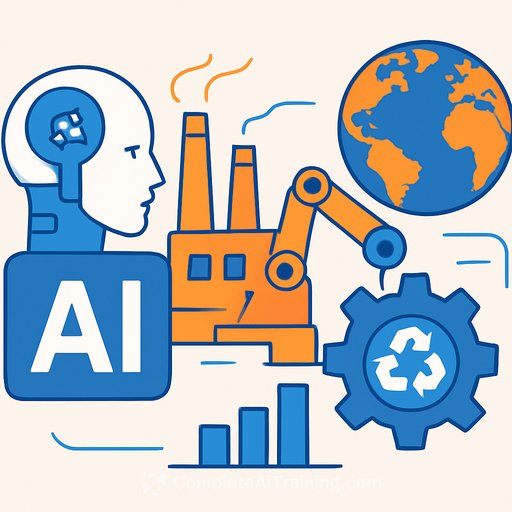
AI is not floating in the cloud. It runs on land, steel, silicon, energy, water, and supply chains. That physical footprint is now the policy priority.
If governments treat AI as a purely digital project, they will miss the real work: securing materials, modernising infrastructure, and building systems that keep value in circulation. Think industrial, environmental, and social strategy-integrated-so AI advances sustainability instead of draining it.
From cloud myth to factory floor
Data centres are factories. They consume land, power, water, and hardware-and produce heat and waste. Chips depend on finite materials. Devices retire early. Valuable components end up in skips.
Shift policy from "more tech" to "enough tech." Push digital sufficiency. Extend device lifetimes. Recover parts. Keep high-value components in use. Treat end-of-life hardware as inventory, not rubbish.
How physical AI can drive net-zero
AI can optimise the physical world if we build it right. Smart grids and buildings cut energy waste and recirculate heat. Data centres can act as grid-stabilising assets, not just loads.
There is also a massive recovery opportunity. In 2022, an estimated $91 billion in minerals was lost to e-waste. AI can improve sorting accuracy, predict asset returns, cut transport emissions by roughly 35 percent with better routing, and find high-value reuse pathways so waste becomes industrial feedstock.
The risks: efficiency without restraint
The biggest threat is the rebound effect. We make individual AI tasks more efficient, aggregate demand surges, and total energy use climbs anyway. If AI growth outruns grid decarbonisation, we lock in higher emissions and stress shared infrastructure.
There is also a materials crunch. Without repair, refurbishment, and remanufacturing at scale, component shortages-memory included-become systemic. With much of the supply chain concentrated in East Asia, any disruption can ripple across public services and the wider economy.
Policy and procurement that set the rules of the game
- Mandate circularity by design. Embed requirements through regulatory tools such as the EU's Ecodesign for Sustainable Products Regulation (ESPR), Digital Product Passports, and Right-to-Repair laws.
- Fix the "sustainability sandwich." In many tenders, price squeezes sustainability out. Update frameworks so environmental, circular, and resilience KPIs carry real weight across evaluation and contract performance.
- Refurb by Default. For non-critical compute, default to certified refurbished hardware with transparent SLAs. Treat new kit as the exception, not the norm.
- Use Hardware-as-a-Service (HaaS) for critical loads. Vendors retain ownership, hit uptime targets, and are incentivised to design for repair, upgrade, and material recovery because profitability depends on it.
- Move beyond TCO. Evaluate projects on Total Value of Sustainability: energy, water, repairability, reuse potential, and domestic recovery of critical materials-not just sticker price.
Building the procurement muscle to do this is a skill in itself. See the AI Learning Path for Procurement Specialists for practical frameworks and tools.
Innovation, safety, ethics, and trust-without the trade-offs
- Equitable resource allocation, whole-systems planning. Don't permit data centres in a vacuum. Assess grid capacity alongside housing, hospitals, and public transport. In places like West London, AI demand has already delayed social infrastructure because of grid constraints.
- From black boxes to community partners. Require heat reuse where feasible and align planning with local offtakers-district heating, pools, and greenhouses. Germany's Energy Efficiency Act sets a direction by introducing waste-heat reuse obligations for data centres; a useful reference point: BMWK: Energy Efficiency Act.
- Open standards for transparency and resilience. Digital Product Passports make materials and carbon visible. Open, modular hardware standards reduce lock-in, improve security posture, and give the public sector control over repairs and upgrades.
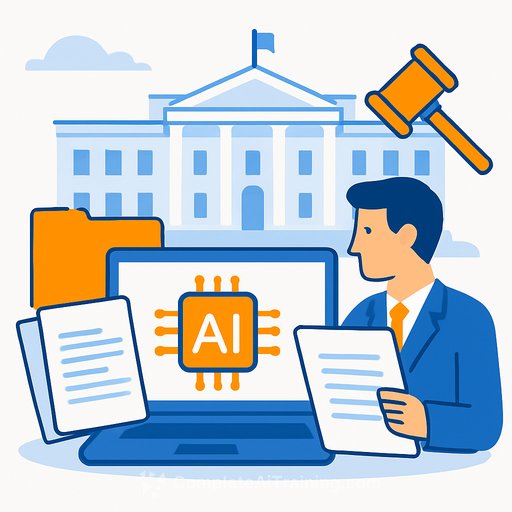
For broader governance and capability support, explore AI for Government.
The skills public institutions need
- Strategic procurement and financial modelling. Shift from buy-and-replace cycles to value-retention models that price repair, reuse, and recovery.
- Whole-systems planning and integration. Treat data centres as energy and heat assets, not isolated IT boxes.
- Circular supply chain governance. Build domestic recovery capacity for critical raw materials. Set and enforce take-back, yield, and purity targets.
- Technical regulatory oversight. Audit for ESPR, repairability, modularity, and DPP data quality. Verify, don't assume.
What "sustainable physical AI" looks like in 10-15 years
The cloud becomes physical infrastructure that pays its way. Data centres operate as Resource Hubs: stabilising local grids, feeding district heating, and serving as urban mining sites that recover chips and high-value parts back into domestic supply chains.
Planning permissions and public investment require circular KPIs. Refurbished hardware is the default for non-leading-edge compute. The state stops owning disposable hardware and procures open-standard, modular systems differentiated by service levels, not secrecy. Forced obsolescence fades because it is unprofitable and non-compliant.
Your 12-month action checklist
- Map your physical footprint. Energy, water, land, and material flows for all public-sector compute-on-prem and cloud.
- Adopt Refurb by Default. Update procurement playbooks, frameworks, and SLAs. Require vendor-grade testing, warranties, and DPP data.
- Pilot HaaS for critical workloads. Tie payments to uptime, efficiency, repairability, and recovery outcomes.
- Mandate heat-reuse feasibility in new builds. Prioritise sites with real offtakers and add heat-network clauses to planning approvals.
- Launch a DPP pilot across end-user devices and servers. Track materials, repairs, and recovery rates to set 3-year targets.
- Stand up a circular supply alliance. OEMs, refurbishers, recyclers, grid operators-shared targets, shared data.
- Fund skills. Create roles for circular procurement, materials recovery, and technical compliance audits.
- Publish an open-standards roadmap. Set dates for modular hardware adoption and vendor interoperability.
The takeaway is simple: treat AI like infrastructure. Build it to last, make it pay back, and keep the value cycling at home. That is how AI supports net-zero, resilience, and public trust-at the same time.
Your membership also unlocks: