Games Workshop Bans Generative AI to Protect Human Creators and IP
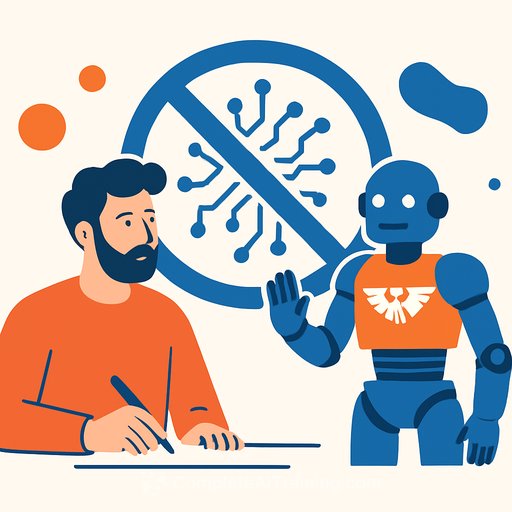
Games Workshop has issued a company-wide ban on using generative AI for creative work. CEO Kevin Rowntree outlined the policy with a clear message: the brand is built by people, and the company intends to keep it that way.
The goal is twofold - prioritize human creativity and protect valuable intellectual property. Research into AI theory is allowed, but AI has no place in the creation process.
What the policy actually says
- No AI-generated content in any internal projects.
- AI cannot be used as part of the Design process at any stage of the creative workflow.
- The ban applies to third-party work and officially sanctioned competitions.
- Increased scrutiny on data compliance and security tied to AI tools.
In short: if you create for or with Games Workshop, your work must be human-made from start to finish.
Why this matters for creatives
This is a clear signal: the company is doubling down on craft. If you're a concept artist, sculptor, illustrator, writer, or art director, your process and portfolio matter more than ever.
It also means fewer shortcuts. No AI moodboards, no text prompts for idea generation, no generative fills - nothing that uses AI to produce or modify creative output.
Where Games Workshop is investing
Rowntree emphasized the company's long-term commitment to human talent: "We continue to invest in Warhammer Studio, hiring new staff from concept artists to sculptors and writers. These are the talented and passionate people who make Warhammer such a rich franchise, beloved by so many fans."
Recruitment is ongoing across creative roles, reinforcing the message that human originality is the core asset.
Practical steps if you work with or for Games Workshop
- Audit your workflow: remove AI from ideation, drafting, and final production. Keep your process fully manual.
- Disable generative features in creative software. Avoid AI-assisted filters, fills, or code that alters assets.
- Track provenance: save sketches, iterations, and source files. Be ready to prove your work is human-made.
- Update contracts and briefs to include "no AI involvement" clauses for internal teams and contractors.
- For competitions: do not submit entries created or altered with AI. Expect stricter checks.
- Keep research separate: studying AI theory is fine - just don't apply it to production work.
IP and security: the other reason behind the ban
The company flagged growing concerns around data compliance and security. Many AI tools retain inputs or learn from them, which risks leaking unreleased designs or confidential concepts.
For brands with valuable IP, that's a deal-breaker. Expect similar policies to spread across franchises with strong licensing pipelines.
What triggered the formal announcement
After fans criticized an official illustration for looking AI-made, the company clarified the flaws were human error, not machine output. The incident pushed an informal stance into a formal, public policy.
If you need official updates or want to build AI literacy (without using AI for output)
- Warhammer Community for official news and statements.
- AI Learning Path for Primary School Teachers for hands-on AI literacy resources that focus on understanding concepts and ethics without using AI in production.
Bottom line for creatives
Games Workshop is drawing a hard line: human-made work is the standard. If you're collaborating with them - or aiming to - build a process you can defend, document, and proudly call your own.
Your membership also unlocks: