
AI news ·
GCC organizations risk losing top talent by treating AI as a technology problem rather than a people strategy
Gulf organizations are pouring money into AI but skimping on the people needed to run it. Weak talent pipelines, not technology gaps, are stalling AI programs across Saudi Arabia and the UAE.
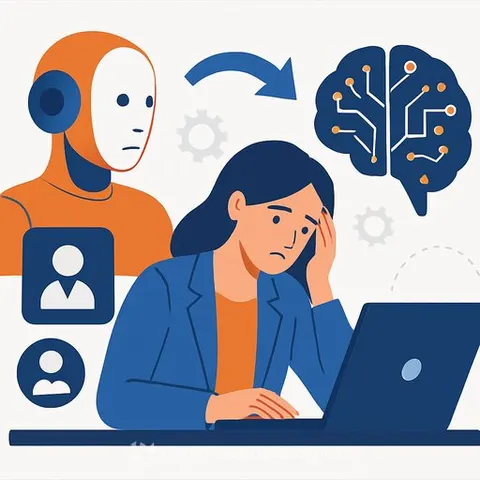
Why AI Strategies Fail: The Talent Problem Executives Miss
Organizations across the Gulf are spending heavily on AI systems. Few are spending enough on the people who have to use them.
Boards in Saudi Arabia, the UAE, and neighboring markets have aligned AI investments with national strategies like Saudi Vision 2030 and the UAE National AI Strategy. The bottleneck is not technology access. It's organizational capacity to absorb new ways of working without losing experienced staff.
A familiar pattern repeats: promising pilots that don't scale, duplicated data efforts, inconsistent controls, and operating models that can't keep pace with AI agents. Meanwhile, executives reach for traditional levers-restructuring and headcount reduction-that erode engagement and destroy local knowledge that takes years to rebuild.
The Leadership Pipeline Problem
When internal talent benches are weak, organizations hire externally more than they plan to. External leaders take longer to reach full productivity. High-potential programs misfire because the criteria are vague and inconsistent.
Three questions rarely get answered rigorously: Who genuinely wants bigger responsibility? Who can actually succeed at the next level? Who is committed enough to stay?
In a GCC labor market with high talent mobility, intense competition for nationals, and scarce AI skills, this approach is expensive and fragile.
A Different Model: The People Control Plane
Business architecture is emerging across the region as the control plane for enterprise AI. Rather than letting dozens of AI initiatives scatter across human resources, operations, risk, and customer channels, architecture provides a coherent map of value streams, capabilities, processes, and structures.
It becomes the single source of truth that AI agents consult before acting, keeping automation aligned with strategy, regulation, and risk appetite.
What business architecture does for digital work, integrated talent assessment can do for people. When executed as a strategic capability, talent assessment becomes an always-on system that objectively measures aspiration, ability, and engagement-and connects those insights directly to roles and value streams.
How Rigorous Assessment Works
A competency-based assessment framework asks three disciplined questions about each person:
- Do they want more demanding roles?
- Do they have the capabilities and learning agility to succeed at the next level?
- Are they engaged enough to justify continued investment?
Answering these questions requires multiple data sources: assessment centers, psychometrics, cognitive tests, structured interviews, 360-degree feedback, and performance records. The output is not static reports but structured datasets-capability profiles, readiness indicators, development needs-that aggregate across business units and countries.
When this discipline embeds across the full lifecycle, hiring shifts from intuition to evidence-based selection. Development spending targets specific capability gaps that matter for strategy. Retention becomes proactive as aspiration and engagement signals flag where critical talent is at risk. Promotions, lateral moves, and exits follow objective profiles rather than politics.
Wiring Talent Into AI Operations
Real financial impact appears when talent architecture connects directly to the AI control plane. Job architecture, role families, skills taxonomies, and decision rights stop being HR documents and become structural elements of business architecture.
For an energy company or port operator, this means seeing in one view how many leaders and specialists are ready for AI-enabled roles, how quickly critical positions can be filled internally, and where external hiring or reskilling is required before committing capital.
As AI platforms move toward agentic models-where multiple specialized agents collaborate across processes-this integrated view becomes more valuable. AI agents can read capability definitions, role requirements, and anonymized talent data to recommend optimal team compositions, flag bottlenecks, or suggest where automation can relieve pressure on scarce skills. Leaders retain clear accountability for final decisions.
The result is a talent and AI operating system: a stack of data, workflows, and AI services that manages people as an integrated lifecycle rather than separate HR processes.
The Competitive Edge
Organizations that invest in a control-plane approach reduce hidden costs from failed appointments, over-dependence on external hires, and repeated restructurings. They shorten time-to-productivity for leaders, protect scarce national talent, and unlock more value from AI programs that might otherwise stall.
In a region where AI ambition is high but realized value is still emerging, the organizations that win will treat talent architecture and business architecture as shared infrastructure-and use rigorous assessment to keep their best people while they transform.
Learn more about AI for Executives & Strategy or explore AI for Human Resources to understand how assessment and talent management fit into organizational AI strategy.