GE HealthCare deepens AI imaging in prenatal and interventional care
February 09, 2026
GE HealthCare Technologies (NasdaqGS: GEHC) is expanding its ultrasound and interventional portfolio with newly cleared AI tools for prenatal care and a mobile C-arm system for cath labs and operating rooms.
What's new
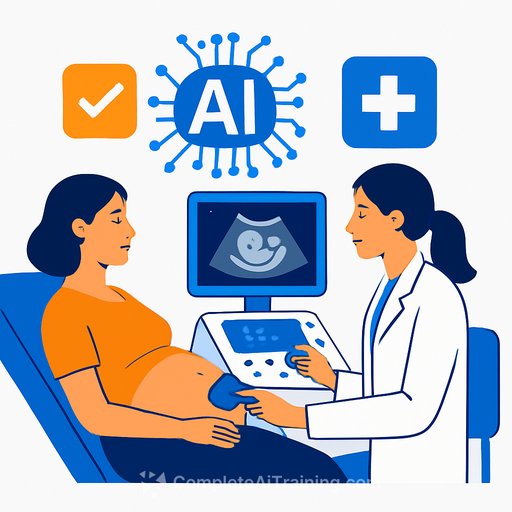
- Voluson ultrasound systems now support AI tools from BrightHeart's B-Right and Diagnoly's Fetoly platforms. Both have FDA 510(k) clearance and CE Marking, opening clinical use in multiple regions. For context on these frameworks, see the FDA's 510(k) process here and EU medical device CE guidance here.
- Allia Moveo, an AI-guided interventional imaging system, received FDA clearance for cardiovascular and surgical imaging.
Why this matters for care teams
Fetal medicine and interventional procedures live or die on workflow, measurement consistency, and image quality. Embedding third-party AI into Voluson aims to reduce manual steps and standardize outputs across providers.
In procedural settings, a mobile, AI-assisted C-arm can help teams move faster from setup to image acquisition with fewer repeated shots. If adoption sticks, the bigger gains will come from predictable throughput and more consistent studies that slot cleanly into existing QA and reporting.
How it stacks up against Philips, Siemens Healthineers, and Canon Medical
GE HealthCare is pitching an integrated path: keep the Voluson base, layer in vetted AI software, and extend into interventional imaging with Allia Moveo. It's a practical stance for hospitals that prefer incremental upgrades instead of wholesale swaps.
Competitors offer strong image quality and mature ecosystems. The difference here could be day-to-day workflow impact and how easily these tools fit your PACS/VNA, reporting, and credentialing processes.
The bigger picture
Partnerships and software are becoming a larger share of GE HealthCare's story. Together with the planned Intelerad acquisition and prior work in advanced imaging (like total-body PET), these moves point to a cloud-first, data-rich ecosystem built around the installed base instead of relying solely on replacement cycles.
Practical checklist for providers and administrators
- Run a limited pilot: 4-6 weeks, defined protocols, measure scan time per study, re-scan rates, and inter-reader variability.
- Validate outputs against your current QA: blinded reads for key fetal measurements and standardized interventional views.
- Map integration: Voluson → PACS/VNA → reporting. Confirm DICOM tags, structured data fields, and credentialing for AI-assisted steps.
- Reimbursement fit: confirm coding, documentation requirements, and payer policies for AI-assisted exams.
- Training plan: short onboarding modules; add competencies to sonographer and interventional staff checklists.
- Governance: track AI versioning, audit logs, and exceptions. Set thresholds for when to override AI suggestions.
Risks and friction points
- Financial flexibility: analysts have raised concerns about debt relative to operating cash flow, which could constrain the pace of investment alongside partnerships.
- Proof in daily practice: hospitals will expect clear, measured gains in time saved and measurement consistency. Without that, adoption can stall.
- Competitive pressure: peers can match features quickly; procurement may hinge on total cost of ownership and integration effort.
What to watch next
- Adoption across the Voluson base: how fast B-Right and Fetoly show up in routine prenatal workflows.
- Allia Moveo traction: inclusion in new cath lab and OR tenders; any signs of shorter room turnover or reduced retakes.
- Revenue signals: disclosures in ultrasound and interventional segments that tie to software usage and service contracts.
For finance-minded leaders
GE HealthCare trades at $80.65. Three-year return sits at 17.0%, while the past year and year-to-date are negative. If you're budgeting capital and service agreements, the near-term price weakness contrasts with a longer multi-year gain-useful context for timing larger refreshes or add-ons.
Bottom line
GE HealthCare is betting on workflow and consistency where they matter: fetal medicine and interventional care. If these tools cut steps and reduce variability without adding integration pain, they'll earn their keep. Pilot quickly, measure hard outcomes, and scale what proves itself.
Further learning
- Building internal AI capability for clinical teams? Explore role-based upskilling resources here.
This content is general and based on publicly available information. It is not financial advice and does not consider your objectives or financial situation. It may not reflect the latest price-sensitive announcements or qualitative updates.
Your membership also unlocks: