Geezer Butler Is Using an A.I. Singer to Demo Songs - Here's What Writers Can Steal from That
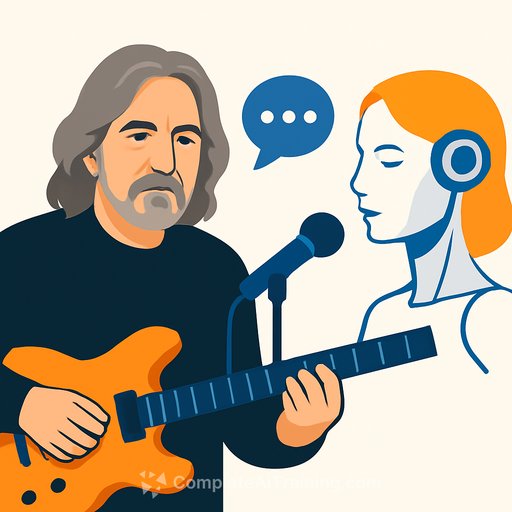
Geezer Butler says he's been using an A.I. singer to bring his lyrics to life before handing tracks to collaborators. He talked about it at Steel City Con 2025 in Monroeville, Pennsylvania, explaining that the tool helps him "bring all the lyrics out" so vocalists know exactly what he wants.
His point was simple: it's easier to show a vision than explain it. Instead of playing a bass riff and asking "can you sing to this?", he now shares a full demo with a temporary vocal. Then real musicians take over.
What he said (the short version)
"I've got tons of stuff… I'm using an A.I. singer to bring all the lyrics out… now I can take it to singers I'm working with and go, 'This is what I want on the album.' It's so much better - do everything in the studio, then let proper musicians take over."
That's not replacing people. It's prototyping faster.
Why this matters for writers
- Clarity beats ambiguity. A rough vocal (or narrated draft) communicates timing, tone, and intent better than text alone.
- Iteration speeds up. You can test phrasing, rhythm, and structure in minutes and keep what works.
- Collaboration gets smoother. Teammates respond to a concrete draft, not a vague idea.
How to use the same approach in your writing
- Read your draft with an A.I. voice to stress-test flow, emphasis, and cadence. If it's boring out loud, it's boring on the page. (Text-To-Speech)
- Create "demo" versions: try three alternate openings, three headlines, and two call-to-actions. Pick the best by ear.
- Use placeholders. Don't obsess over the perfect metaphor or quote. Drop a temp line, keep momentum, and refine later.
- Share the demo with collaborators. State intent: "Tone = dry humor, pace = quick, audience = general + writers."
A simple workflow you can copy
- Draft core ideas in plain text. Keep paragraphs short (2-4 sentences).
- Generate a scratch read-through with an A.I. voice. Listen for awkward phrasing and weak transitions.
- If you record spoken notes or read-aloud sessions, convert them with Speech-To-Text to capture quick edits and timestamps.
- Edit for punch: cut filler, tighten verbs, and front-load value in each paragraph.
- Repeat once. Don't loop forever - move to final polish and human review.
- Hand off to your editor or client with a clear note on tone, structure, and must-keep lines.
Ethics and guardrails that keep you out of trouble
- Don't clone a living artist's voice without consent. Use neutral voices for demos.
- Label demos as demos. Be clear about what's A.I.-generated and what's final.
- Keep rights clean. Check terms for any tool you use, especially for commercial work.
- Credit collaborators. The faster you work, the easier it is to forget who shaped what.
Bottom line
You can't really jam with a machine, but you can get to a sharper draft faster. Use A.I. for the sketch. Keep the taste, judgment, and final decisions human.
Event reference: Steel City Con. For broader workflows and tools for creators, see AI for Creatives. If you want a curated starting point for writing tools, here's a useful roundup: AI tools for copywriting.
Your membership also unlocks: