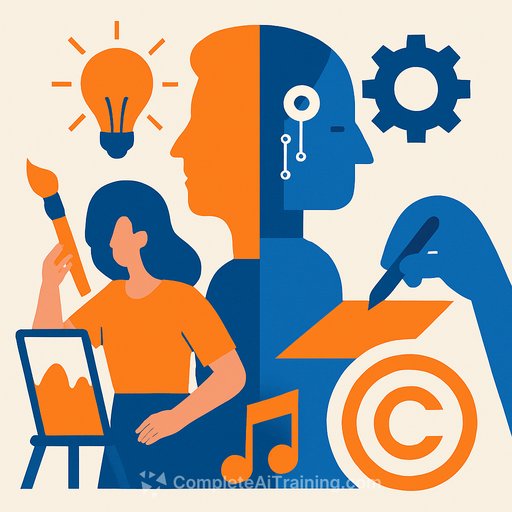
The Impact of Generative AI on Creativity and Copyright
Picture this: you’re a homemaker known for making the best hummus in your community. Neighbors invite you to events, praise your recipe, and you’ve perfected it enough to scale without losing quality. So, what’s stopping you from turning this into a business? Lack of skills like designing a logo, crafting catchy taglines, managing online orders, or creating engaging social media posts.
Enter Generative AI. With this tool, designing a logo, drafting press releases, writing blog posts, improving your website’s SEO, and even building an app become achievable tasks. Suddenly, you’re more than a gig worker—you’re a business owner expanding your reach and impact. This optimistic view sees AI as a tool that empowers anyone to triple their potential and create jobs.
Reality Check
However, the story isn’t all rosy. OpenAI faced criticism when users generated images of themselves in the style of Studio Ghibli, raising concerns about plagiarism and disrespect to the studio’s hand-drawn legacy. Meta was sued for copyright infringement after training its large language model, Llama, on pirated e-books.
Science fiction author Samit Basu points out the irony: large companies accused of stealing work for AI training criticize others for the same. He warns that AI benefits could be limited to a privileged few, while many lose jobs to automation. This uneven playing field raises serious questions about fairness and ethics.
Environmental concerns add to the debate. Author and activist Bijal Vachharajani highlights the enormous energy consumption of training AI models. For example, training GPT-3 used as much energy as a typical American household would in 120 years. The worry is that creative activities like writing and illustrating are being reduced to manufactured outputs with a significant environmental cost.
Are AI Models Susceptible to Producing Harmful Content?
Writer Jerry Pinto voices a critical perspective, suggesting that AI is dominated by a narrow group—mostly men—who prefer binary computer logic over emotional complexity. He fears AI aims to replace human creativity with command-driven outputs, pushing human writers out. Yet, he insists that writers won’t disappear anytime soon.
Constantly Shifting Stance
While legal battles stir debate, many see AI as a useful tool for productivity and research. Priya Kapoor, editorial director at Roli Books, is excited about AI handling tasks like market research, proposal writing, and grammar checks—tasks that don’t require deep critical thinking. Yet, she worries about its effect on true creativity.
Literary agent Mita Kapur has encountered manuscripts partly written with AI but finds them lacking authenticity. She values writing that comes from raw honesty and emotional depth. Still, she acknowledges AI’s growing role and expects writers to coexist—some relying on AI, others sticking to traditional methods.
Jibu Elias, formerly of India’s AI initiative, notes that AI evolves faster than expected, making it hard to write about it definitively. He’s optimistic about AI’s role in healthcare and infrastructure but cautious about generative AI’s impact on jobs. His concern: the artists who inspired AI are being sidelined by the systems built on their work.
‘We’re Not Going to Be Able to Replace Editors’
At Juggernaut Books, founder Chiki Sarkar and her team are experimenting with AI for editorial tasks. AI helps generate subtitles and brainstorm book cover ideas, but real design work still requires human creativity. Sarkar sees AI as a useful line-editing tool—to tighten headlines and improve narrative style—but it can’t replace core editorial judgment.
She believes the publishing industry won’t see massive job losses due to AI anytime soon. AI’s output depends heavily on the quality of prompts, and essential editorial tasks like author relations and assessing manuscripts still need human insight.
Is AI a Disruptor Like Photoshop?
Digital anthropologist Payal Arora compares AI’s impact to that of Photoshop in the 1990s. Initially met with skepticism, Photoshop became a valuable tool without replacing photographers. Similarly, AI tools democratize creativity, enabling filmmakers from underrepresented backgrounds to create work that was once cost-prohibitive.
However, Arora notes that awareness of copyright infringement often comes with privilege—creatives protesting AI misuse usually have platforms and institutional backing. Historically, new technologies face fear before acceptance, and AI might follow the same pattern.
Writer Jerry Pinto is not threatened by AI. For him, AI is a tool for those who dislike writing emails or performing repetitive tasks. He enjoys writing and will continue to do so without AI assistance. He respects AI’s potential in fields like medicine but doubts it will replace human judgment entirely.
Figuring Out the Legalities
While regions like the European Union have introduced AI-specific laws, India relies on existing intellectual property laws to cover AI-generated content. IP lawyer Pankhuri Upadhyay acknowledges India’s legal framework is strong but needs updates to address AI’s unique challenges.
For example, performer contracts often grant producers perpetual rights, which weren’t problematic before AI tools like Sora could generate entire performances using an actor’s likeness without consent or compensation. This raises new ethical and legal questions.
The legal landscape is unsettled, with ongoing lawsuits expected to clarify whether training AI on copyrighted material constitutes infringement. The United States Copyright Office has issued guidelines to help navigate these issues. This period could be an opportunity to rethink intellectual property systems, with emerging ideas like using blockchain to track creative ownership. Ironically, AI itself may become a tool to protect creative rights across various media.
Your membership also unlocks: