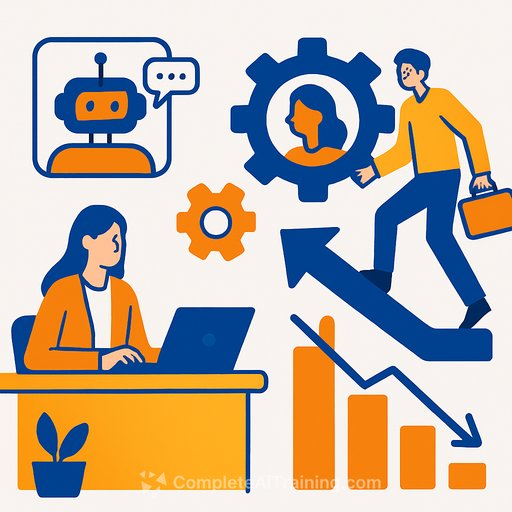
Recession-Ready HR: Leveraging Generative AI to Stabilize Talent and Costs
Economic challenges in early 2025 have put pressure on corporate boards and HR leaders. A 0.3% contraction in real GDP in Q1 2025, combined with new tariffs, has created a squeeze on revenue growth and increased inflationary pressures on benefits and salaries.
Rather than resorting to layoffs, many HR teams are turning to generative AI to streamline operations and find efficiencies beyond cutting payroll. The focus is on maintaining talent acquisition, onboarding, engagement, and retention while working within tighter budgets.
Optimize Hiring, Benefits, and Payroll with AI
Recruiting often involves time-consuming manual resume reviews and scoring. AI-powered applicant tracking systems can quickly analyze resumes, rank candidates by skills and cultural fit, and highlight top prospects within minutes. Chatbots handle common applicant questions, schedule interviews, and gather early feedback, reducing hiring time.
Benefits administration is a major cost area, especially for small and midsize employers who lack bargaining power with insurers. AI systems trained on past contracts can flag costly clauses, suggest alternative plans, and identify more affordable providers without compromising coverage. For example, one mid-market company saved 3% on benefits renewals while preserving plan quality and employee choice.
Payroll, reimbursements, and benefits reconciliations often reveal budget issues too late, leading to reactive cuts. AI-driven finance bots reconcile invoices, categorize expenses, and generate variance reports days before month-end. This early warning allows HR and finance to address anomalies proactively, protecting cash flow and enabling smarter workforce planning.
Make AI Your Training Partner
Learning and development (L&D) teams benefit from AI's ability to rapidly create content. Instead of spending weeks developing materials, AI can generate microlearning lessons, branded infographics, and interactive simulations tailored to specific roles within hours.
Diversity, equity, and inclusion programs can use AI to produce scenario-based content that adapts to audience feedback in real time. Automating content creation lets L&D professionals focus on coaching, facilitation, and measuring training effectiveness.
Modern AI tools include strong data privacy and governance features. Role-based access controls, encryption, and federated learning protect sensitive employee information. Companies maintain audit trails to comply with regulations like HIPAA and GDPR, ensuring AI enhances HR operations without risking confidentiality.
AI Adoption in HR Is Accelerating
Generative AI has moved beyond early experimentation. Surveys indicate that over 70% of U.S. executives already use or plan to use AI in core functions. Many enterprises report that their leading AI projects meet or exceed ROI targets, with some achieving returns above 30%. Small business adoption is growing rapidly, expected to surpass 50% by the end of the year.
Historical recessions have often triggered waves of technology adoption that improve efficiency and reduce costs. Today, generative AI is positioned to reduce the cost of cognitive tasks, giving early HR adopters a lasting competitive advantage.
Economic uncertainty offers an opportunity for HR to rethink how work gets done. AI can automate routine tasks, optimize benefits management, enhance learning programs, and deliver actionable insights. Embracing these tools now helps stabilize budgets, maintain employee satisfaction, and build a more flexible workplace.
Delaying AI adoption risks falling behind competitors who set new standards for efficiency and innovation during this challenging period.
For those interested in expanding AI skills for HR and management roles, explore comprehensive resources and courses available at Complete AI Training.
Your membership also unlocks: