Generative AI on Campus: What Stanford's Faculty Senate Is Seeing
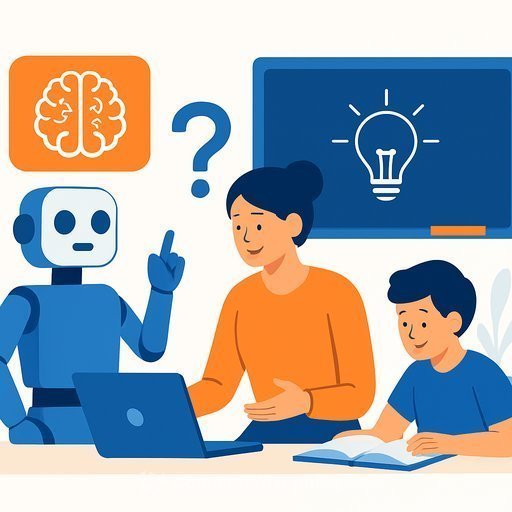
Generative AI is now a daily companion for Stanford students. Survey results shared at the Faculty Senate show most frosh use it consistently, often calling it "an intellectual sparring partner," said Jay Hamilton, Freeman-Thornton Chair for the Vice Provost for Undergraduate Education (VPUE).
Students say they lean on AI to understand hard concepts, search more efficiently, draft practice materials, summarize and paraphrase, edit writing, and support research. The least common use is straight text generation.
How students use AI (and what's changing)
- Concept clarification and quick Q&A
- Search assistance and idea exploration
- Practice questions and study drills
- Summaries, paraphrases, and writing edits
- Research support and organization
- Lowest usage: generating full assignments
At the same time, students are visiting faculty office hours and the Hume Center for Writing and Speaking less. In computer science, problem-set scores are up while midterm and final exam scores are down. "This is concerning in the sense that if they were using generative AI as a study pal, they weren't absorbing as much as they might think they did," Hamilton said.
Set clear course policies students can trust
Students are asking for clarity. Hamilton urged faculty to spell out what AI use is allowed, why, and how to cite it. Concrete examples help remove ambiguity.
- Define permitted uses (e.g., brainstorming, editing, debugging) and prohibited ones (e.g., generating full responses).
- Explain your pedagogy: what skills must be learned unaided and why.
- Show proper citation formats for AI assistance.
- Include examples of acceptable and unacceptable AI use for your course.
Support for instructors: AIMES and teaching strategies
To meet growing demand, VPUE and the Center for Teaching and Learning launched AI Meets Education at Stanford (AIMES). It offers a student guide, professional development for instructors, sample policies and assignments, and an overview of teaching strategies. Explore related resources at the Stanford Center for Teaching and Learning and Stanford HAI.
Hamilton also stressed a dual skill set: students should learn to write and code with AI-and unaided-to build judgment, agency, and meaning.
Make class time worth showing up for
Lecture attendance is down, said Patricia Burchat, professor of physics. Her push: make sessions that students choose to attend, and reset norms so phones and laptops are closed or out of sight during class.
Learning, mental health, and a competitive culture
Senators raised concerns about mental health alongside learning outcomes. Some advocated more one-on-one time; others noted budget limits.
William Barnett emphasized Stanford's competitive environment and the need for wise constraints. "It's up to us to create the constraints so that competition leads to the healthy behaviors that make them better educated people by the time they get out."
Beyond undergrad: ethics at every level
Keith Winstein noted the ethical challenges of AI extend across society. James Landay urged faculty to treat this moment as an opportunity: rethink how we teach and learn so students benefit-and lead.
Renewing public support for universities
A Faculty Task Force is developing strategies to strengthen public understanding of higher education and Stanford in particular. Co-chair Kathryn "Kam" Moler called for reflection on the university's public value-confident, but humble.
Planned work includes improving communication about education and research, building processes for ongoing reflection, and hosting spring convenings on timely policy issues:
- Challenges and opportunities in research funding
- The role of international students in U.S. universities
- Access and affordability
- Perceptions of political polarization on campus
Co-chair Brandice Canes-Wrone invited faculty input and collaboration on outreach. Alyce Adams urged featuring trusted community partners as messengers. David Palumbo-Liu pushed for focus on "bread-and-butter" concerns-what the university is doing to educate people's children. Debra Satz cautioned against staying in a bubble; seek input from those with very different perspectives.
In memory
Senators heard a memorial resolution for Ronald "Ron" Lyon, professor emeritus of applied Earth sciences, a pioneer of geological remote sensing who studied mineral formations on Earth, the moon, and Mars. He died at age 95 on Jan. 17, 2023.
Quick checklist for educators
- Publish a clear AI policy in your syllabus with examples and citation rules.
- Assess both AI-assisted work and unaided skills; be explicit about when each is required.
- Shift some grading weight to in-class, oral, or whiteboard assessments to test actual understanding.
- Make lectures interactive and device-light; explain the "why" behind those norms.
- Coordinate department-wide guidelines so students see consistency across courses.
- Watch for mental health signals; integrate low-lift check-ins and peer support.
- Engage with your institution's teaching and AI resources; share what works.
- If you want structured upskilling, explore focused options for your role at Complete AI Training.
Context matters, but the direction is clear: clarify norms, teach the thinking behind the tools, and design learning that transfers beyond the assignment.
Your membership also unlocks: