AI Systems Generate Drug Candidates Faster, But Data Quality Remains the Constraint
Generative AI can produce novel molecular structures and predict their chemical properties, compressing what once took months into weeks. The bottleneck isn't the AI-it's the quality of patient data feeding these systems.
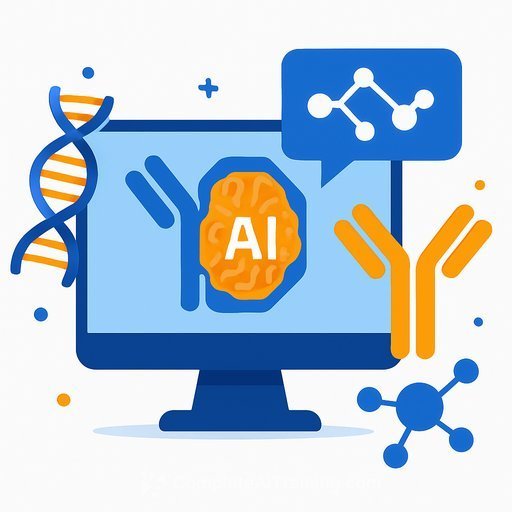
The drug discovery process traditionally moves through distinct stages: researchers design molecules, test their properties in silico, then validate promising candidates in the lab. Generative AI accelerates the first two steps by generating large numbers of potential compounds and forecasting how they'll behave.
This works only when systems have access to high-quality, multimodal patient data. A single incomplete dataset or biased patient population can send researchers down unproductive paths, wasting both time and resources downstream.
What This Means for Healthcare Teams
For clinical and research professionals, the practical implication is straightforward: AI tools are only as useful as the data they train on. Organizations investing in AI-driven drug discovery need equally robust data governance practices.
Teams should expect faster candidate identification, but also more rigorous validation phases. The speed of AI doesn't eliminate the need for careful experimental work-it just shifts where that work happens.
Learn more about Generative AI and LLM applications, or explore how AI is being applied across healthcare.
Your membership also unlocks: