GeoX.AI and Mitsui Sumitomo bring property-level intelligence to Japan's home insurance market
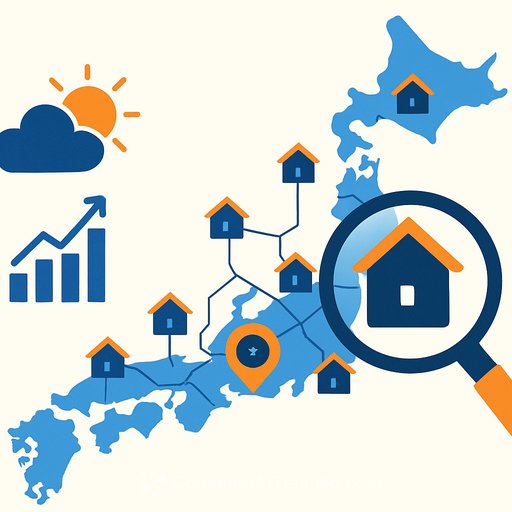
Insurers are shifting from regional hazard maps to property-level insight. Climate volatility, aging homes, and higher reconstruction costs demand it. That's the backdrop for GeoX.AI's partnership with Mitsui Sumitomo Insurance to analyze tens of thousands of homes across Japan, starting in Hokkaido.
GeoX builds AI models that read aerial, satellite, and street-level imagery to produce structured, building-level data. The system flags roof aging, exterior deterioration, vegetation encroachment, debris accumulation, damaged fencing, and similar risk factors tied to fire and storm losses. It's not a replacement for underwriting - it's high-signal input you can price, triage, and manage portfolios with.
What's different about the approach
- Fused datasets: aerial, satellite, and ground-level 3D images analyzed together rather than in silos.
- Structured outputs: machine-readable building attributes plus visual evidence.
- Action-oriented: usable for rating, eligibility, inspection deflection, and book-level risk scoring.
Why this matters for carriers
- Underwriting: improve base rates and modifiers with actual roof and parcel conditions, not proxies.
- Selection and pricing: target acceptable risks that were previously mispriced; reduce anti-selection.
- Portfolio management: surface clusters of deterioration or vegetation exposure before CAT season.
- Claims: accelerate triage and reserving after events; GeoX data has supported FEMA post-disaster assessments.
- Loss control: deliver homeowner reports with specific fixes that reduce fire spread and improve resilience.
Inside the Japan pilot
Mitsui Sumitomo Insurance, part of MS&AD Insurance Group, will assess tens of thousands of homes, starting in Hokkaido. Japan is a tough market: frequent typhoons, rising wildfire exposure, millions of aging structures, and a growing number of vacant homes. Losses and premiums have trended higher as a result.
Homeowners will get visual reports showing conditions that increase risk. Mitsui Sumitomo will use the data for risk-based pricing and to prioritize preventive maintenance opportunities.
Where GeoX is operating today
Founded in 2018 by Itzhak Lavi, Eli Lavi, and Guy Atar, GeoX operates in the United States, Europe, Japan, and Australia. Clients include insurers and reinsurers such as Munich Re and Sompo, along with banks and public agencies. In the U.S., the company's datasets have supported post-disaster assessments where speed and accuracy matter.
GeoX has raised $23 million and employs 33 people across multiple regions. Despite broader insurtech volatility, adoption like this shows geospatial AI moving into mainstream insurance workflows.
How to put this to work in your organization
- Start with a pilot: pick a CAT-exposed region or a high-loss segment; define clear objectives (pricing lift, inspection deflection, loss ratio delta).
- Integrate the data: load attributes via batch or API; add to GLMs or tree-based models; measure lift against holdout.
- Validate: perform field spot-checks; quantify false positives/negatives; run A/B pricing or underwriting tests.
- Governance: document features, thresholds, and model usage; prepare regulator-facing summaries and customer disclosures.
- Track KPIs: pure premium improvement, loss ratio shift, claim cycle time, reinsurance savings, and inspection cost reduction.
Limitations to keep in view
- Imagery cadence and quality vary by geography; occlusions (trees, snow) can reduce accuracy.
- Correlations aren't causation; keep human review for edge cases and high-value risks.
- Use consistent standards across markets so scores are comparable over time and across portfolios.
The bigger industry signal
Traditional underwriting - regional maps and historical claims - is losing predictive power as weather patterns shift and housing stock ages. Standardized, property-condition data fills that gap and supports fairer pricing, better selection, and clearer conversations with policyholders about prevention.
For insurers, the takeaway is simple: better visibility leads to better portfolios. Start small, measure lift, and scale what works.
Further learning
- AI courses by job role for teams building skills in underwriting, claims, and risk analytics.
Your membership also unlocks: