
AI news ·
German surgery experts clarify that artificial intelligence and robots assist rather than replace human surgeons
Without digital infrastructure, AI in surgery won't arrive, Prof. Ritz said. 200 sessions at the congress underscored its role, but paper records still block uptake.
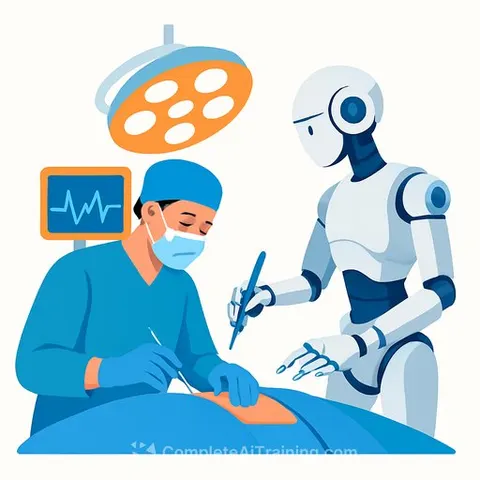
At the 2026 German Surgery Congress, Prof. Dr. Jörg-Peter Ritz, President of the German Society for General and Visceral Surgery (DGAV) and Chief Physician at Helios Kliniken Schwerin, outlined how AI and robotics are already being used in surgery, where the technology is heading, and the persistent misunderstandings that undermine patient trust. More than 200 sessions at the conference underscored how central these tools have become-but Ritz made clear that without digital infrastructure, even the most advanced AI will remain a distant promise.
"If we don't have the digital infrastructure in place, then AI won't arrive, or its arrival will be delayed," Ritz said. He pointed to the continued reliance on paper files and printouts in many German hospitals. Only once digital patient records are the norm, he argued, can AI deliver on its potential to reduce clinician workload and improve care.
From consultation to discharge: AI as a documentation ally
Where digital systems are already in place, AI is handling routine tasks that drain clinical time. Automatic speech recognition captures patient data during consultations and transfers it directly into hospital information systems. In Spain, Ritz described a model where patients interact with an AI system before a visit: the system collects relevant history, pre-structures findings, and coordinates appointments. While this remains a future prospect for Germany, it shows how AI could absorb administrative burden.
Pilot projects are also testing AI-generated discharge summaries and surgical reports. These systems flag gaps that are easy to miss in a busy clinic-a missing follow-up appointment, an undocumented medication dose. Risk stratification tools under development go further, analyzing current and past findings to highlight critical drug interactions or necessary pre-operative measures. None of these applications have reached widespread clinical use yet, but the direction is clear.
Inside the operating room: VR overlays and robotic assistance
AI's role in the operating theatre is moving beyond documentation. Virtual reality headsets now project tumour images and anatomical structures directly onto the surgical site, helping surgeons translate two-dimensional scans into the three-dimensional reality of the abdomen. Tumour boundaries become visible, and critical vessels are marked. Ritz noted that these systems are still largely confined to research projects and early clinical applications.
Modern surgical robots pack the computing power needed for real-time data and video analysis, which opens the door to something akin to driver-assistance in cars. "AI systems in the operating theatre could alert surgeons to risky manoeuvres-for example, that a particular surgical approach would be avoided by the majority of experienced colleagues," Ritz explained. These early warning systems are in their infancy, but they are expected to mature in the coming years.
Telesurgery: technically possible, practically limited
Telesurgery has produced headline-grabbing demonstrations, such as a robotic cholecystectomy performed across hundreds of kilometres. Yet Ritz said the technology is not ready for everyday clinical use. Latency must be kept to just a few milliseconds, and the demands on data security and quality remain too high. "So far, it has been more about demonstrating what is technically feasible," he said.
Where telesurgery is already delivering value is in surgical training. Remote observation and interaction during minimally invasive procedures are now possible, and AI can evaluate recordings of those sessions. "Current systems recognise difficulties at certain stages of a procedure, such as during suturing, and then offer personalised training," Ritz said. The goal is targeted skill improvement that directly enhances patient safety.
Deskilling and the patient trust gap
The convenience of AI assistance carries a risk Ritz called deskilling-the gradual erosion of core surgical skills that are no longer practised regularly. He illustrated the shift with open cholecystectomy: a procedure that once required four people at the table now often involves two. Robotic systems could push staffing even lower, denying young surgeons the hands-on experience they need. "That is why we need structured curricula, so that AI and modern technology do not push us out," he said.
Another underappreciated challenge is patient perception. Many people still believe that robot-assisted surgery means a machine operates autonomously. In reality, the robot is an instrument under the surgeon's full control. Ritz stressed that addressing this misunderstanding is not merely about providing information, but also about building trust in modern surgical procedures. As the field of AI for Healthcare advances, closing that perception gap will be crucial for adoption.
Why this matters for healthcare professionals
Ritz offered a clear answer to the question of whether AI will replace surgeons: "No." Neither the technical capabilities nor the ethical and legal frameworks-especially unresolved accountability questions-support that scenario. Instead, the practical path forward is AI that handles documentation, flags risks, and supports training, freeing surgeons to focus on the irreplaceable human work of operating. For clinicians, the message is to demand the digital infrastructure that makes these tools usable, while actively shaping training curricula so that essential skills are preserved, not lost.