
AI news ·
Germany misses EU pay transparency deadline as AI adoption reaches 54 percent and legal risks for employers grow
Germany missed the EU's June 7 Pay Transparency Directive deadline, leaving employers open to lawsuits. Courts are already applying the directive's principles, with a March ruling expanding workers' rights to demand employment references.
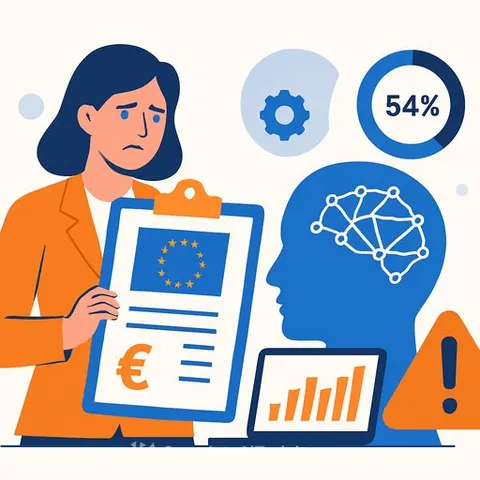
Germany Misses Pay Transparency Deadline as Courts Tighten Worker Protections
Germany failed to implement the European Union's Pay Transparency Directive by the June 7 deadline. The miss leaves German employers exposed to litigation, as domestic courts have begun interpreting existing national labour rules in line with the directive before it is formally transposed into German law.
Courts are already moving faster than legislators. On March 4, the Cologne Regional Labour Court ruled that workers who credibly intend to change careers can demand a qualified interim employment reference. Employers can refuse only if they have concrete doubts about the stated intention - mere suspicion that the reference might support a lawsuit is not enough. The case has been granted leave to appeal to the Federal Labour Court.
The ruling shifts leverage toward employees in salary negotiations and job transitions. Workers now have clearer legal grounds to request documentation of their employment history and performance.
AI Adoption Surges While Legal Complexity Grows
German companies are embedding AI at accelerating speed. According to an Ifo Institute survey released June 5, 54.5 percent of businesses now use AI, up sharply from 40.9 percent a year earlier.
Construction firms led the jump. AI adoption among main construction companies rose from 7.1 percent three years ago to 39.8 percent. In industry and services, adoption stands at 58.7 percent and 56.2 percent respectively.
Most companies buy from external providers: 74 percent pay for commercial AI solutions. Large firms with more than 250 employees account for 67.2 percent of that spending; smaller companies hover around 51 percent.
Employee enthusiasm lags behind adoption rates. A Boston Consulting Group study found only 51 percent of German workers expect AI to improve job satisfaction. Many AI projects stall on organisational friction and the practical difficulty of integrating the technology into existing workflows.
Unions Push for Early Involvement in AI Decisions
Organised labour is demanding a seat at the table before AI systems are deployed. The DGB Berlin-Brandenburg regional federation is pressing for early involvement of works councils and staff representatives in the planned rollout of "LLMoin," an AI system for the Brandenburg state administration. The ver.di service union is calling for binding works agreements at the state level.
These demands reflect a broader concern: without worker input, AI implementations often fail or create unforeseen compliance risks.
Automation Reshapes Job Categories
AI is remaking entire occupational profiles. The Institute for Employment Research classifies 50 percent of tasks performed by tax clerks as automatable.
In IT, the labour market is shifting. The number of unemployed computer specialists climbed 25 percent over the past year, while demand for entry-level programmers has dropped sharply.
These shifts create new legal exposure for employers. Layoffs tied to automation can trigger severance disputes, discrimination claims, and challenges under German employment protection laws.
Legal Tech Sees Opening in Compliance Demand
Berlin-based legal-tech firm nu:legal closed a €1.3 million funding round in June. The company automates the drafting of legal documents for small and mid-sized enterprises, with final review still conducted by licensed attorneys.
The bet is simple: rising regulatory and legal requirements will create demand for tools that help companies manage compliance faster. For in-house counsel and compliance officers, such tools can reduce the time spent on routine document preparation - freeing resources for higher-level risk assessment.
Across the Atlantic, workplace AI conflicts are taking a new form. In May, a female employee at a US technology company received a religious exemption from working with AI systems, citing ethical and environmental concerns tied to a papal encyclical. US authorities reported that religious discrimination lawsuits filed in fiscal year 2024 rose 70 percent compared with 2021.
For German legal teams, the lesson is clear: as AI adoption spreads, expect more disputes over religious accommodation, disability access, and the right to refuse AI-driven tasks. Courts are already interpreting worker protections expansively.
Learn more about AI for Legal professionals and how AI Agents & Automation are reshaping compliance and document workflows.