AI, VR, and Simulation Are Ready. Adoption Isn't.
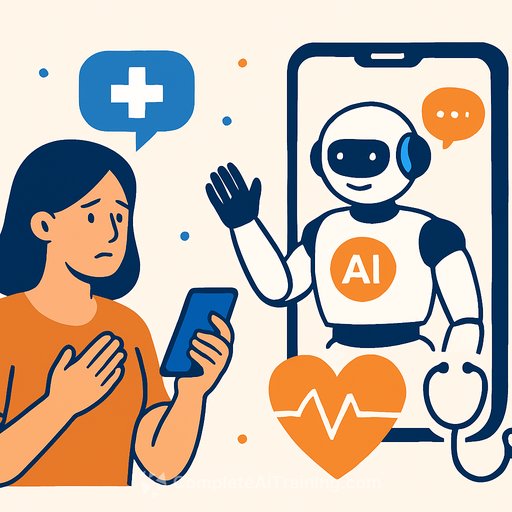
AI is moving from pilots to point-of-care, and healthcare stands to gain the most. Health systems are investing in AI-enabled tools, VR, and simulation to speed onboarding and strengthen training under staffing pressure. Yet adoption remains slow and outcomes often underwhelm. The barrier isn't the tech - it's how we roll it out.
Why Adoption Lags Despite Strong Evidence
Immersive learning and simulation improve knowledge retention, confidence, and team performance. See the AHRQ primer on simulation in healthcare for context. AI can reduce the administrative load that fuels burnout by handling routine documentation and repetitive tasks, a point echoed by the National Academy of Medicine.
So why the stall? Implementation. Pilots linger, tools go underused, and rollouts get deprioritized. Efficient deployment, clear training, and ongoing education determine whether new methods stick.
The Overlooked Role of Nurse Educators
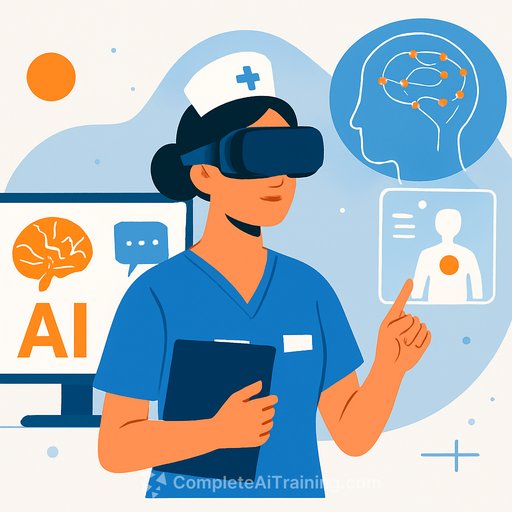
Nurse educators are the tipping point. They decide which modalities to use and how learning lands across units. Yet familiar practices win when costs, time, workflow fit, ROI proof, and "not now" pressure pile up.
The hard truth: the perfect timing won't arrive. The move is to embed new training into current workflows, remove friction, and iterate. Once teams see wins, the barriers that slowed change start to fade.
Many educators are curious about VR and AI but lack the language, demos, and confidence to advocate. Without socialization and peer proof, even strong supporters tap the brakes. That's fixable with a simple, repeatable plan.
Lessons From Past Tech Adoption
Healthcare adopts fastest under external pressure. Telehealth had years of proven value before COVID-19 pushed it into daily use. Policy flexibility and urgency flipped the switch almost overnight; see HHS telehealth policy changes during COVID-19.
Waiting for the next crisis is risky. Compressed timelines force rushed decisions. Preparation now creates cleaner rollouts later - with less waste and better outcomes.
What Leaders Should Rethink
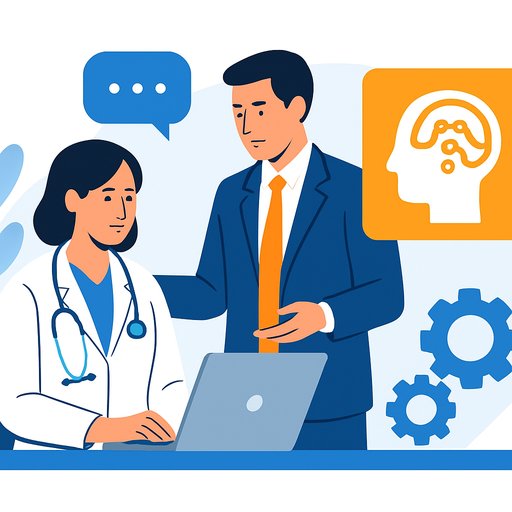
Treat training as a strategic capability, not a downstream task. Set a clear vision, fund it, and give educators protected time. Acknowledge the cognitive load of change and bake support into the plan - before go-live, not after. That's how you turn early wins into sustained performance.
A Readiness Playbook for AI, VR, and Simulation
- Define the problem and outcome targets: time-to-competence, documentation minutes per shift, near-miss rates, HAIs, falls, or readmissions.
- Map stakeholders and decision rights: CNO, CMIO, Nursing Education, Quality, IT/Security, Finance, Risk, and frontline champions. Assign a simple RACI.
- Pick high-yield use cases: infection prevention scenarios, sepsis recognition, safe handoffs, discharge documentation, or device competency refreshers.
- Integrate early: SSO, EHR links, data governance, and content update workflows. No shadow IT.
- Design the pilot: 6-8 weeks, clear sample size, pre/post measures, adoption targets, and a go/no-go threshold.
- Enable educators: train-the-trainer, office hours, champion networks, and a 2-page value brief they can use with leaders.
- Make change communication simple: 2-minute videos, one-page job aids, huddle scripts, and QR codes at the point of work.
- Protect time and reward learning: paid practice blocks, CNE/CME credit, microlearning that fits into 10-15 minute windows.
- Measure and adjust weekly: a basic dashboard for usage, completion, and impact; fix bottlenecks fast.
- Scale in phases: unit by unit, with playbook reuse and a quarterly content refresh cadence.
- Model the ROI: reduced onboarding days, overtime/premium labor avoided, fewer agency shifts, lower turnover, quality event reduction - minus vendor and staff time costs.
- Manage risk: human-in-the-loop for AI suggestions, bias reviews, fallback procedures, and a simple incident reporting path.
Make It Easy to Use
People won't read a 40-page manual. They will use a one-pager, a short walkthrough, and a practice scenario that mirrors their shift. Keep modules focused, short, and relevant to the unit's current pain.
Blend new tools with existing methods - simulation labs, bedside precepting, and short refreshers away from patients. The goal is confidence and competence without added chaos.
Your First 90 Days
- Weeks 0-2: Baseline the problem, pick the use case, secure sponsor, align metrics, and confirm IT/security needs.
- Weeks 3-4: Train educators, set up access and data capture, finalize content, and launch communications.
- Weeks 5-8: Run the pilot, monitor weekly, resolve friction fast, collect stories, and document time saved or errors reduced.
- Weeks 9-12: Review outcomes vs. thresholds, refine content, and plan a phased scale with protected time and clear ownership.
Metrics That Matter
- Adoption and completion rates by unit and role
- Time-to-competence for new hires and cross-training
- Documentation minutes per shift and after-hours charting
- Quality and safety signals: HAIs, falls, near misses tied to targeted skills
- Staff satisfaction and burnout indicators
- Onboarding throughput and preceptor load
- Cost per learner and overtime/premium labor trends
- Rework, escalation, and incident frequency in affected workflows
Bottom Line
The tech works. Return depends on readiness and behavior. Start with one high-value use case, make it easy to learn, measure what matters, and scale what proves itself. That's how AI, VR, and simulation move from pilots to daily practice - and stay there.
For educators building a plan and toolkit, explore the AI Learning Path for Training & Development Managers for strategy and implementation ideas you can adapt to your teams.
Your membership also unlocks: