Ghost in the Machine, Ghost in GDP: What Finance Needs to Solve Before 2028
"Ghost in the machine" isn't just a phrase from a rock album. It's a midcentury critique of the idea that a separate "mind" drives the body-useful now because AI feels like a ghost inside capitalism's engine. The question is simple: does this ghost produce real prosperity, or just numbers that don't touch wallets?
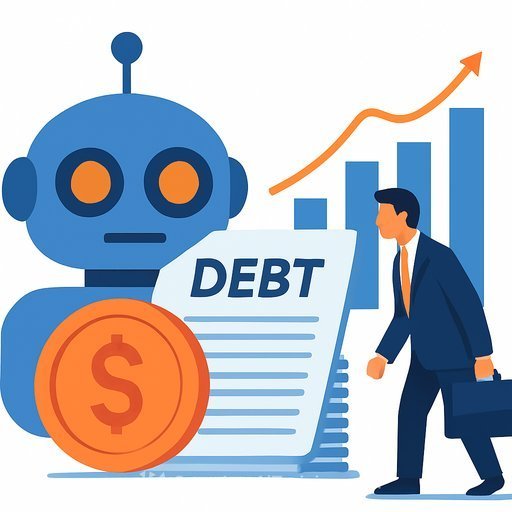
A recent memo from Citrini Research poses a hard version of that question: a near-term future where AI drives record profits, then drains demand by cutting the wage base that funds consumption. Call it "ghost GDP"-output that pads national accounts but never circulates because machines don't buy dinner.
The setup: profits up, demand down, friction to zero
The thesis runs like this. Companies adopt AI to defend margins. White-collar headcount falls. Consumer spend contracts. Management doubles down on more automation to keep EPS level. You get a feedback loop with no natural brake.
Underneath it is a bigger shift: the displacement of the scarce input of the modern economy-human intelligence. When agents operate nonstop and optimize everything, "friction" that once justified fees, markups, and intermediaries starts collapsing. A lot of what looked like a relationship was time scarcity wearing a friendly face.
- Travel and scheduling: end-to-end itineraries assembled faster and cheaper than platforms can serve.
- Insurance renewals, tax prep, and routine advice: if the value is "I deal with the tedium," agents don't get tired.
- Payments and marketplaces: AI routes around take rates and interchange wherever possible. Moats built on friction erode first.
Why finance should care: earnings mix and multiple risk
Many business models price in human indecision, urgency, or information gaps. Remove that, and take rates compress, CAC falls but so does ARPU, and churn rises when agents re-shop every cycle. Operating leverage flips direction.
Expect a measuring problem too. National accounts can show higher output while household cash flow shrinks. If "productivity" accrues to capital but bypasses wages, the top line of GDP rises while the bottom line of Main Street thins. That's how you get ghost GDP.
Credit map: where cracks could appear first
- Residential mortgages: high-FICO prime borrowers face income pressure from white-collar displacement; performance lags historical norms even without rate shocks.
- Private credit: PE-backed software and service firms get undercut as clients replace SaaS seats and vendor contracts with agents; defaults rise as revenue-per-seat falls.
- Consumer credit: discretionary spend weakens from the top down; watch delinquencies in historically "safe" cohorts tied to professional jobs.
Counters you can't ignore
There's a credible optimistic path. As costs fall, real purchasing power can rise even with flat nominal wages. Historically, productivity gains reallocate value rather than delete it. Entire job categories shrink (think farming after cold-chain logistics) and new demand surfaces elsewhere.
Human preference also blunts full automation. People pay for trust, taste, and shared identity-even when a machine can do the task. That keeps pricing power alive where experience and meaning matter.
Several leaders argue a large share of work resists full automation because context is messy and changes quickly. And forecasts aren't one-sided: one widely cited estimate has tens of millions of roles displaced this decade while even more new roles appear as the economy rewires. The IMF also notes large exposure to AI but uneven impacts across tasks and countries, with policy able to tilt outcomes either way. IMF: GenAI and the future of work
Playbook for CFOs, PMs, and Risk Leaders
1) Model second-order effects into your P&L and DCF
- Revenue compression: stress test 5%-20% take-rate erosion where your pricing rides on convenience, intermediation, or information gaps.
- Churn reflex: assume agents re-shop every renewal; raise churn and lower net expansion for brokered, marketplace, and subscription lines.
- Cost curve: separate "agent minutes" from headcount. Treat agent usage like compute-variable, scalable, and subject to price declines.
- Pricing power audit: tag offerings as Utility, Outcome, or Experience. The "Experience" bucket holds the defensible margin.
2) Recut sector and factor exposure
- At risk: OTAs, delivery intermediaries, insurance brokers, routine tax/advice platforms, pure-play interchange models, and SaaS priced per-seat without embedded outcomes.
- Potential beneficiaries: compute and acceleration supply chains, power and data center capacity, security, firms with privileged data and distribution, and operators that bundle outcomes rather than hours or seats.
- Style tilt: quality with cash generation and durable moats not built on friction; avoid revenue models easy for agents to arbitrage.
3) Credit and liquidity controls
- Underwriting overlays: add a "white-collar income elasticity" factor to PD/LGD. Don't let a 780 FICO mask future earnings risk.
- Private credit hygiene: tighten covenants for software and service names with high agent-substitution risk; shorten duration; demand reporting on AI-driven customer loss.
- Treasury ops: diversify SaaS and API dependencies; add step-down pricing clauses indexed to market agent costs.
4) Consumer demand shock drill
- Map revenue by customer occupation mix. If 50%+ of your demand skews to professional services, pre-plan discounts, bundles, and alternative financing to hold share through a white-collar downturn.
- Track early signals: announcements of knowledge-worker layoffs, declines in premium discretionary categories, softening in high-income zip codes, and rising card revolve among prime borrowers.
5) Build the "context advantage" inside the firm
- Shift roles toward context gathering and decision quality. Pair every team with agents but measure output per person-hour and decision cycle time.
- Codify trust: compliance, brand, and service standards that make a human-premium obvious and worth paying for.
- Data rights: lock down proprietary data sources and usage terms now. In an agent-dense market, unique data is the toll road.
6) Policy watchlist (your macro hedge)
- Potential brakes on the loop: interchange caps, broker fee reforms, tax policy on automated labor, accelerated upskilling credits, consumer income supports, changes to mortgage underwriting for gig/portfolio income.
- Any of these can slow friction collapse, redirect demand, or backstop credit-meaningfully changing valuation ranges.
What to track weekly
- Take-rate and fee compression across travel, delivery, and payments.
- SaaS seat contraction vs. usage-based growth; agent-assisted churn.
- Layoff and hiring trends in professional occupations; wage step-down into gig roles.
- Delinquency shifts among prime borrowers; private credit amendments and restructurings.
- Power and data center capex signals; GPU supply chain lead times.
The bottom line
AI can look like a ghost adding GDP without cash flow-or like a new engine that lowers prices, lifts real demand, and funds fresh categories. Both paths are live. Your edge is speed: price in fee compression early, protect cash, lean into outcome-based offers, and own data and distribution.
If you lead finance, build the muscles now. Start with AI for Finance for sector-specific tactics, or go deeper with the AI Learning Path for CFOs to harden forecasting, risk, and capital allocation for the next five years.
Your membership also unlocks: