GIMS Greater Noida to Launch India's First Government Hospital-Based AI Clinic
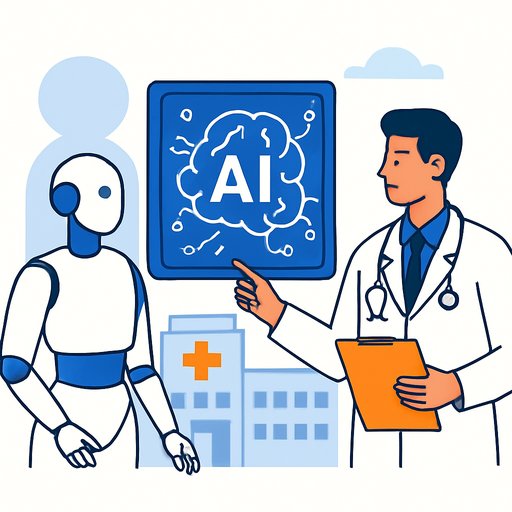
Greater Noida, 02/01/2026 - The Government Institute of Medical Sciences (GIMS), Greater Noida, is launching India's first Artificial Intelligence (AI) Clinic inside a government hospital. Built under the Centre for Medical Innovation (CMI), this unit will run within a fully functional, 630+ bed public hospital and operate inside real clinical workflows.
For government health leaders, this is a practical step: move AI from slide decks into duty rosters, wards, and patient records-where it must prove value, safety, and accountability. AI for Government
What the AI Clinic Will Do
The GIMS AI Clinic for Startups will co-create solutions with clinicians and test them in day-to-day hospital settings. Tools will go through clinical relevance checks, safety and ethics reviews, and process-level validation before any scale-up, following recognized AI for Healthcare best practices.
Focus areas include patient safety, clear and explainable AI use, strict data governance, and solutions that help doctors manage high patient volumes common in public hospitals.
Who's Leading the Launch
The clinic will be inaugurated by Dr. Sujata Chaudhary, Additional Director General of Health Services (ADGHS), Ministry of Health and Family Welfare, Government of India. The ceremony will also be attended by Col. Dr. Ashok Puranik, Executive Director, AIIMS Guwahati, and Mr. Aman Sharma, Joint Secretary (Medical Devices), Department of Pharmaceuticals.
More than 200 participants-doctors, AI startups, hospital administrators, policymakers, and innovators-are expected to join the national online event.
Ministry of Health and Family Welfare | AIIMS Guwahati
Why This Matters for Government Systems
Public hospitals need AI that stands up to scrutiny: clinical outcomes, audit trails, data protection, and operational fit. By placing the clinic inside a government hospital, GIMS sets a clear bar-technology must work for real patients, on real schedules, with real constraints.
The initiative directly supports national and state health priorities by creating a structured path from concept to validation to deployment inside government settings. Think of it as a "living clinical laboratory" for responsibly scaling what works-across districts and states.
What to Expect Operationally
- Co-creation with clinicians: product teams work beside wards, OPDs, and diagnostic units.
- Ethics and safety gates: bias checks, clinical risk assessment, and incident reporting protocols.
- Data governance: clear consent flows, de-identification standards, access controls, and auditable logs.
- Deployment readiness: SOPs, training playbooks, and measurable performance thresholds before wider rollout.
Key Outcomes Government Leaders Should Track
- Clinical impact: time-to-diagnosis, readmission rates, triage accuracy, and workload reduction for clinicians.
- Safety and trust: adverse event reports, explainability of model outputs, and patient consent adherence.
- Operational fit: integration with current workflows, uptime, escalation paths, and staff adoption.
- Cost and scale: per-case cost, total cost of ownership, and readiness for district/state-level deployment.
Guiding Principles Stated by GIMS Leadership
According to the Director of GIMS, the clinic signals a clear shift in how government hospitals work with emerging technologies. AI must be clinically meaningful, ethically grounded, and actually help doctors and patients.
By embedding development and testing inside the hospital, the institute ensures every tool is judged against real patient needs, real practices, and the pressures of public health. The goal: build a national model that strengthens trust, improves outcomes, and can be responsibly scaled across government systems.
Immediate Actions for Health Administrators
- Nominate a hospital nodal officer and a cross-functional review committee (clinicians, IT, legal, ethics).
- Define evaluation metrics upfront: safety thresholds, bias checks, clinical endpoints, and go/no-go criteria.
- Set data-use rules: consent models, de-identification, retention periods, and third-party access boundaries.
- Run limited-scope pilots first: controlled departments, clear timelines, and weekly review sprints.
- Train staff: brief, role-specific sessions for clinicians, nurses, technicians, and administrators.
- Prepare SOPs: incident reporting, model drift monitoring, human-in-the-loop overrides, and escalation.
- Plan procurement pathways: technical specs, compliance requirements, and post-deployment monitoring clauses.
- Document results: publish internal playbooks to speed replication across other government hospitals.
Where Startups Fit In
Startups will gain access to real clinical settings, defined problem statements, and ethical review structures. In return, they must meet government-grade expectations on data protection, reliability, explainability, and service support.
Success here won't be about flashy demos-it will be about durable outcomes that stand up to audits and scale.
What This Could Enable Next
If the model proves effective, states can adopt a shared framework: common metrics, standardized review gates, and reusable SOPs to speed up safe deployments. That reduces duplicated effort and helps move validated solutions faster across the public system.
For capacity-building of public sector teams working on AI pilots and governance, see curated options here: AI for Executives & Strategy.
The Signal
This launch sends a simple message: public healthcare can move forward with AI on its own terms-clinically sound, ethically clear, and operations-first. GIMS Greater Noida is putting that approach into daily practice inside a government hospital.
That's how meaningful progress happens in public systems: step by step, with accountability, and measurable improvements where patients and clinicians feel it most.
Your membership also unlocks: